

The content is published under Creative Commons Attribution 4.0 International license (CC BY 4.0).
Reviewed Article:
A Functional Reassessment of Roman Dodecahedra as Tools for Forming Standardised Wax Objects
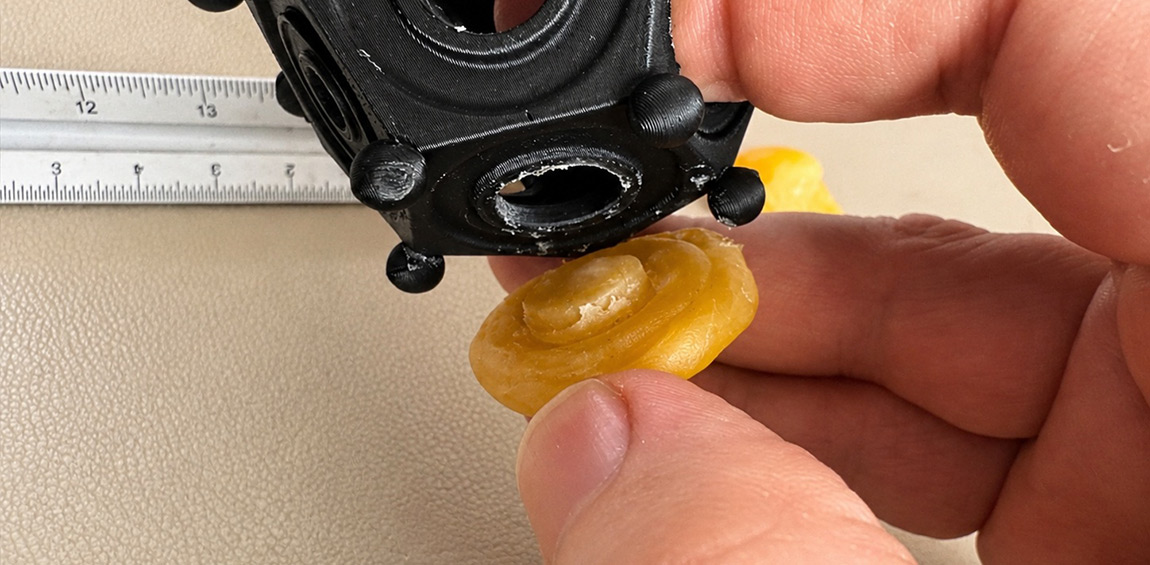
Roman dodecahedra are hollow bronze objects dating to the 2nd–4th centuries AD, predominantly found in the north-western provinces of the Roman Empire (Guggenberger, 2013). Despite extensive debate, their function remains undocumented in contemporary sources and unresolved archaeologically. This study applies experimental archaeology to reassess whether the form of the Roman dodecahedron is consistent with use as a practical tool in administrative contexts.
This study tests the hypothesis that dodecahedra functioned as forming aids for the production of standardised wax elements - such as bullae or related wax objects - used to secure cords, mark documents, or support identification. Using 3D-printed replicas and historically plausible wax mixtures, a series of forming trials was conducted to evaluate how the object’s geometry interacts with material behaviour.
Initial trials demonstrated that wax seals can be produced by hand, but with inconsistent results. Revised methods showed that the dodecahedron can produce discrete, repeatable wax forms with controlled thickness and a raised central boss suitable for receiving a seal, and in the cord trials, improved the consistency of attachment to the substrate. Features often regarded as problematic - variable aperture sizes, protruding knobs, and lack of dimensional standardisation - were shown to perform coherent functional roles within the forming and removal process. The results indicate that the dodecahedron’s value lies not in enabling sealing, but in formalising and standardising a flexible craft action. This interpretation aligns with known Roman administrative practices in which visual order and presentation were integral to authority. While not excluding other uses, the study demonstrates that wax forming represents a materially and mechanically plausible function for Roman dodecahedra.
Introduction
Roman dodecahedra are hollow bronze objects dating primarily to the 2nd–4th centuries AD and found predominantly in the north-western provinces of the Roman Empire (Guggenberger, 2013). Characterised by twelve pentagonal faces, each pierced by a circular aperture of varying diameter and fitted with a small knob at each vertex, their function has long remained uncertain (Guggenberger, 2013). Despite their distinctive form and relatively widespread distribution, no contemporary literature describes their use.
A wide range of interpretations has been proposed, including measuring devices, gaming implements, ritual objects, or symbolic artefacts (Guggenberger, 2013). Many of these interpretations rely heavily on assumed, symbolic meanings. Moreover, they frequently fail to account for key physical features observed across surviving Roman dodecahedra, including aperture variability, protruding knobs, and the lack of dimensional standardisation between artefacts.
Given these limitations, experimental archaeology provides an appropriate framework for reassessing the functional potential of Roman dodecahedra (Coles, 1979, pp. 36–38; Reynolds, 1999). By reconstructing plausible materials and processes and testing them physically, it is possible to evaluate whether the form of the dodecahedron is consistent with specific practical applications. This paper presents an experimental investigation into the potential use of Roman dodecahedra as tools for producing administrative wax seals.
Background and Previous Interpretations
Previous interpretations of Roman dodecahedra have been diverse and often contradictory. Measuring hypotheses have proposed their use as distance or range-finding devices, though these interpretations struggle to explain the lack of standardisation between examples. Gaming theories have suggested their use as dice or toys, while ritual or symbolic explanations raise broader methodological problems about how archaeologists interpret unusual objects when direct evidence for use is absent (Merrifield, 1987, pp. 1–21).
A common limitation across many interpretations is the absence of experimental testing. Few studies have evaluated how the object performs when used physically, or whether its form supports the proposed function in practice. As a result, there remains scope for experimentally grounded reassessment focused on use, process, and material behaviour.
Hypothesis
This study explores whether Roman dodecahedra could have functioned as practical tools for producing standardised wax elements used in administrative contexts. In this interpretation, the dodecahedron acts as a forming aid for creating discrete, repeatable wax objects around a knotted cord or similar substrate - producing compact forms suitable for sealing, marking, or identification. This approach provides a material explanation for the object’s complex geometry and for features that have resisted symbolic or measurement-based interpretations.
Experimental trials show that the geometry of the dodecahedron naturally supports the shaping of small, token-like wax forms. When softened wax is pressed within the object, it consistently produces a defined perimeter, controlled thickness, and a raised central boss. These characteristics align closely with known Roman wax bullae used to secure cords on documents and containers, while also suggesting potential use as free-standing tokens independent of seal boxes.
In this framework, the dodecahedron is not a sealing instrument itself but a forming tool that generates a recognisable, standardised wax object. Such forms could have operated within a broader family of Roman sealing and authentication practices, overlapping with wax bullae protected by seal boxes. The distinction between “token” and “bulla” may therefore represent degrees of use, reflecting a flexible approach to material administration.
The proposed forming process involves pressing softened wax around a cord knot from both sides, enclosing the substrate and forming a raised central boss that provides a flat surface for a seal impression or stamped mark. The concentric circular motifs often seen on dodecahedra could further formalise the appearance of the finished object, contributing to a recognisable and authoritative visual language even before sealing.
Within this interpretation, the protruding knobs at each vertex act as functional spacers that limit compression and ensure consistent thickness. When pressed onto a flat surface, these knobs prevent over-flattening and help produce uniform results - qualities desirable in bureaucratic or administrative settings where reliability and presentation mattered. Variation in aperture diameters within a single dodecahedron is likewise understood as an intentional design choice, allowing the tool to accommodate cords of varying thickness while shaping the central boss. In this process, the apertures function directly as practical forming interfaces.
Larger apertures, often unmarked and slightly oval, appear specifically sized to accommodate a user's finger, serving a practical handling purpose. Experimental use confirmed that these openings comfortably admit a finger, enabling the user to press and release wax from within the tool without distortion, which is an essential step in forming and extraction.
Across surviving examples, differences in size, aperture configuration, and surface detail are interpreted not as inconsistencies but as local adaptations. Such variation could have enabled officials or regional offices to produce wax forms with distinctive proportions and textures, allowing recognition of origin without textual identifiers. This diversity may represent a feature of decentralised standardisation.
This hypothesis evaluates the dodecahedron through its physical behaviour. The experimental results demonstrate that the object’s geometry is consistent with the controlled formation of repeatable wax elements, providing a testable and materially grounded model for a possible administrative role. Ultimately, this study establishes the functional plausibility of the wax-forming process, irrespective of claims regarding the object's original design intent or exclusive use.
Materials and Methods
Testing began using a 3D-printed replica of a dodecahedron with an external diameter of approximately 65 mm, printed in PLA. Roman dodecahedra are typically hollow copper-alloy objects with twelve pentagonal faces, circular apertures of varying diameter, and protruding corner knobs. Published examples show considerable variation in overall size and aperture configuration, so the experimental model was not intended to reproduce a single artefact exactly (Guggenberger, 2013). Instead, the replica was designed as a representative mid-sized example that preserved the key geometric features relevant to the hypothesis: hollow construction, twelve apertured faces, variable aperture sizes, and corner knobs capable of acting as spacers during compression. The experiment therefore prioritised general geometric and functional accuracy over the direct replication of any one archaeological find.
After printing, the dodecahedron was taken to a commercial foundry workshop focused on lost-wax modelling and casting, where wax handling and forming techniques were explored. Contextual images from this workshop are included as Figures 13 and 14. All final forming trials reported in Sections 5 and 6 were conducted using the mechanically stable replica shown in Figure 1.3; earlier prints were used only to explore handling, adhesion, and failure modes. During early experimentation, an alternative hypothesis - that the object functioned as a risk-and-reward gaming device—was tested and discarded after practical trials showed it to be mechanically implausible.
Instead, attention focused on wax behaviour. A synthetic modelling wax was allowed to cool to a warm, plastic state before forming. At room temperature of approximately 25 degrees Celsius, the material behaved similarly to modelling clay, allowing it to be shaped manually and pressed into form. After extended experimentation, it was found that rolling a wax ball by hand, flattening it into a disc, and pressing it using the dodecahedron consistently produced a neat, token-like object with a raised central boss suitable for receiving a seal impression.
Further experiments were undertaken using a more historically plausible wax composition. A mixture consisting of approximately 80% beeswax and 20% pine resin (colophony) by weight was prepared using a double boiler. This mixture was selected as a practical experimental analogue rather than as a reconstruction of a documented Roman recipe. Fully molten wax proved difficult to control and adhered excessively to tool surfaces. Once cooled and re-softened by hand, however, the wax was easily manipulated without a sustained heat source. This aligns with the construction of Roman seal boxes, whose open cord slots would likely have made the controlled containment of fully molten wax more difficult, potentially favouring hand-softened wax.
For cord and knot testing, cotton twine tied with a double overhand knot was used as a consistent baseline. Wax was applied by flattening and pressing discs above and below the cord, then compressing them using the dodecahedron. The protruding corner knobs acted as a depth gauge, while the central aperture produced a slight raised boss during compression.
Experimental Results
Initial Trials
While a range of wax volumes could produce a workable bulla identifying an optimal size for consistent and well-formed results required a short series of trials. After each attempt, the formed bulla was assessed for excess or insufficient material; wax was either removed or added accordingly, re-formed into a ball, and pressed again. Through this iterative adjustment, an appropriate volume was quickly established. The larger aperture of the dodecahedron subsequently functioned as a reliable visual gauge, enabling consistent preparation of wax balls for repeatable outcomes.
This method produced a neat wax bulla but did not reliably embed the cord within the wax. If the bulla detached from the substrate, the string became partially exposed and could potentially be separated without destroying the wax seal.
It was also found that when using the smaller dodecahedron apertures, wax would occasionally bond to the dodecahedron and ruin the pressing. This was likely due in part to the textured surface of the 3D-printed replica compared with a smooth bronze surface.
Placing a finger inside the dodecahedron to gently push against the wax proved an effective method for removing the tool without damaging the raised boss or surrounding imprint.
Revised Method
The revised trial involved making a wax ball as before, then splitting the ball into two parts. One half of the wax is placed behind the cord, and the other half on top. A thin film of olive oil was wiped across the top surface of the wax with a finger as a release agent.
Functional Observations
The revised method reliably produced a neat wax bulla with the knot fully embedded. A comparable wax bulla was also created without using the dodecahedron and was functionally similar. The principal differences were that the dodecahedron-formed bulla was pressed more firmly onto the substrate and displayed a more ordered, formal appearance.
Repeatability and Thickness Consistency
To assess the consistency and repeatability of the forming process, a series of ten wax tokens was produced in a single session using the dodecahedron. The tokens were formed without cord or knot insertion to isolate thickness control as a variable.
All ten tokens were produced within approximately five minutes, reflecting a realistic working pace. Wax balls were formed rapidly by hand, with slight intentional variation in initial size and using different apertures of the dodecahedron.
Despite these variations, the finished tokens showed a consistent perimeter thickness. Measurement with a steel rule to the nearest 0.5 mm indicated that the disc thickness around the perimeter ranged from approximately 4.0 to 4.5 mm across all examples. No token fell outside this range. This should be treated as a preliminary measurement pending calliper-based recording in future trials.
Although digital callipers were not available, the narrow spread observed across all ten tokens suggests that the dodecahedron’s geometry passively constrains thickness during compression. This consistency was achieved without careful measurement, visual judgement, or adjustment by the maker, indicating that depth control is an inherent mechanical property of the tool.
Discussion
The experimental trials indicate that the Roman dodecahedron’s physical form is compatible with use as a tool for forming standardised wax objects. While similar shapes can be produced without specialised equipment, the dodecahedron appears to regularise and formalise the outcome, even under conditions of rapid production and minor variation in starting material. It may have functioned to standardise a flexible craft action, producing discrete, repeatable, and visually ordered forms. In administrative contexts, where authority and legibility depend on both function and appearance, such control over form would have been advantageous.
Used as a pressing aid, the dodecahedron produces wax forms that bond more firmly to their substrate and appear more visually ordered than hand-formed examples. The resulting objects consistently show a defined perimeter, controlled thickness, and a raised central boss that provides a clear, repeatable surface for sealing. These characteristics emerge naturally as a result of the tool’s geometry, suggesting that expectations of form are embedded within the object. In this way, the dodecahedron acts as a passive regulator of craft, reducing variability while remaining simple to operate.
Several structural features of Roman dodecahedra that resist alternative interpretations are directly engaged during this process. The protruding knobs at each vertex act as spacers, limiting compression and preventing excessive flattening of the wax. This results in consistent thickness across repeated trials, largely independent of the user’s force - a property difficult to explain symbolically but relevant to repetitive administrative work.
The apertures likewise perform complementary roles. The largest allows finger access into the hollow interior, enabling the wax to be carefully released without deformation. This ensures both full enclosure of a cord or knot and clean removal after forming. These openings may also have accommodated thicker knots or larger seals, although this was not systematically tested. Accommodating different cord and knot sizes is one possible explanation for the variation in aperture sizes found on Roman dodecahedra.
The importance of presentation in Roman sealing practices is underscored by comparison with seal boxes, widely attested in administrative and military contexts across Roman Britain and the north-western provinces. These bronze objects were often elaborately decorated and served to protect and display wax seals on documents or containers (Andrews, 2013).
Their embellishment exceeds functional need, indicating that visual authority and controlled presentation were integral to sealing practices.
Concentric motifs framing central apertures, common on seal boxes, emphasise legitimacy and control. The similar impressions observed on Roman dodecahedra resonate with this visual language. While this comparison does not demonstrate a direct functional relationship, it suggests that the forms produced by the dodecahedron would have been consistent with established expectations of ordered and official appearance in administrative contexts.
The ability to form wax bullae by hand does not negate the value of a forming tool. In administrative contexts, tools often exist to regularise actions and improve consistency across users. The dodecahedron makes outcomes more consistent, repeatable, and visually legible.
Practical considerations from the experiments further support the plausibility of a bronze forming tool. 3D-printed replicas, though geometrically accurate, proved less effective: wax adhered to their rough polymer surface and was difficult to remove. A smooth bronze surface would resist adhesion, allow easy cleaning, and tolerate heat or hot water for residue removal. Bronze’s durability, low porosity, and thermal resilience would suit repetitive administrative use where speed and reliability mattered.
That similar wax forms can be made without such a tool raises the question of why dodecahedra were manufactured at all. One explanation is that they formalised and standardised a variable manual process. In administrative systems, visual regularity often stood as a proxy for institutional order. A seal that looked deliberate and well-formed may have conveyed authority more effectively than a freehand equivalent. Variations among surviving dodecahedra - in size, aperture layout, and ornament - may therefore indicate purposeful regional differentiation.
As shown above, the dodecahedron represents a form that is well suited to this specific set of constraints. It solves the problems of depth control, release, and size versatility more effectively than simpler geometric forms, suggesting that its complexity is the result of functional refinement.
Finally, the observation that hand-softened wax performs more effectively than molten wax reinforces this interpretation. Moulding by hand provides better control, avoids the need for heat, and aligns with the construction of seal boxes, whose broad cord apertures would make pouring impractical. This suggests a sealing practice based on tactile manipulation, making a hand-held forming tool logical and efficient.
This study does not argue that all dodecahedra served this role, nor that the wax-object hypothesis excludes alternative uses. Instead, it shows that the proposed function is materially and mechanically credible and that it unites geometry, material behaviour, visual language, and administrative context into a coherent, testable model.
The experimental results establish mechanical plausibility; the following theoretical comparison considers how this performance relates to alternative geometric solutions.
While the measurements presented here are intentionally simple, the narrow thickness range observed across multiple tokens produced rapidly and without calibration provides preliminary quantitative support for the claim that the dodecahedron functions as a passive depth-control device.
This study does not claim to demonstrate original design intent. As with much experimental archaeology, it evaluates functional plausibility rather than historical certainty. The question addressed is not whether Roman dodecahedra were designed exclusively for wax forming, but whether their geometry is materially consistent with such a use in ways that competing interpretations are not.
Comparative Design Logic
To further explore the functional plausibility of the dodecahedron, a theoretical comparative design exercise was undertaken, comparing the object against alternative geometries that might achieve similar outcomes, such as simple tubes, flat plates, or hinged presses.
Based on mechanical principles, simple forms such as tubes and plates present inherent issues with friction, release, and depth control. In this design framework, the dodecahedron appears to offer a coherent geometric solution, resolving several of these constraints through its specific shape, aperture layout, and protruding knobs.
This comparison is intended as a conceptual framework rather than empirical proof. It supports the experimental findings by showing that the dodecahedron’s geometry performs effectively relative to the requirements identified through testing.
Limitations and Further Research
This study has a number of limitations that help define where the results are strong and where future work is needed. Most importantly, wax is a recyclable and short-lived material with little chance of surviving in the archaeological record. Unlike clay, which often endures as fragments or waste, wax would normally be reused or lost without a trace. The lack of surviving wax bullae formed with dodecahedra is therefore not surprising, but this absence still means the hypothesis relies on experimental evidence rather than direct archaeological proof.
Some Roman seal boxes do show traces of wax, but more specialised analysis is needed to understand how that wax was used. Chemical and microscopic testing could show whether it had been poured while molten or pressed and shaped by hand. Results like that could indirectly support the idea that seals were formed through tactile methods consistent with a hand-held tool such as the dodecahedron (Bushe-Fox, 1916).
The experiments described here were carried out by a single maker using a small number of replicas. Every effort was made to use historically plausible materials and techniques, yet differences in surface texture, weight, and heat behaviour between 3D-printed or cast replicas and real bronze examples are unavoidable. Future testing with replicas more closely matching known alloys, finishes, and weights would help refine these results.
Seal impression testing was also limited. A small metal charm and a coin were used as placeholders for signet rings, and as expected, they did not produce readable impressions. Because seal usage in wax is already well documented for Roman administration, this did not affect the evaluation of the dodecahedron as a forming tool. Even so, testing with replica rings of different sizes and designs would help to understand how the shaped boss interacts with real seals and whether aperture size affects placement and control.
Other restrictions include the limited range of cord materials and knot types tested. Only cotton twine and a double overhand knot were used here. Roman practice probably involved a wider set of fibres - linen, leather, or bundled cords - and more knotting methods. Exploring these options could show how variations in cord thickness or tension interact with wax and aperture size.
An additional factor that may merit further investigation is the relationship between wax-based sealing practices, regional climate, and material culture. Wax is thermally sensitive, and higher ambient temperatures increase its susceptibility to deformation and accidental damage. In warmer regions of the Roman world, such conditions may have discouraged reliance on exposed wax seals, favouring alternative materials such as clay or lead. By contrast, seal boxes - an important comparative proxy for wax-based sealing - are particularly well attested in Britain and other north-western provinces, where numerous examples have been recovered from urban, military, and administrative contexts (Bushe-Fox, 1916; Andrews, 2013), but appear to be comparatively rare in many central Mediterranean settings. While this uneven distribution cannot be used to infer function directly, it suggests regional variation in sealing practices, providing contextual support for the plausibility of wax-forming tools being most advantageous in cooler climates.
Finally, this study did not explore where and by whom dodecahedra were used. Integrating locations where they were found, wear patterns, and distribution data with future experiments could reveal whether these tools were mainly associated with military, administrative, or domestic settings.
Together, these limitations suggest directions for the next round of work. They do not weaken the interpretation but underline the need for wider replication and analysis. Combining experimental archaeology, materials science, and contextual study will be key to understanding how Roman dodecahedra may have functioned within everyday sealing or record-keeping practices.
Future work could improve on these observations by using digital callipers or micrometres to record thickness variance across larger sample sizes, allowing statistical comparison between dodecahedron-formed wax objects. A further avenue for investigation concerns the potential use of standardised wax objects as short-term administrative tokens. The experiments presented here demonstrate that the dodecahedron reliably produces discrete, repeatable wax forms that could accept different seals and be produced in varied colours through the addition of pigments. Such characteristics raise the possibility that these objects may have functioned as internal accounting devices, issue markers, or temporary tokens within constrained contexts such as households, workshops, or military camps. This suggestion remains speculative and is not supported by direct archaeological evidence; however, it highlights a potentially productive area for future experimental and contextual research, particularly regarding Roman practices of rationing, distribution, and local administration.
Conclusion
This study used experimental archaeology to test whether Roman dodecahedra could have functioned as tools for forming wax bullae. Experiments with historically plausible materials showed that while wax seals can be made by hand, the dodecahedron improves consistency and control, producing wax forms with uniform thickness, strong attachment, and a repeatable, ordered appearance. Features often seen as puzzling - such as variable holes, protruding knobs, and hollow construction - work together as a coherent forming system.
When treated as a tool, the dodecahedron performs this job with efficiency under the conditions tested. Designing a new implement for the same purpose reveals how difficult it would be to improve on its geometry, suggesting a form refined through practical use rather than abstract design.
Comparison with Roman sealing traditions strengthens this view. Many seal boxes were highly ornate, implying that presentation and visual order were integral to the communication of authority. The dodecahedron’s role in shaping consistent, well-defined wax bullae would have met this same requirement for controlled appearance.
While other uses remain possible, these results show that the wax bulla hypothesis is materially and mechanically credible and that experimental reconstruction can uncover the functional logic embedded in ancient form.
More broadly, this study illustrates how experimental archaeology can contribute to recovering functional logic from artefacts that resist textual interpretation by examining how form constrains material behaviour.
Appendix
The following comparison is a thought experiment rather than a set of measured results. It uses constraints observed in the wax trials, together with basic mechanical reasoning, to illustrate why some geometries align more closely with the forming task than others.
| Design Criteria | Simple Tube / Ring | Flat Multi-Aperture Plate | Hinged Mould / Press | Roman Dodecahedron |
| Primary Action | Cutting / Containment | Pressing | Casting / Enclosing | Pressing / Forming |
| Substrate Bonding (Adhesion to document) | Generally aligned. Open bottom allows direct contact with the surface. | Generally aligned. Open bottom allows direct contact. | Weakly aligned with requirements. The bottom half of the mould obstructs contact with the document surface. | Strongly aligned. Open bottom allows direct compression of wax into the string and substrate. |
| Depth Control (Standardised Thickness) | Weakly aligned. User must visually judge when to stop pressing. | Partially Aligned. Requires adding specific feet/stand-offs to the plate. | Generally aligned. Depth is fixed by the closed mould. | Strongly aligned. Integral corner knobs act as passive depth gauges, ensuring uniform thickness. |
| Release Mechanism (Removing sticky wax) | Weakly aligned. High friction; difficult to access the rear to push it out. | Partially Aligned. Requires pressing through the back; plate may flex. | Weakly aligned. Opening the hinge separates the tool from the wax. One half of the hinge would remain pressed onto the wax. Release agent required, wax may still be distorted upon removal. | Strongly aligned. Opposing apertures allow finger access to gently eject wax without damage. |
| Versatility (Range of sizes) | Weakly aligned. Fixed diameter; requires carrying multiple tools. | High. Can accommodate many holes, but creates a large, fragile surface. | Weakly aligned. Typically accommodates only one die size per tool. | High. 12 distinct aperture sizes in a single compact object. |
| Durability (Field conditions) | High. Very difficult to damage. | Weakly aligned. Prone to snapping if dropped. | Partially Aligned. Hinge mechanisms are vulnerable to grit/breakage. | High. Geometric stability of the polyhedron resists crushing; no moving parts. |
Table 1. Comparative Functional Assessment of Geometric Forms for Wax Sealing.
The functions listed below represent a selection of commonly proposed interpretations discussed in the literature and are not intended to be exhaustive.
| Proposed Function | Operational Requirement | Dodecahedron Performance Characteristics | Functional Assessment |
| Textile Production (Spool Knitting) | A ring with hooked pins to retain yarn loops; smooth path for finished tube. | Mechanically Redundant. The bundling of 12 fixed rings creates ergonomic obstruction; spherical knobs offer poor yarn retention compared to hooked pins; internal yarn paths risk entanglement. | Sub-optimal. The complexity of the form hinders rather than aids the specific mechanical action of knitting. |
| Measurement (Range Finding / Surveying) | A calibrated scale, graduated markings, or standard reference values. | Functionally Incomplete. The object consistently lacks graduations, numerals, or standardised markings. The protruding knobs prevent the device from resting flat on a drawing surface or plane table. | Poorly aligned with requirements. The object lacks the essential data (markings) required to perform the function of measurement. |
| Gaming (Dice) | Distinct, identifiable values (pips/numerals) on each face to determine an outcome. | Functionally Incomplete. The vast majority of dodecahedra bear no numerals or distinct symbols on their faces. Without values, the generation of a random result is impossible. | Poorly aligned with requirements. The object lacks the essential data (values) required to determine a game outcome. |
| Wax Forming (This Study) | A physical mould to shape a plastic material. | Functionally sufficient. The function relies entirely on the geometry of the object (shape and depth), not on surface data. No text or markings are required for the tool to operate. | Well aligned with identified constraints. The object is complete and functional exactly as found, requiring no additional paint or marking. |
Table 2: Comparative Efficiency Analysis of Proposed Functions
This table evaluates the suitability of the dodecahedron against the operational requirements associated with each proposed function.
Taken together, the comparison allows the functional plausibility of competing interpretations to be assessed through a design-logic framework (Tables 1–2).
When considered in these terms, proposed functions such as knitting, gaming, or measurement rely on operational requirements that are more simply and effectively met by alternative tools known from the Roman period. By contrast, the requirements associated with wax forming—depth control, clean release, adhesion to substrate, and adaptability to variable cord sizes—are coherently addressed by the geometry of the dodecahedron.
The purpose of this comparison is not to exclude all other possible functions, but to demonstrate that wax forming uniquely satisfies the largest number of constraints identified through physical testing.
Bibliography
Andrews, C., 2013. Are Roman seal-boxes evidence for literacy? Journal of Roman Archaeology, 26, pp. 423–438. Available at: < https://journalofromanarchaeology.com/wp-content/uploads/... > [Accessed 24 May 2026].
Bushe-Fox, J.P., 1916. Third Report on the Excavations on the Site of the Roman Town at Wroxeter, Shropshire, 1914. Reports of the Research Committee of the Society of Antiquaries of London, 4. Oxford: Society of Antiquaries of London.
Coles, J.M., 1979. Experimental Archaeology. London: Academic Press.
Guggenberger, M., 2013. The Gallo-Roman Dodecahedron. The Mathematical Intelligencer, 35, pp. 56–60. https://doi.org/10.1007/s00283-013-9403-7
Merrifield, R., 1987. The Archaeology of Ritual and Magic. London: Batsford.
Reynolds, P.J., 1999. The nature of experiment in archaeology. In: A.F. Harding, ed. Experiment and Design: Archaeological Studies in Honour of John Coles. Oxford: Oxbow Books, pp. 156–162. Available at: < https://butser.org.uk/Nature%20of%20Expt.pdf > [Accessed 24 May 2026].
Sketchfab, n.d. Roman seal box [3D model]. Available at: < https://sketchfab.com/3d-models/seal-box... > and < https://sketchfab.com/3d-models/seal-box-... > [Accessed 9 January 2026].
West Semitic Research Project, n.d. Roman period bullae (seal impressions). University of Southern California. Available at: < https://dornsife.usc.edu/wsrp/roman-... > [Accessed 9 January 2026].