
stamp
A Functional Reassessment of Roman Dodecahedra as Tools for Forming Standardised Wax Objects
Publication Date
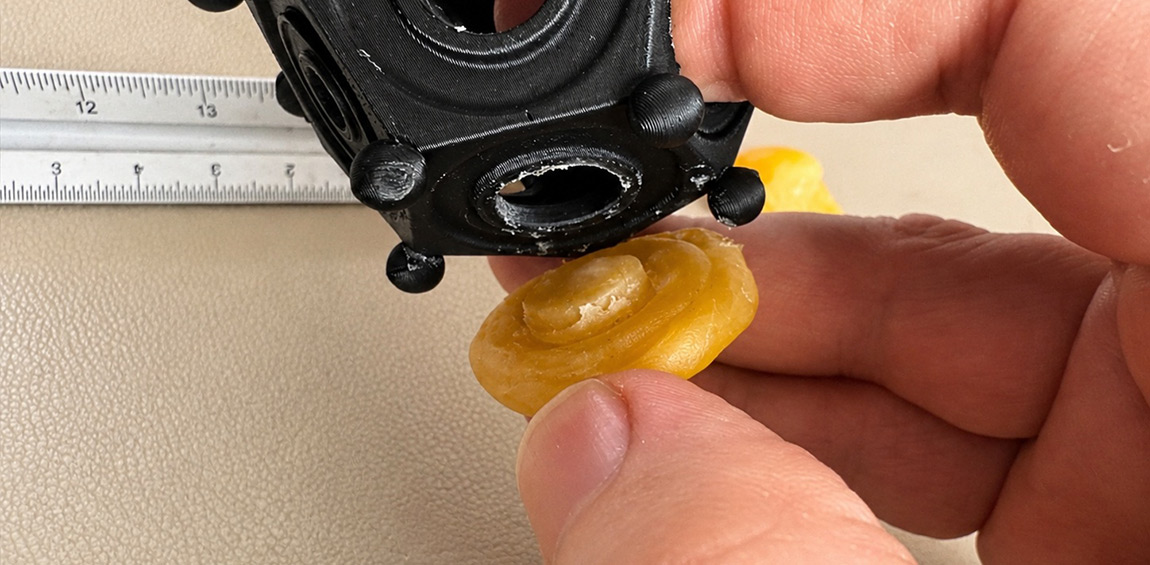
Roman dodecahedra are hollow bronze objects dating to the 2nd–4th centuries AD, predominantly found in the north-western provinces of the Roman Empire (Guggenberger, 2013). Despite extensive debate, their function remains undocumented in contemporary sources and unresolved archaeologically. This study applies experimental archaeology to reassess whether the form of the Roman dodecahedron is consistent with use as a practical tool in administrative contexts. This study tests the hypothesis that dodecahedra functioned as forming aids for the production of standardised wax elements - such as bullae or related wax objects - used to secure cords, mark documents, or support identification. Using 3D-printed replicas and historically plausible wax mixtures, a series of forming trials was conducted to evaluate how the object’s geometry interacts with material behaviour...