

The content is published under Creative Commons Attribution 4.0 International license (CC BY 4.0).
Reviewed Article:
Jewels Created from Dirt: An Investigation into the Social Context behind Glass Manufacturing in Late Bronze Age Egypt
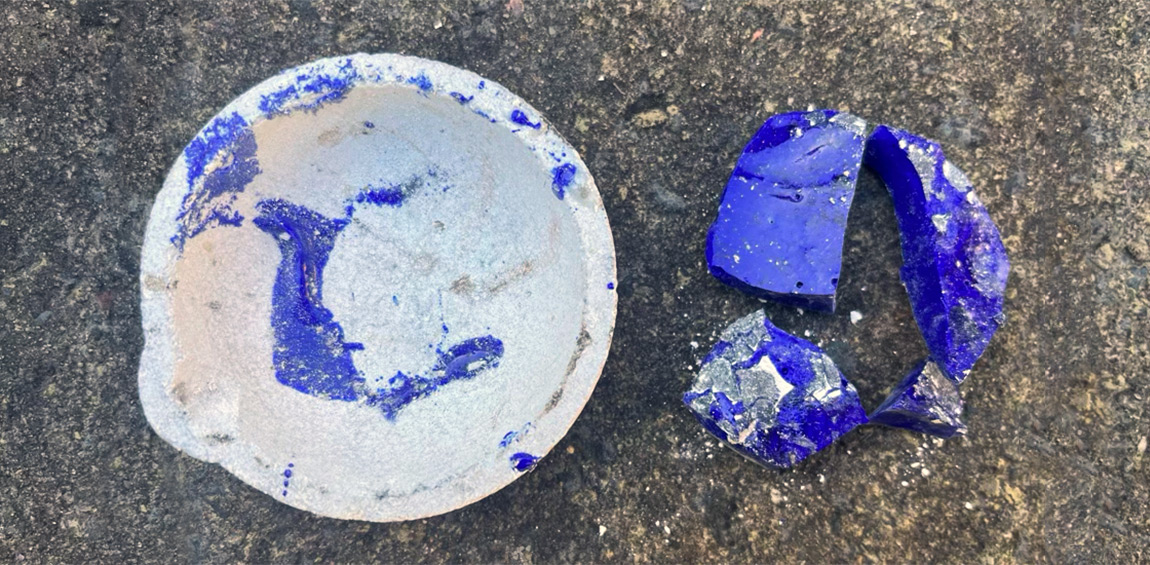
This study aims to understand the manufacturing process of glass ingots, particularly blue glass, through the use of different furnace types, including electrical and wood-fired furnaces in varying locations. The study also investigates the use of a separator in the manufacturing process, which would allow for the glass ingots to be easily separated from the crucibles. Various materials such as oil, pure lime, and crushed oyster shells are used as a parting layer in the glass crucibles; both the lime and oyster shell layers are successful in separating the ingots from the crucibles after firing. This study also aims to further the understanding of cross-craft interaction between glassmaking and other pyrotechnologies, such as metallurgy. Metallurgical crucibles are examined, and comparisons are drawn between them and crucibles that were used for glass manufacturing. The workshops excavated at sites such as Amarna, Qantir and Lisht are also considered to understand the skills that may have been needed to produce glass on an industrial scale. The experiments in this study suggest new avenues for research focusing on the manufacture of coloured glass ingots and the interactions between glassmaking and other technologies in Late Bronze Age Egypt.
Introduction
Glass is one of the few materials with humble beginnings, made out of resources that were considered very common. Glassmaking in Late Bronze Age (LBA) Egypt is directly connected to the earliest Mesopotamian glassmaking techniques, with the art being introduced by captured craftsmen from northern Mesopotamia (Degryse et al., 2015; Desoki, 2019: 12). The earliest development of glassmaking technology in the Mesopotamian and East Mediterranean Late Bronze Age (c.1550-1150 BC) provides a unique insight into the social and symbolic aspects of technological advancement and change in LBA Egypt, but many questions are still unanswered. In particular, there has been almost no investigation to date of: (i) the technology of glassmaking and the production of glass ingots; and (ii) the extent to which the production of glass in workshops at sites such as Amarna was intertwined with other crafts such as metallurgy and faience production. The connections the craftsmen had to both the product and its consumers are also an area that has been given very little attention in previous research. Was glassmaking a new social niche that developed as a result of learning Mesopotamian crafting techniques? How much was the value of glass understood by its craftsmen?
Aims and Objectives
Reconstructing the chaîne opératoire for opaque coloured glassmaking in Late Bronze Age Egypt.
- Practical experiments will be conducted at the Wolfson Laboratory, Newcastle University, in order to identify firing temperatures to reach and improve current methods for temperature maintenance. Experiments will be modelled on the 'partial batch melting 'method (Rehren 2000).
- Practical experimentation at the reconstructed furnace in Wallington and the furnace used in the Torreparedones Furnace project, Spain. Experiments will investigate how the use of traditional wood-fuel (which affects redox and firing regime) affects the results of 1A.
Reconstructing the manufacture of blue glass ingots in Late Bronze Age Amarna, Egypt: how were LBA glassmakers able to cast an ingot of glass and remove it from the crucible without breakage?
- Use the 'partial batch melting model 'under various firing regimes to investigate whether this is capable of producing a glass ingot that can be easily removed from the crucible.
- Investigate other lining techniques: initially use modern-day kiln batt, then investigate the use of different concentrations of CaO.
Contextualisation of findings in terms of the value and symbolic meaning of the earliest glass in Egypt. Did 'consumers' care about the manufacturing processes and techniques at all? To what extent was the value of glass drawn from the use of raw materials and/or the specialist knowledge required to produce it?
- Investigate Egyptian concepts of value/beauty from a theoretical standpoint, and how glass was used in royal settings and trade as a symbol of power or status.
- Utilise city layout plans and excavation reports to understand the combination of domestic and industrial workshops (Nicholson, 2007; Hodgkinson, 2019b).
Previous Work
The similarities in composition that LBA Egyptian glass had to Mesopotamian glasses led to speculations about whether Egyptian craftsmen possessed the skills to make glass during the early stage of its development or whether it was imported to the workshops from elsewhere (Paynter, 2009: 95). Plant ash was a particular component of LBA glass which allowed for questions around the earliest origins of glass in Egypt. Many ancient glasses were made using a mixture of plant ash and some form of ground quartz, which allowed for small compositional differences in glasses across the ancient world (Henderson, 2009: 131). Despite previous questions regarding whether glass was imported into Egypt, sites such as the Uluburun shipwreck confirm that glass was in fact being manufactured on a mass scale in LBA Egypt for a considerable period (Nicholson, Jackson and Trott, 1997: 148; Jackson and Nicholson, 2010: 295; Smirniou and Rehren, 2011: 59; Lankton, Pulak and Gratuze, 2022: 4).
Research into reconstructing ancient glasses has been previously conducted by Rehren (2000a, 2000b). Rehren's theory of 'total batch melting 'suggests that medieval and later glasses show very few changes after the initial batch compositions aside from changes in colourant additions and the conditions of the furnace. Rehren also postulated the theory of 'partial batch melting', which is more appropriate when attempting to reconstruct LBA glasses originating from Egypt and the Middle East. The 'partial batch melting 'method suggests that during the glassmaking process, a surplus of ingredients added to the crucibles may result in a material of a similar composition to LBA glass. At present, it is unclear if the initial materials needed for glass manufacture were measured out precisely before being added to the glass mix. Rehren and Freestone suggest that glass may have been manufactured and coloured in two separate stages (2015: 235).
Work has also been carried out regarding the layout of the workshops at Amarna, with suggestions of a tri-partite system of urban workshops in the city (Hodgkinson, 2019b). Although it is not possible to gain a complete picture of the importance of various working roles at sites such as Amarna due to preservation problems and archaeological visibility. We can gain a superficial view into the importance of different manual roles in LBA Egypt (Shaw, 2016: 15). The workshops at Amarna are thought to have been divided between private ownership and state-owned shops. It is currently unclear if the more 'private 'workshops were a dominant feature in LBA Egypt or whether the craftsmen were more typically under the employment of larger state-controlled workshops (Shaw, 2016: 18).
Background
Components and Composition
Most ancient glasses were based on a soda, lime and silica mix, with soda (Na2O) being the flux that lowers the melting temperature of the silica. Two sources of alkali flux were often used throughout glassmaking history: ashes from halophytic plants, which were often full of other impurities, and mineral soda (natron), which was relatively pure compared to plant ash. Lime was often incorporated accidentally with the silica through beach sand or through one of the impurities in plant ashes (Nicholson, 1993: 42; Shortland, Hatton and Tite, 2007: 186). Lime may also have been added on purpose from seashells or crushed limestone. Silica was the glass former and was incorporated through sand or crushed quartz pebbles from riverbeds. Although not all ancient glasses were made to this recipe, it is thought to be the oldest method for glassmaking and was used well into the Roman period (Freestone, 2016).
Glass Furnaces, Crucibles and Ingots
Glassmaking crucibles and furnaces found at Tell el-Amarna, Qantir, and Lisht indicate that glass production across Late Bronze Age (LBA) Egypt was extensive (Rehren, 2000: 21). The site of Qantir, ancient Pi-Ramesse is thought to be one of the later glass production sites in LBA Egypt (Smirniou and Rehren, 2011: 76). Active between c. 1279 - 1213 BC (Jackson and Nicholson, 2023: 1), Qantir specialised in the production of red glass, the extensive evidence at this site however paved the way for investigations into glass manufacturing at both Amarna and Lisht (Rehren, 2021: 63). Lisht is also thought to be a major glass production site, the glass recovered from Lisht however has been shown to be of a lower quality than the glass recovered from Amarna and Qantir (Smirniou, Rehren and Gratuze, 2018: 511). The most contextualised site for glassmaking evidence is by far the city of Amarna (c. 1352 - 1332 BC). First excavated by Petrie (1894: 25), Amarna yielded what he believed to be multiple glass factories and glazing works dating to the New Kingdom (c. 1295 - 1096 BC)).
Petrie's initial excavations of Amarna were continued by Nicholson (2007) and revealed two kilns thought to have been used in glass manufacturing (See Figures 1 and 2). Nicholson's findings also include multiple cylindrical vessels, which are assumed to be the crucibles used for manufacturing glass ingots. The cylindrical vessels found at the site are very similar in measurements to the ingots retrieved from the Uluburun shipwreck and many of the artefacts appear to have a calcareous slip or lining on the interior of the vessels, suggesting that some sort of lining was used in the firing process to separate the glass from the crucibles (Nicholson and Jackson, 2007: 90).
Furnace Variations Across Late Bronze Age Egypt
Throughout this study, the variation in furnace designs, albeit incidental, developed several hypotheses in relation to glass manufacturing. The glass kilns discovered at Amarna differed significantly from kilns across Egypt that were known for pottery making and metallurgy, leading to the conclusion that Amarna was primarily a site for glass production. This was particularly due to the large amounts of slag discovered around the site (Nicholson and Jackson, 2007a: 157). Pottery waste is common, and metallurgy produces slag as a by-product in pyrotechnology. Glass is recyclable and does not have a slag by-product, so it is arguably less visible than other manufacturing processes. Although the craftsmen at Amarna and across the LBA would be far more skilled at manufacturing glass in wood-fired furnaces than those of use in the modern day, it is clear from the experiments conducted at both the Torreparedones project and at Wallington that crucibles inside the furnace could be displaced extremely easily simply as a result of stoking the furnace. Therefore, it is likely that the glass melt was often disrupted during manufacture, leading to higher amounts of waste than would be typical at a pottery-making or metallurgical workshop.
Excavations at the site of Qantir revealed substantial amounts of green glass, although microscopic analysis proved that this glass was originally red (Rehren and Pusch, 1997: 135). The crucibles recovered at Qantir also displayed various 'hot spots', thought to be made by blowpipes which were used to maintain the high temperatures around the crucibles during firing (Rehren, 1997: 365). It is generally agreed that the glass furnaces in LBA Egypt were capable of reaching temperatures of 1050-1100°C, although the layout and structure of furnaces in glass workshops may have differed significantly. Workshop area Q I at Qantir revealed a range of furnaces and hearths. These areas are distributed evenly around a central circular feature with traces of some sort of superstructure (Rehren and Pusch, 1997: 138; Shortland, 2012: 94). This furnace structure differs significantly from that of the workshops at Amarna. The workshops at Amarna appear to be clustered in small groups of 'slums 'which were situated between elite houses, following the design of the 'urban village 'model (Kemp, 2012: 299, 2018). The differences in design and structure of furnaces and workshops between LBA Egyptian sites may have influenced the rate and approach to glass manufacturing.
Egyptian sites such as Lisht were initially thought to have only been used as glassworking sites during the LBA due to the lack of evidence in the archaeological record (Smirniou, Rehren and Gratuze, 2018: 502-503). Recent research into the chemical signatures of glass fragments found at Lisht has revealed that there may have been alternative glass manufacturing methods used at these sites due to differences in furnace temperatures and firing regimes. The glass recovered from Lisht shares the standard soda-lime-silica composition as other glasses in LBA Egypt, with higher levels of magnesia and potash. The lime content in the Lisht glass is considerably lower than that of glasses from Qantir and Amarna, suggesting that the glass may have been fired at a lower temperature than it would have been at other LBA sites. As lime absorbs into the glass melt in higher temperatures (Merkel and Rehren, 2007: 2569; Tanimoto and Rehren, 2008: 208), the furnaces at Lisht are thought to have only been fired up to temperatures of around 800-900°C (Smirniou, Rehren and Gratuze, 2018: 511). Due to the lower firing temperatures of the Lisht furnaces, the glass from this site is described as being less well fused and of a lower quality than that of glass at sites such as Amarna (Keller, 1983: 25). As it has been proven that Lisht was a primary glass production centre in LBA Egypt, the lower quality of glass from this site raises questions regarding the size and types of furnaces that were being used in the manufacturing process.
Evidence from each of the experiments in this study has shown that vastly different results can be achieved when firing glass in different furnaces. This may suggest that there was a degree of cross-craft interaction between glass manufacturing and other professions, such as pottery making and metallurgical practices. Connections to the elite classes also may have had an impact on how well furnaces at different sites functioned. The pressure to create flawless glass may not have been as extreme at sites such as Lisht if it was not in fact connected to a royal trade industry.
The Development of Glass as a High-Status Material
Following the establishment of Tell el-Amarna under Akhenaten's reign, glass production across Egypt began to flourish. Although Amarna was one of the primary glass production centres in LBA Egypt (Hodgkinson and Bertram, 2020: 2), glass was traded and manufactured throughout the Mediterranean and the Near East (See Figure 3). Dark blue glass was used extensively throughout the 18th Dynasty and was often used to imitate precious stones such as lapis lazuli which was imported from the Sinai and present day Afghanistan (Hodgkinson et al., 2019: 36). The colour blue in LBA Egypt held special connotations to religion due to it being the colour of both the sky and the sea. Aspects of deities and elements were often depicted with blue inlays, which can be seen in how royalty was presented in the New Kingdom.
Blue glass was commonly used in palace and temple settings as well as burial settings throughout LBA Egypt, further implying that the possession of this material elevated the status of the owner. Cobalt blue glass, as well as red, yellow and white glass, are all thought to have associated symbolism with royalty and exoticism, which increased the desirability of these materials over that of copper blue and green glass (Duckworth, 2011: 217). The Amarna Letters, dating to the mid-14th century BC, frequently reference the import of glass into Egypt and the royal demand for high quality glass from the Near East (Bianchi, 2002: 115; Smirniou and Rehren, 2011: 59). The royal demand for glass, as well as its connections to decorum and royal ideologies suggests that glass was a material that separated the elites from the lower classes and acted as a symbol of status and authority for the monarch and those of a higher social status (Bianchi, 2002: 117). Although coloured glass has been shown to be equal in value to precious stones in Egypt, metals such as gold and silver surpassed glass in material value (Hodgkinson, 2019: 135).
Glass and the Theory of Value
The use of blue glass in particular separated the elites from the lower classes due to its symbolic connections to nature as well as aspects of Egyptian life which were linked very closely to deities such as Aten and Ra, who were associated with the sun (Singer, 2016). Many of the glass workshops in Amarna and other sites across Egypt were controlled by the state, which further suggests that glass was held in high esteem by those of higher status (Hodgkinson, 2019).
Understanding the true value of glass in Late Bronze Age Egypt may also be investigated through an understanding of the level of cross-craft interaction between glassmaking and other technologies. Cross-craft interaction in archaeology is often used to trace technological change over time and space to understand the overlap of skills used by people in the past. The craftspeople of LBA Egypt would have been highly skilled in the technology of glassmaking; there may be a possibility, however, that these craftspeople did not specialise in a single industry only. There are many components and variables to consider in relation to glass manufacturing, for example, the production of ceramic crucibles in which glass is fired. The furnaces used for the firing of glass would have also required a degree of skill to be constructed properly. Were these tasks the responsibility of the glass craftsmen to complete? If so, were the crucibles constructed in the same workshops that the glass was produced in, or were they manufactured by pottery craftsmen and then transported to glass workshops to be used in glassmaking?
Method
A range of experiments were carried out over the course of this project. Table 1 provides information on each glass batch fired throughout the project. Multiple types of furnaces were used throughout the experimentation section of this study, which provided a range of different results. The wood-fired furnaces at both the Torreparedones Furnace project and Wallington provided a reconstruction of the glass manufacturing process and allowed for multiple experiments to take place in quick succession. The Vecstar Furnace was extremely useful in regard to reaching specific temperatures and maintaining the temperature consistently. Although useful for achieving consistent temperatures, the modern furnace was not representative of ancient glassmaking. Each of the furnaces used in the experiments achieved highly useful results, although it was possible to produce only limited amounts of glass in all cases.
| Crucible # | Glass Charge | Crucible Material | Parting Layer | Glass Fused? |
| 1L | Chunks (1-5 mm) | Slip-Cast | None | Y |
| 2L | Chunks (1-5 mm) | Porcelain | None | Y |
| 3L | Powder (<1 mm) | Slip-Cast | None | Y |
| 4L | Powder (<1 mm) | Porcelain | None | Y |
| 1S | Glasma chunks (>10 mm) | Ceramic | Kiln batt (4 mm thick) | N |
| 2S | Glasma chunks (>10 mm) | Ceramic | Kiln batt (4 mm thick) | N |
| 1W | Chunks (1-5 mm) | Ceramic | Oil | Y |
| 2W | Chunks (1-5 mm) | Ceramic | Lime (1 mm thick) | N |
| 3W | Chunks (1-5 mm) | Ceramic | Lime (3 mm thick) | N |
| 4W | Chunks (1-5 mm) | Ceramic | None | Y |
| 5W | Chunks (1-5 mm) | Handmade clay | Crushed oyster shell (1 mm thick) | N |
| 6W | Chunks (1-5 mm) | Handmade clay | Crushed oyster shell (1 mm thick) | N |
| 7W | Chunks (1-5 mm) | Handmade clay | Crushed oyster shell (1 mm thick) | N |
| 8W | Chunks (1-5 mm) | Handmade clay | Lime (1 mm thick) | N |
| 9W | Chunks (1-5 mm) | Handmade clay | Lime (1 mm thick) | N |
Table 1. Master table of every glass batch in this study.
Wolfson Laboratory Experiments
In order to replicate the manufacturing processes of LBA Egyptian glass, it was first necessary to consider the design of the crucibles. In the laboratory phase, the size of the furnace chamber, availability of glass for experimentation, and the feasibility of working with hot glass in an indoor environment were factors in the decision to use smaller, shallower crucibles than those found in association with glass production in LBA Egypt. A batch of 19 crucibles (c. 6.5 cm diameter) was made with grogged stoneware clay (grog is a ceramic temper formed from fired and crushed pots, which mechanically strengthens the crucibles against thermal shock). The crucibles were made by finger-pinching, then air-dried and fired to 1150°C in the Vecstar Furnace (See Chart 1).
| Reference Point | Definition | Viscosity | 96% SiO2 (°C) | soda - lime - silica (°C) |
| Working Point | Sufficiently soft for shaping. | 104 | - | 1000 |
| Softening Point | Glass tubes can be bent in a flame. | 107,6 | 1500 | 700 |
| Annealing Point | Internal stresses removed in a few minutes. | 1013,4 | 900 | 510 |
| Strain Point | Highest temperature from which the glass can be rapidly cooled without serious internal stress. | 1014,5 | 820 | 470 |
Table 2. Table displaying various phases glass goes through depending on temperature and viscosity.
Based on previous research by Brachlow (2012: 120), it was hypothesised that glass ingots might have been removed from their crucibles at a temperature below the glass-melting temperature but within the range of temperatures at which glass is still relatively soft. The glass working range is dependent on the viscosity of the material, as is the annealing process, which is the point at which internal stress can be relieved in order to avoid the glass cracking (See Figure 4). See Table 2 for a tabulated explanation of each phase. The cobalt blue glass had responded very well to previous firing regimes, with the resultant material closely resembling LBA cobalt-coloured glass. Two 25ml porcelain crucibles were used for this test alongside two previously handmade, slip-cast crucibles of the same volume and approximately the same dimensions. To test the necessity of finely grinding the glass for future experiments, which depending on the type of glass used could take up to an hour, two samples of the cobalt-blue glass were crushed into a fine powder (1L and 2L) using a mortar and pestle, whilst two more were added in 1-5 mm chunks (3L and 4L) (See Table 3). These were then fired to 1050°C in the Vecstar Furnace (See Chart 2).
| Crucible # | Glass Charge | Crucible Material | Glass Fused? |
| 1L | Chunks (1-5 mm) | Slip-Cast | Y |
| 2L | Chunks (1-5 mm) | Porcelain | Y |
| 3L | Powder (<1 mm) | Slip-Cast | Y |
| 4L | Powder (<1 mm) | Porcelain | Y |
Table 3. Information on each batch of glass used in the Wolfson Laboratory experiments.
Torreparedones Furnace Experiments
In order to test the feasibility of separator use in a traditional wood-fired furnace with larger crucibles, tests were also undertaken at the Torreparedones Furnace Project, July 2023. The project aimed to reconstruct and operate a large 12th-century glassworking furnace excavated in Murcia, Spain (John Pearson, pers. comm.) (See Figure 5).
Prior to experimenting with the use of different separators, it was hoped to test the feasibility that a parting layer would allow the resultant ingot to be easily removed from and retain the form of the crucible. For this reason, the initial separator used was a modern 'kiln batt wash', used to prevent pottery glazes from adhering to the kiln furniture. Kiln batt generally consists of alumina, sourced from kaolin clay, as well as silica and zirconium. Silica and alumina-based kiln batts are typically used for lower firing temperatures (950°C - 1305°C), whereas zirconium-based kiln batts are reserved for higher firing temperatures due to their higher melting point (1855°C) (Grenson, 2022). The kiln batt was mixed with water to create a paste separator, which was applied throughout the interior of the crucible to approximately 4 mm in
thickness (See Figure 6). Two ceramic crucibles (c. 12 cm diameter) were used for each batch of experiments. Due to the high porosity of ceramic material, it is generally a good thermal insulator (Rehren and Pusch, 1997: 137-138). The glass used was 'Glasma', a colourless soda-lime-silica material typically used specifically in modern glass studios. Glasma has a melting temperature of approximately 1275°C and can be worked from 1120°C (Studio Glass Batch, 2023). The glasma was added into the lined crucible in large chunks (>10 mm) without crushing and grinding (See Figure 7). Two crucibles were fired, one on each night of the furnace operation (1S and 2S). They were added to the furnace already charged with lining and glass, at c. 300°C and gradually raised over 2-4 hours (See Figure 8). Although temperatures fluctuated due to the challenges of stoking this large furnace, it maintained temperatures between 950°C and 1050°C for approximately 2 hours on the first night, and 4 hours on the second night.
Although thermocouples were attached to the furnace, no more precise record of the temperature regime was kept because of logistical challenges encountered by the project.
Wallington Furnace Experiments
Following the Spanish Furnace Project, experiments were carried out at the Old Sawmill, Wallington National Trust Property, using a traditional, clay-built wood-fired furnace constructed there by the PEGG Research Group, Newcastle University, in 2022 (See Figure 9). Because there was only a limited supply of LBA replica glass, it was decided to use cobalt-blue Murano glass lampworking canes (Effetre 104) for further experiments due to their similar chemistry (soda-lime-silica) to LBA glass, and the homogeneity of their composition, which reduces experimental error. Ten blue Murano canes (Opq Med Lapis 591242) were crushed and ground using a pestle and mortar (See Figure 10). Four ceramic crucibles (c. 6.5 cm diameter) were used for this experiment, the separators for each crucible are as follows:
| Crucible # | Glass Charge | Parting Layer | Glass Fused? |
| 1W | Chunks (1-5 mm) | Oil | Y |
| 2W | Chunks (1-5 mm) | Lime (1 mm thick) | N |
| 3W | Chunks (1-5 mm) | Lime (3 mm thick) | N |
| 4W | Chunks (1-5 mm) | None | Y |
Table 4. Information on the first batch of glass used in the Wallington Furnace experiments.
The lime powder used in the experiment was mixed with water to form a paste and added to the crucibles. The crucibles (See Figure 11) were then added to the furnace at approximately 350°C. No thermocouples were available, but approximate temperatures were gauged based upon the prior experience of Chloe Duckworth (pers. comm.), who operated the stoking of the furnace. A temperature of 900°C was achieved after two hours, and the crucibles were removed from the furnace.
It was also decided to test crushed oyster shells as a separator. As oyster shells are CaCO3 (calcium carbonate), the shells first needed to be fired to 950°C to produce CaO, or quicklime. The shell fragments were placed in graphite and stoneware crucibles (See Figure 12), which were then placed in a Carbolite Gero CWF 11/05 + 301 Controller Muffle Furnace located at the Wolfson Laboratory. This furnace was used in place of the Vecstar Furnace as it was able to rise to a temperature of 950°C in a very short time. Following firing, the oyster shells were then crushed to a fine powder using a pestle and mortar (See Figure 13), and a fine sieve was also used to provide particles of uniform size. Five of the stoneware clay crucibles made in the Wolfson Laboratory were used in this experiment. The crushed shell was then mixed with water to create a paste and added to three of the crucibles in a 1 mm thick lining. Pure lime (CaO) was also used in two of the crucibles; this was also mixed with water to make a paste, and a 1 mm thick lining was made. The glass used for this batch of experiments was a mix of the Murano blue canes as well as the remaining cobalt-blue glass manufactured in the Wolfson Laboratory. The separators for this batch are as follows:
| Crucible # | Glass Charge | Parting Layer | Glass Fused? |
| 5W | Chunks (1-5 mm) | Crushed oyster shell (1 mm thick) | N |
| 6W | Chunks (1-5 mm) | Crushed oyster shell (1 mm thick) | N |
| 7W | Chunks (1-5 mm) | Crushed oyster shell (1 mm thick) | N |
| 8W | Chunks (1-5 mm) | Lime (1 mm thick) | N |
| 9W | Chunks (1-5 mm) | Lime (1 mm thick) | N |
Table 5. Information on the second batch of glass used in the Wallington Furnace experiments.
It was decided that three of the crucibles would be removed from the furnace at peak temperature, whilst the remaining two would be allowed to cool slightly before being removed. The crucibles (See Figure 14) were added to the furnace at a temperature of approximately 350°C. Similar to the previous experiments at Wallington, no thermocouples were available, but temperatures were gauged approximately based upon prior experience. A temperature of around 950°C was achieved after an hour of stoking. The crucibles were then removed from the furnace.
Results
Wolfson Laboratory
The cobalt blue glass fired in the Vecstar Furnace did appear to be more malleable when removed from the furnace (See Figure 15). Both the powdered samples and the crushed samples appeared to have the same result. Despite the glass appearing more malleable when removed from the furnace, it still adhered to the crucibles, so separating the glass was not possible. It may be possible that the colourant in the glass had some sort of influence on the firing process; further testing with colourless glass and glasses containing other colourants should be considered.
Torreparedones Furnace Project
The first batch of glass fired in the furnace yielded promising results. The crucible was displaced during the stoking of the furnace (See Figure 16), which resulted in some of the glass mix being lost in the furnace fire. A considerable amount of the glasma, however, was easily separated from the crucible during this displacement (See Figures 17 and 18), which suggested that the glass mix would separate from the crucible with more firing time.
The second batch of experiments on this project also yielded promising results. After being placed in the furnace at 300°C, explosions were heard from inside the furnace when it reached approximately 700°C. Due to this, the experiments were stopped. The following day, the crucibles were removed from the furnace. Whilst not in a perfect ingot form, the glasma separated from the crucible easily and did not appear to adhere to the crucible at all (See Figures 19, 20 and 21).
Wallington
Following the first firing process in the furnace at Wallington, a range of results were seen in the crucibles (See Figure 22). Crucible 2W, containing the 1 mm thick lime lining, showed promising results. At the time of removal from the furnace, it appeared that the glass was beginning to separate from the lining; however, due to a lack of sufficient tools to remove the crucibles from the furnace, it was not possible to properly separate the glass from the crucible. As the glass cooled completely, however, it gradually separated from the lime lining and was removed from the crucible in several small parts (See Figure 23). A layer of lime lining is present on the glass fragments (See Figure 24). Crucible 3W, which had a lining of 3 mm, also yielded positive results. As stated previously, a lack of sufficient tools meant that the crucibles could not be properly removed from the furnace. The crucible was displaced during firing, and the glass separated from the crucible in an almost perfect ingot form (See Figure 25). It was not possible to retrieve the glass from inside the furnace. Crucible 4W, which had no lining, completely adhered to the glass, which was as expected. Crucible 1W containing the oil lining caused the glass to react slightly with the crucible, and it was also completely adhered to the crucible.
The second batch of experiments at Wallington proved hugely successful. Three of the crucibles: 5W, 6W, and 8W were removed when the furnace temperature was at a peak of 950°C. 8W had not fully formed into an ingot shape at the time of removal; therefore, it lacked proper shape. Despite this, the glass separated easily from the crucible and appeared to have no contamination with the crucible or lime separator. Crucibles 5W and 6W also separated from the crucibles with ease, each of them forming an ingot shape (See Figure 26).
The remaining crucibles: 7W and 9W, were removed from the furnace and allowed to cool slightly before an attempt was made to separate the glass from the crucibles. 7W unfortunately had debris from the furnace attached to the glass, which could not be removed before the glass cooled. Both 7W and 9W separated easily from the crucibles after they had sufficiently cooled, however. Both fragments formed an ingot shape during the firing process (See Figures 27 and 48). A residual lime lining can also be seen on all the glass ingots removed from the crucibles.
Discussion
The findings from the experiments and their connections to LBA glass production offer several avenues for discussion. Due to this, four main areas for discussion are noted in this section, which elaborate on the production of Egyptian glass and the value it held in LBA society.
The Use of Lime as a Separator
Following the success of using kiln batt as a separator on the Torreparedones project, the use of lime as a separator during the experiments at Wallington led to several hypotheses. Firstly, the database compiled in this study of each of the cylindrical vessels found at Amarna may point towards evidence of a lime separator (See Appendix 1). A significant number of the crucibles described in the database are described as having a calcareous slip, often coating the interior of the vessels. Although the calcareous slip is not present on all crucibles with glass remains, it is mentioned frequently in various works regarding LBA Egyptian glass and the 'partial batch melting 'model (Nicholson and Jackson, 2007b: 90; Tanimoto and Rehren, 2008: 2567). Previously, the calcareous slip has been thought to be a result of unreacted batch materials left behind during the manufacturing process, leading to Rehren's theory of 'partial batch melting 'and 'total batch melting '(Rehren, 2000a: 22). The experiments conducted at the Torreparedones project and also at Wallington suggest that the slip may be the remains of a lime separator used to prevent the glass melt fusing to the crucibles.
Shortland (2012: 103) suggests that the level of lime needed in LBA glass averages around 8% CaO. He also suggests that aside from plant ash this may have been added through shell or limestone which contributed to the lime parting layer. Glass manufacturing crucibles from both Amarna and Qantir show evidence of a lime parting layer on the interior of the vessels, thought to have been used to prevent contamination by ferruginous clay and assist in the release of the glass from the crucibles (Rehren and Pusch, 2005: 1756). Further experimental work by Merkel and Rehren (2007) suggested that the parting layer on the LBA crucibles may have consisted of slaked lime, silica, and crushed ash tray ceramic, based on analysis of a crucible sample recovered from Qantir. Merkel and Rehren also suggest that due to the high firing temperatures used in glass manufacturing it is seemingly unlikely that calcium carbonate was used as a parting layer as it would react with the surrounding materials (2007: 209), this is also supported by Smirniou and Rehren (2011: 65). The first set of experiments conducted at Wallington for this project suggest that a variation of slaked lime was used to separate the coloured glass from the crucibles during the production stage and assisted in forming the ingot shape. The possibility of using shells was also confirmed in the second set of experiments at Wallington. Although we cannot be sure based on this study alone whether crushed and ground shells were completely reacted during firing in the muffle furnace, which implies that having at least some calcium carbonate (as opposed to pure calcium oxide) in the mix with the water would not necessarily prevent the successful formation and separation of ingots.
As the glass ingots created in this study were easily removed from the crucibles at varying temperatures, this may suggest that glass of different colours were removed from the furnaces at different times in order to form the desired shape. The residual lime layer left on the ingots, previously thought to be unreacted batch materials, is almost certainly the residual parting layer left behind from the manufacturing process. Previous work suggesting that the lime layer assisted in preventing contamination by the clay crucibles (Rehren and Pusch, 2005: 1756) is also supported by the experiments in Wallington. The glass ingots had little to no reaction with the surrounding crucibles, which suggests that not only does the lime layer act as a separator for the glass, but also as a form of protectant from impurities that may be in the clay crucibles. Evidence of the calcareous slip in the cylindrical vessels recovered from Amarna also points to a lime parting layer consisting of shells. The crucibles used in the Wallington experiments each have traces of the parting layer adhered to the sides of the vessels (See Figure 29). Although the crucibles used in this study are on a smaller scale than those used at Amarna, the evidence of a calcareous slip being present on both sets of crucibles further supports the use of shells as a separator.
The use of lime as a separator has proven successful when used for cobalt-blue glass. Differences in coloured glasses may impact this, however. Work by Duckworth et al. (2012) using ToF-SIMS analysis found significant chemical differences in various coloured LBA Egyptian glass. Lead-antimonate yellow glass, in particular, has proven to be notably different in composition to other glasses. The key difference is in the way the opacifying inclusions are distributed within the glass, and the morphology, which differs from those in white and turquoise opaque glasses. Lead antimonate yellow glass has clumps and streaks of inclusions, which often have sub-angular forms and a heterogeneous internal chemical structure. These point to the likelihood that the inclusions had to be added to a pre-formed glass and stirred in while it was viscous and below the full melting temperature. On the other hand, the calcium antimonate inclusions in white and turquoise opaque glasses are consistent in appearance with having precipitated out from a melt. Rehren (2001) suggests that variations in plant ash may be a contributing factor to compositional differences in glass. It may be possible that the chemical differences in the colourant-opacifiers used in LBA glass interacted with the lime parting layer in different ways during the firing process. If this is the case, higher or lower amounts of lime may have been incorporated into the glass melt during production, subsequently altering both the opacity and colour of the base glass.
Cross-Craft Interaction in Late Bronze Age Egyptian Workshops
It is well known that glassmaking followed metallurgical and faience production; the use of metals such as copper oxides for colourants in glass suggests that it was developed from an awareness of the properties of metals (Fenn, 2015: 392). The presence of copper slag on the crucible fragments from Amarna may have been a result of smelting copper to use it as a colourant in the glass manufacturing process. Skills in ceramic production were also likely to have been a part of the glassmaking world due to the extensive number of crucibles necessary to produce glass ingots on an industrial scale. Although initially it was suggested that the workshops at Amarna were very loosely organised and difficult to differentiate between crafts (Nicholson and Jackson, 2018: 3; Hodgkinson, 2019a: 168), recent studies suggest that the smaller domestic workshops at Amarna often included resources for faience and metal production as well as glass production (Hodgkinson et al., 2019: 48).
One of the aims of this study is to understand how the craft of glassmaking was perceived by both the craftsmen and the consumer in LBA Egypt. It may be the case that the presence of metallurgy and faience kilns in smaller workshops was due to the process of glassmaking being deemed less valuable than the glass itself; therefore, it was left to the lower-class workshops to manufacture materials such as the colourants to send to the larger workshops for processing. If this is the case, it may grant valuable insight into the social status of glassmaking, and separate the end product. Although precious metals such as gold and silver were deemed far more valuable than glass, it may be that more practical metals, such as copper, were less appreciated due to a lack of rarity by the time glass became a widespread material. The same could be said for ceramic materials such as crucibles. The crucible fabric from LBA Egyptian sites typically consists of local Nile clay (Rehren, 1997: 356), of which there would have been no shortage. It may be that, due to the commonplace nature of this material, it was again left to the smaller workshops to produce the crucibles needed for glass manufacturing. On the other hand, glass manufacturing was a swiftly developing industry in LBA Egypt; therefore, the larger workshops and factories that were under royal control would surely have needed a constant supply of colourants for the glass, and crucibles due to their rather fragile nature. The craftspeople may have been skilled in each aspect of the glassmaking process and simply worked in rotations around the different workshops, or perhaps they remained separated from each step and perfected their skills in a very specific part of the process.
The Value of Glass
Understanding the value of glass in LBA Egypt is greatly enhanced through an appreciation of the practice of glassmaking itself, despite the production of glass previously being a study area that was generally neglected (Rehren and Pusch, 2008: 14). The level of skill required to create glass of varying colours, as well as maintaining consistent and high quality materials only further displays the status that was placed on glass during the New Kingdom.
In regard to cobalt-blue glass, it is well known that it was under some degree of royal control throughout the LBA which links the material directly to glass production in cities such as Amarna (Jackson and Nicholson, 2023: 2). The value of blue glass is closely linked to symbolism regarding the sea and the sky as well as having connections to lapis lazuli (Shortland, 2012: 55; Hodgkinson et al., 2019: 36). Evidence of a red ingot found at Amarna may also hold other connotations for why blue glass was so commonly manufactured, however. The glass ingot (See Figure 30), now held at the Garstang Museum, University of Liverpool, is thought to have possibly been the result of recycling copper glass due to the muddy colour; this avenue of research should be further explored at a future date. Chemical analysis of the ingot also suggests that the glass was originally red due to the concentration of copper oxide (11.42 wt%) and antimony oxide (1.62 wt%). The quality of the ingot is considerably lower than other glass ingots recovered from Amarna; it does suggest that other glass colours aside from blue may have been manufactured at the site. Currently, the Garstang ingot is one of the only examples of red glass that may have been produced at Amarna. Colourants such as antimony were often acquired through long-distance trade, which may also have influenced the value of various glass colours (Duckworth, 2012: 322). The skill required to produce red and yellow glass was considerable due to the unpredictable nature of the colourants used; it could be possible that the Garstang ingot was only intended for local use in Amarna due to the lower quality of the ingot (Jackson and Nicholson, 2023). Regarding cobalt, this material appeared to have been difficult to acquire at times, leading to a particular shade of blue glass known as 'Amarna Blue'. The difficulties in sourcing cobalt may have also been a factor in the value of the cobalt-blue glass manufactured in LBA Egypt.
The location of the production sites of glass in LBA Egypt appears to follow the relocation of royal centres over time (Jackson and Nicholson, 2023: 7). Alongside this, the transfer of ingots across significant distances, often between major political powers only further supports that glass was hugely valuable across the wider ancient world (Rehren and Pusch, 2008: 15). Although the status of glass was not held as highly as precious stones and metals, as shown through the vast amount of waste heaps found at Amarna (Hodgkinson, 2019a: 168), the status of glass may have been of a political nature as well as a symbolic one. The concept of value in the ancient world is defined loosely due to the systems of value among commodities still evolving, particularly during the time that glass production in LBA Egypt was at its peak (Renfrew, 2012: 250). Art and value were commonly intertwined when it came to valuable materials such as glass and precious stones (Papadopoulos, 2012: 264). In particular, the Egyptian values of decorum and restraint were closely tied to these materials (Lichtheim, 1997: 31; Bianchi, 2002: 117). Bartering systems in the ancient world recognised from an early stage that value was equivalent amongst commodities which allowed for negotiations between societies regarding the exchange of goods (Renfrew, 2012: 251). Glass imported from elsewhere has been argued to have possibly held more value than that of local Egyptian glass for the Pharaoh and the elites (Shortland, 2007: 149), this may have been due to these areas having a greater availability of materials to make high quality glass. The Amarna letters request glass as a raw material from neighbouring countries; this may be due to it being relatively new at the time the letters were created. This reference to glass in the letters suggests that it was held in high esteem. Materials in correspondence, such as the Amarna letters, were often listed in order of value; in this instance, glass is listed directly below a gold object and above several other objects made of gold with inlaid stones (Duckworth, 2011: 87); this further reinforces the value that glass held in LBA Egypt.
The experiments conducted in this study suggest that cobalt-blue glass was commonly manufactured in Amarna, not only because of its prestigious symbolic qualities, but also due to the consistency of its composition, which allowed its craftsmen to produce vast quantities of it with little difficulty. The presence of red glass at Amarna suggests that other colours may have been produced for more local use, and the value of coloured glasses may have differed between glass production sites despite the general symbolic values attached to the material. It is currently unclear whether the Egyptian values that were attached to glass and its colourants were a belief which was held by the majority of LBA Egyptian society, or whether this was simply a political motive pursued by the elites of the ancient world (Appadurai, 2014). The relationship that the craftsmen and lower classes had with this material is a topic of research that should be considered in order to fully understand the true value of glass in LBA Egyptian society.
Further Research and Conclusions
This section will consider how the experiments conducted in this study have contributed to (i) understanding the manufacturing process of glass in LBA Egypt and (ii) how glass was understood by the craftsmen and its consumers, as well as how the relationships they may have had with this material differed from the elites of LBA Egyptian society.
The Chaîne Opératoire of Glassmaking
The experiments conducted in this study have greatly assisted in understanding the chaîne opératoire of glassmaking in LBA Egypt. The combined use of the Vecstar Furnace at the Wolfson Laboratory, as well as the wood-fired furnaces at both the Torreparedones project and Wallington, allowed a range of conclusions to be drawn about the exact manufacturing process of glass in the LBA. It is clear from the experiments in this study that although modern-day furnaces are highly useful in reaching precise temperatures and maintaining consistent firing regimes, they do not obtain the desired results with regard to LBA glass ingots. The differences in the size and design of the furnaces on the Torreparedones project and at Wallington illustrate that there is a range of variables to be tested in future research.
It may be the case that if furnace designs did indeed vary between sites, they may have been used for different steps in the glass manufacturing process. It is currently unclear whether glass furnaces and kilns in LBA Egypt had a range of designs; however, there is a possibility that furnaces on a far smaller scale than previously thought were used for the working of glass beads and decorations (Hodgkinson, 2020). Due to the variations in glass from sites such as Amarna and Lisht, however, as well as the differing designs found in workshops across sites, it may not be unfeasible to suggest that Egyptian craftsmen had a range of firing processes at their disposal.
The Production of Glass Ingots
Possibly the most significant achievement in this study has been furthering the understanding of the production of glass ingots in LBA Egypt. For this study, we can assume some form of crushed shell or limestone was used as the lining for glass ingots, which assisted in not only preventing contamination from the crucibles but also facilitating the removal of the ingots from the crucibles after firing. It must be borne in mind, however, that there may be other reasons for the presence of a lime layer in the crucibles, as we were unable to test the production of other glass colours, such as lead-antimonate yellow. The residual shell lining left in the crucibles used at Wallington correlates with the calcareous slip so often found in the cylindrical vessels recovered from Amarna, further supporting the use of shells as a separator for glass ingots. Although this study has greatly assisted in understanding how blue glass ingots were manufactured, the manufacturing process of other glass colours remains a question.
Glass and the Glass Maker
Throughout this study, understanding the relationship that craftspeople had with glass, alongside those who used glass as a commodity in LBA Egypt, has been an underlying aim. The relationships that people had with this material played a huge role in the scale of manufacture throughout the New Kingdom. The extent of royal control placed on blue glass at Amarna is displayed through the manufacture of the glass ingots, such as those found on the Uluburun shipwreck, as well as the relocation of primary glass production centres to follow the centre of royal control over time. This control over glass in LBA Egypt displays a clear picture of how the elites of society viewed glass and how valuable it was to them. The relationship the craftsmen had with glass as a material is still unclear, however.
The idea that glass may have been used as a political tool by the elites has also been expanded upon throughout this study. The idea of value in LBA Egypt and the wider ancient world is closely linked with beauty, art and money, which is evident through the portrayal of glass as a royal material. The use of the royal cartouche alongside reliefs and passages regarding glass is evidence of its status and the relationships the elites of LBA Egyptian society held with this material. It is generally far more difficult to understand the actions and behaviours of normal people of ancient societies due to them all too often being omitted from the archaeological record.
Concluding Remarks
The experiments conducted throughout this study have provided a range of outcomes which have been a source of understanding and opportunity for future research regarding the manufacturing of glass in LBA Egypt. Steps are being taken in the archaeological research of ingot manufacturing, as well as how glass was understood by the Egyptian people. There remains a significant lack of understanding regarding firing regimes and the temperatures at which different glass colours were created.
The value of glass in LBA Egyptian society is yet to be fully explored. Work conducted in this study has assisted in furthering our understanding of glass as a commodity in the ancient world alongside works such as Appadurai (2014) and Papadopoulos (2012). The degree of cross-craft interaction between glassmaking, metallurgy and pottery production is considerable due to the necessity of crafting glassmaking crucibles and integrating the colourants into the glass melt during the production stage. Although strides should still be taken to investigate the structure of workshops across Egyptian glass production sites, this study has assisted in understanding how variations in workshop layouts and designs may have impacted the quality of glass produced at varying sites. To acknowledge the relationship the craftspeople in LBA Egypt had with this material, understanding the environment they worked in is an essential step for further research.
Acknowledgements
This dissertation would not have been possible without the help of so many incredible people. I’d first like to thank my supervisor, Dr Chloe Duckworth, for her incredible support and guidance throughout this project and for providing me with so many wonderful opportunities over this last summer. I’d also like to thank Diana Blumberg and Dr Eline Van Asperen for their wonderful help in the Wolfson Laboratory and for allowing me so much time for my experiments.
I’d like to give a special thank you to everyone who was a part of the Spanish Furnace Project earlier this summer. A significant part of this dissertation would not have been possible without that project. Thank you for a truly incredible fieldwork experience and for letting me carry out my little experiments in our beloved furnace. I’d also like to thank the staff at the Petrie Museum of Egyptology for so kindly allowing me access to some incredible artefacts as part of my research. Once again, this dissertation would not have been possible without it.
Finally, I’d like to thank my incredible friends and family for helping me complete this insane project of mine. Whether that involved lying on the floor of the postgraduate study room or proofreading endless chapters, I’m grateful for all of it. Thank you.
Country
- Egypt
Bibliography
Appadurai, A., 2014. 'Introduction: commodities and the politics of value', in Appadurai, A., The social life of things: commodities in cultural perspective. Cambridge: Cambridge University Press, pp. 3-63.
Bianchi, R.S., 2002. 'Ancient Glass from the Cultural Perspective of Ancient Egypt', in Schlick-Notle, B., Bernheimer, G. M., and Barag, D., Reflections on Ancient Glass from the Borowski Collection: Bible Lands Museum Journal. Edited by R. S. Bianchi. Mainz am Rhein: von Zabern, pp. 111-122.
Brachlow, H., 2012. Shaping Colour: Density, Light and Form in Solid Glass Sculpture. PhD Thesis. Royal College of Art.
Degryse, P., A. Boyce, N. Erb-Satullo, K. Eremin, S. Kirk, R. Scott, A. J. Shortland, R. Schneider, and M. Walton. 2010. 'Isotopic Discriminants between Late Bronze Age Glasses From Egypt And The Near East'. Archaeometry 52, pp. 380-88.
Degryse, P. et al., 2015. 'Isotopic investigation into the raw materials of Late Bronze Age glass making', Journal of Archaeological Science, 62, pp. 153-160.
Desoki, S.S.I., 2019. 'The Study of the Historical Development of Glass in Ancient Times', Majallat al-ʻimārah wa-al-funūn wa-al-ʻulūm al-insānīyah, 4(17), pp. 12-20.
Duckworth, C., 2011. The Created Stone: Chemical And Archaeological Perspectives On The Colour And Material Properties Of Early Egyptian Glass, 1500 - 1200 B.C. PhD Thesis. University of Nottingham.
Duckworth, C., 2012. 'Imitation, Artificiality and Creation: The Colour and Perception of the Earliest Glasses in New Kingdom Egypt', Cambridge Archaeological Journal, 22, pp. 309-327.
Duckworth, C. et al., 2012. 'Opacifiers in Late Bronze Age glasses: the use of ToF-SIMS to identify raw ingredients and production techniques', Journal of Archaeological Science, 39(7), pp. 2143-2152.
Fenn, T.R., 2015. 'A Review of Cross-craft Interactions Between the Development of Glass Production and the Pyrotechnologies of Metallurgy and other Vitreous Materials', Cambridge Archaeological Journal, 25(01), pp. 391-398. Available at: https://doi.org/10.1017/S0959774314001206.
Freestone, I. C., 1991. 'Looking into Glass'. In Science and the Past, edited by S. Bowman, 37-57. London: British Museum Press
Freestone, I.C., 2016. Pliny on Roman glassmaking. In Archaeology, History and Science (pp. 77-100). Routledge.
Freestone, I. C., P. Degryse, J. W. Lankton, B. Gratuze, and J. Schneider, 2018. 'HIMT, Glass Composition and Commodity Branding in the Primary Glass Industry'. In Things That Travelled: Mediterranean Glass in the First Millennium CE., by D. Rosenow, M. Phelps, A. Meek, and I. C. Freestone, 159-90. University College London
Grenson, J., 2022. 'Kiln Wash 101: Recipe & How to Use It Properly', 15+ Types of Kilns for Pottery - Your Options for Firing Clay. Available at: < https://typesofkilns.com/kiln-wash-recipe/#What_is_Kiln_Wash_Made_Of > [Accessed: 14 August 2023].
Henderson, J., 2009. 'The provenance of archaeological plant ash glasses', in A.J. Shortland, I.C. Freestone, and T. Rehren (eds) From Mine to Microscope: Advances in the Study of Ancient Technology. Oxbow Books, pp. 129-138.
Hodgkinson, A., 2016. 'Excavation of a Bead Workshop M50.14-16'. The Journal of Egyptian Archaeology 101, pp. 1-17.
Hodgkinson, A., 2019a. 'Manufacturing Colourful Glass Objects in New Kingdom Egypt: A Spatial and Statistical Analysis', in D. Warburton and S. Thavapalan (eds) The Value of Colour: Material and Economic Aspects in the Ancient World. Berlin: Edition Topoi, pp. 126-175.
Hodgkinson, A., 2019b. 'Preliminary Report on the Work Undertaken in the Main City South at Tell el-Amarna', Journal of Egyptian archaeology, 105(1), pp. 3-15.
Hodgkinson, A. et al., 2019. 'The use of Cobalt in 18th Dynasty Blue Glass from Amarna: the results from an on-site analysis using portable XRF technology', STAR: Science & Technology of Archaeological Research, 5(2), pp. 36-52.
Hodgkinson, A., and D. A. Frick. 2020. 'Identification of Cobalt-Coloured Egyptian Glass Objects by La-Icp-Ms: A Case Study From The 18th Dynasty Workshops at Amarna, Egypt'. Mediterranean Archaeology and Archaeometry 20, no. 1, pp. 45-57.
Hodgkinson, A. and Bertram, M., 2020. 'Working with fire: Making glass beads at Amarna using methods from metallurgical scenes', Journal of Archaeological Science: Reports, 33.
Jackson, C. M., 2005. 'Glassmaking in Bronze-Age Egypt'. Science 308, no. 5729, pp. 1750-52.
Jackson, C.M. and Nicholson, P.T., 2010. 'The provenance of some glass ingots from the Uluburun shipwreck', Journal of Archaeological Science, 37(2), pp. 295-301.
Jackson, C.M. and Nicholson, P.T., 2023. 'Simply red: A Late Bronze Age glass ingot from Amarna', Journal of Archaeological Science, 47, pp. 1-8.
Keller, C., 1983. 'Problems Iin Dating Glass Industries of The Egyptian New Kingdom: Examples From Malkata and Lisht', Journal of Glass Studies, 25, pp. 19-28.
Kemp, B., 2012. The city of Akhenaten and Nefertiti : Amarna and its people. London: Thames and Hudson.
Kemp, B., 2018. Ancient Egypt : Anatomy of a Civilization. Third Edition. New York: Routledge.
Kemp, B.J., 1977. 'The City of El-Amarna as a Source for the Study of Urban Society in Ancient Egypt', World Archaeology, 9(2), pp. 123-139.
Lankton, J.W., Pulak, C. and Gratuze, B., 2022. 'Glass ingots from the Uluburun shipwreck: Addition of glass cullet during manufacture and evidence for the changing context of New Kingdom Egyptian glass production in the late 18th Dynasty', Journal of Archaeological Science: Reports, 45, pp. 1-15.
Lichtheim, M., 1997. Moral Values in Ancient Egypt. Fribourg, Switzerland / Göttingen, Germany: University Press / Vandenhoeck & Ruprecht.
Mass, J. L., and M. T. Wypyski., 2002. 'Malkata and Lisht Glassmaking Technologies: Towards a Specific Link between Second Millennium BC'. Archaeometry 44, pp. 67-82.
Merkel, S. and Rehren, T., 2007. 'Parting layers, ash trays and Ramesside glassmaking: an experimental study', in E.B. Pusch and T. Rehren (eds) Hochtemperatur-Technologie in der Ramses-Stadt: Rubinglas für den Pharao. Hildesheim, Germany: Verlag Gebrüder Gerstenberg, pp. 201-220.
Mitchell, S., 2023. Glass Fit for a King: An Investigation into Manufacturing Methods and the Value of Glass in New Kingdom Egypt. Assignment for ARA8106, MA Archaeology. Newcastle University. Unpublished.
Nicholson, P.T., 1993. Egyptian Faience and Glass. Shire Egyptology.
Nicholson, P. T., 1995. 'Glassmaking and Glassworking at Amarna: Some New Work'. Journal of Glass Studies 37, pp. 11-19.
Nicholson, P.T., 2007. Brilliant Things for Akhenaten: The Production of Glass, Vitreous Materials and Pottery at Amarna Site O45.1. Egypt Exploration Society.
Nicholson, P.T., 2011. 'Glass Working, Use and Discard', UCLA Encyclopedia of Egyptology, 1(1), pp. 1-12.
Nicholson, P.T. and Hart, R., 2007. 'Excavations at Site O45.1', in Nicholson, P. T., Brilliant Things for Akhenaten: The Production of Glass, Vitreous Materials and Pottery at Amarna Site O45.1. Egypt Exploration Society, pp. 27-84.
Nicholson, P. T., and J. Henderson., 2000. 'Glass'. In Ancient Egyptian Materials and Technology, by J. Henderson, R. Morkot, E. J. Peltenburg, S. Quirke, M. Serpico, J. Tait, and R. White, 195-226. Cambridge University Press
Nicholson, P.T. and Jackson, C.M., 2000. 'Tell el-Amarna and the Glassmakers 'Workshop of the Second Millenium BC', in Pouilloux, J., La Route du verre. Ateliers primaires et secondaires du second millénaire av. J.-C. au Moyen Âge. Colloque organisé en 1989 par l'Association française pour l'Archéologie du Verre (AFAV). Lyon: Maison de l'Orient et de la Méditerranée, pp. 11-21.
Nicholson, P.T. and Jackson, C.M., 2007a. 'Compositional Analysis of the Vitreous Materials Found at Amarna', in Nicholson, P. T., Brilliant Things for Akhenaten: The Production of Glass, Vitreous Materials and Pottery at Amarna Site O45.1. Egypt Exploration Society, pp. 101-116.
Nicholson, P.T. and Jackson, C.M., 2007b. 'The Furnace Experiment', in Nicholson, P. T., Brilliant Things for Akhenaten: The Production of Glass, Vitreous Materials and Pottery at Amarna Site O45.1. Egypt Exploration Society, pp. 83-99.
Nicholson, P.T. and Jackson, C.M., 2018. 'Identifying the characteristics of the earliest glass works from excavations', Anatolian Archaeological Studies, 21, pp. 1-14.
Nicholson, P.T., Jackson, C.M. and Trott, K.M., 1997. 'The Ulu Burun Glass Ingots, Cylindrical Vessels and Egyptian Glass', Journal of Egyptian Archaeology, 83, pp. 143-153. Okamoto, H. 'Pb-Sb (Lead-Antimony)'. Journal of Phase Equilibria and Diffusion 32, no. 6 (2011): 567.
Papadopoulos, J.K., 2012. 'Money, Art, and the Construction of Value in the Ancient Mediterranean', in J.K. Papadopoulos and G. Urton (eds) The Construction of Value in the Ancient World. California: Cotsen Institute of Archaeology Press.
Paynter, S., 2009. 'Links between glazes and glass in mid-2nd millennium BC Mesopotamia and Egypt', in A.J. Shortland, I.C. Freestone, and T. Rehren (eds) From Mine to Microscope: Advances in the Study of Ancient Technology. Oxbow Books, pp. 93-108.
Petrie, W.M.F., 1894. Tell El Amarna. Methuen & Company.
Petrie, W.M.F., 1925. 'Glass Found in Egypt', Transactions of the British Newcomen Society, 5, pp. 72-76.
Rehren, T., 1997. 'RAMESSIDE GLASS-COLOURING CRUCIBLES', Archaeometry, 39, pp. 355-368.
Rehren, T., 2000a. 'New aspects of ancient Egyptian glassmaking', Journal of Glass Studies, 42, pp. 13-24.
Rehren, T., 2000b. 'Rationales in Old World Base Glass Compositions', Journal of Archaeological Science, 27(12), pp. 1225-1234.
Rehren, T., 2001. 'Aspects of the Production of Cobalt-blue Glass in Egypt', Archaeometry, 43(4), pp. 483-489.
Rehren, T. , 2008.'A Review of Factors Affecting the Composition of Early Egyptian Glasses and Faience: Alkali and Alkali Earth Oxides'. Journal of Archaeological Science 35, no. 5, pp. 1345-54.
Rehren, T., 2014. 'Glass Production and Consumption between Egypt, Mesopotamia and the Aegean'. In Contextualising Grave Inventories in the Ancient Near East, edited by P. Pfälzner, H. Niehr, E. Pernicka, S. Lange, and T. Köster, 217-26. Qatna Studien Supplementa 3, Harrassowitz, Wiesbaden
Rehren, T., 2021. 'The Origin of Glass and the First Glass Industries', in A.K. Kanungo and L. Dussubieux (eds) Ancient Glass of South Asia. Singapore: Springer, pp. 3-20.
Rehren, T. and Freestone, I.C., 2015. 'Ancient glass: from kaleidoscope to crystal ball', Journal of Archaeological Science, 56, pp. 233-214.
Rehren, T. and Pusch, E., 2008. 'Crushed rock and molten salt? Some aspects of the primary glass production at Qantir/Pi-Ramesse', in C.M. Jackson and E.C. Wager (eds) Vitreous Materials in the Late Bronze Age Aegean. Oxbow Books.
Rehren, T. and Pusch, E.B., 1997. 'New Kingdom Glass-Melting Crucibles from Qantir-Piramesses', Journal of Egyptian Archaeology, 83(1), pp. 127-141.
Rehren, T. and Pusch, E.B., 1998. 'Glass coloring works within a copper-centered industrial complex in Late Bronze Age Egypt', in P. McCray (ed.) The Prehistory and History of Glassmaking Technology. The American Ceramic Society, pp. 227-50.
Rehren, T., and E. B. Pusch., 1999. 'Glass and Glass Making At Qantir-Piramesses And Beyond'. Ägypten Und Levante / Egypt and the Levant 9, pp.171-79.
Rehren, T. and Pusch, E.B., 2005. 'Late Bronze Age Glass Production at Qantir-Piramesses, Egypt', Science, 308(5729), pp. 1756-1758.
Renfrew, C., 2012. 'Systems of values among material things: the nexus of fungibility and measure', in J.K. Papadopoulos and G. Urton (eds) The Construction of Value in the Ancient World. California: Cotsen Institute of Archaeology Press, pp. 249-260.
Shaw, I., 2016. 'Identity and Occupation: how did individuals define themselves and their work in the Egyptian New Kingdom?', in Bourraiu, J. and Phillips, J., Invention and Innovation: The Social Context of Technological Change 2: Egypt, the Aegean and the Near East, 1650-1150 B.C. Oxbow Books, pp. 12-24.
Shortland, A. J., 2002. 'The Use and Origin of Antimonate Colorants in Early Egyptian Glass'. Archaeometry 44, no. 4, pp. 517-30.
Shortland, A.J., 2007. 'Raw Materials of Glass from Amarna And Implications For The Origins Of Egyptian Glass', Archaeometry, 42(1), pp. 141-151.
Shortland, A. J., 2009. 'Glass Production'. UCLA Encyclopedia of Egyptology 1, no. 1, pp. 1-8.
Shortland, A.J., 2012. Lapis Lazuli from the Kiln: Glass and Glassmaking in the Late Bronze Age. Leuven University Press.
Shortland, A. J., and P. Degryse., 2021. 'Ancient Glass, Late Bronze Age'. In Encyclopedia of Glass Science, Technology, History, and Culture, edited by P. Richet, R. Conradt, A. Takada, and J. Dyon, 1249-59. John Wiley & Sons, Ltd
Shortland, A. J., and K. Eremin., 2006. 'The Analysis of Second Millennium Glass from Egypt And Mesopotamia, Part 1: New Wds Analyses'. Archaeometry 48, no. 4, pp. 581-603.
Shortland, A.J. et al., 2018. 'The Analysis of Late Bronze Age Glass from Nuzi and the Question of the Origin of Glass-Making', Archaeometry, 60, pp. 764-783.
Shortland, A.J., Hatton, G.D. and Tite, M.S., 2007. 'Appendix 6: Scientific Examination Of Vitreous Materials And Associated Ceramics', in Nicholson, P. T., Brilliant Things for Akhenaten: The Production of Glass, Vitreous Materials and Pottery at Amarna Site O45.1. Egypt Exploration Society, pp. 183-188.
Shortland, A. J., P. T. Nicholson, and C. M. Jackson., 2000. 'Lead Isotopic Analysis of Eighteenth-Dynasty Egyptian Eyepaints and Lead Antimonate Colourants'. Archaeometry 42, no. 1, pp. 153-57.
Shortland, A.J., Nicholson, P.T. and Jackson, C.M., 2016. 'Glass and faience at Amarna: different methods of both supply for production, and subsequent distribution', in A.J. Shortland (ed.) The Social Context of Technological Change: Egypt and the Near East, 1650-1150 BC. Oxbow Books.
Shortland, A., N. Rogers, and K. Eremin., 2007. 'Trace Element Discriminants between Egyptian and Mesopotamian Late Bronze Age Glasses'. Journal of Archaeological Science 34, no. 5, pp. 781-89.
Singer, G.G., 2016. Color in ancient Egypt. Erişim Tarihi, 20, pp.1-16.
Smirniou, M. and Rehren, T., 2011. 'Direct Evidence of Primary Glass Production in Late Bronze Age Amarna, Egypt', Archaeometry, 53(1), pp. 58-80.
Smirniou, M., and T. Rehren., 2016. 'The Use of Technical Ceramics in Early Egyptian Glass-Making'. Journal of Archaeological Science 67, pp. 52-63.
Smirniou, M., Rehren, T. and Gratuze, B., 2018. 'Lisht as a New Kingdom Glass-Making Site with Its Own Chemical Signature', Archaeometry, 60, pp. 502-516.
Studio Glass Batch, 2023. 'Glasma', FAQ. Available at: https://www.studioglassbatch.com/faq (Accessed: 14 August 2023).
Tanimoto, S., 2007. 'Experimental Study of Late Bronze Age Glass-Making Practice'. PhD Thesis, University College London
Tanimoto, S. and Rehren, T., 2008. 'Interactions between silicate and salt melts in LBA glassmaking', Journal of Archaeological Science, 35(9), pp. 2566-2573.
Tite, M.S., Freestone, I.C. and Bimson, M., 1983. 'Egyptian Faience - An Investigation of the Methods of Production', Archaeometry, 25(1), pp. 17-27.
Tite, M. S., T. Pradell, and A. J. Shortland., 2008.'Discovery, Production and Use of Tin-based Opacifiers in Glasses, Enamels and Glazes from the Late Iron Age Onwards: A Reassessment. ' Archaeometry 50, no. 1, pp. 67-84.