
The content is published under Creative Commons Attribution 4.0 International license (CC BY 4.0).
Reviewed Article:
Preservation Biases in Polycyclic Aromatic Hydrocarbons and their Implications for Identifying Archaeological Fire Use
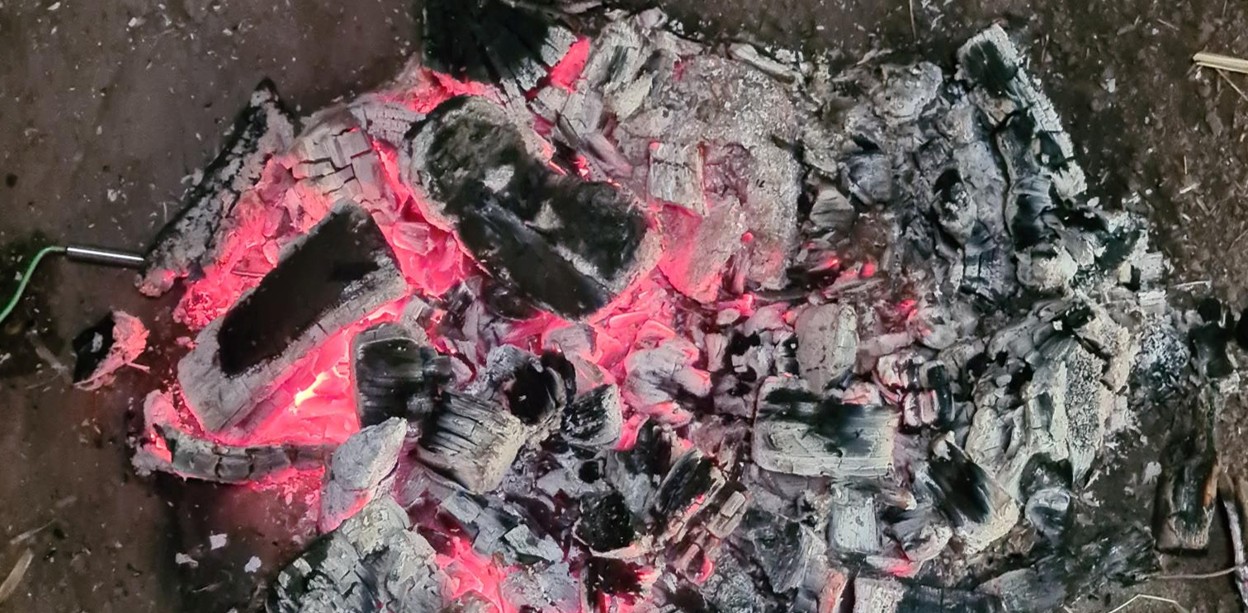
Polycyclic aromatic hydrocarbons (PAHs) are increasingly used to identify fuel sources, combustion conditions, and anthropogenic fire use in archaeological soils and sediments, yet the extent to which post‑depositional processes alter PAH profiles in archaeological combustion features remains poorly understood. This experimental study examines the short‑term preservation and taphonomic behaviour of PAHs within an experimentally produced Palaeolithic style hearth over a one‑year period. Fourteen controlled fires using wood, grasses, dung, and fresh bone were conducted in a semi‑enclosed prehistoric shelter, and soil samples were collected immediately after burning, then at 3‑month, 6‑month, and 12‑month intervals. While absolute concentrations of individual PAHs, particularly those with low molecular weights, varied over time, diagnostic ratios (Phe/Ant, Fla/(Fla+Pyr), BaA/(BaA+Chr)) remained stable and consistently identified pyrolytic sources associated with grass and wood combustion. High‑ring PAHs exhibited minimal degradation, and the ratio of low‑ to high‑ring PAHs remained characteristic of anthropogenic fires throughout the study. Fresh ash, however, yielded a potentially misleading signature with low high‑ring PAH abundance, highlighting potential interpretive challenges when analysing some archaeological residues. A temporary increase in naphthalene suggests short-term mobility from overlying ash deposits within the soils, while the control soil reflected modern petroleum contamination. Overall, the results demonstrate that PAH source indicators are robust to short-term taphonomic alteration, but that freshly deposited ash and the mobility of certain low‑ring PAHs warrant caution. These findings underscore the need for broader, longer-term experimental studies of stratified combustion features across diverse sedimentary environments to fully understand PAH preservation in archaeological fire-related contexts.
Introduction
Polycyclic aromatic hydrocarbons (PAHs) are becoming an increasingly important analytical tool in archaeological science, offering a new perspective on past fire use and its relationship to human behaviour (Brittingham et al., 2019; Sanz et al., 2020; Davis et al., 2025). Produced through the incomplete combustion of organic matter, PAHs function as long lived “molecular fossils” that can record the occurrence, intensity, and environmental context of past combustion events (Karp et al., 2020). Their persistence over extensive timescales makes them particularly valuable for settings where traditional macroscopic fire residues such as charcoal, ash, or thermally altered sediments, are absent, scarce, or poorly preserved (Karp et al., 2020). As a result, PAHs have been applied across a broad range of archaeological investigations, from the reconstruction of domestic hearths to landscape scale studies of palaeofire regimes and human environment interaction (Brittingham et al., 2019; Sanz et al., 2020; Tan et al., 2020; Zuo et al., 2025; Davis et al., 2025).
Despite their interpretive potential, the archaeological utility of PAHs is complicated by the fact that they do not enter the sedimentary record unchanged. Their transition from active combustion products to buried soil constituents is mediated through a series of taphonomic pathways that influence their concentration, composition and spatial distribution (Kieta et al., 2022). PAHs vary widely in their behaviour for example, low‑molecular‑weight compounds are more volatile and more vulnerable to degradation, whereas high‑molecular‑weight PAHs tend to absorb more strongly to mineral and organic particles and thus remain more stable over time (Lima et al., 2005). These differences create the possibility for the potential loss of key diagnostic PAHs which might obscure or complicate interpretation of the original pyrogenic signal. Understanding the potential effect of taphonomy is therefore crucial step towards improving our understanding of PAHs and their interpretive value on archaeological sites.
Recent work in Palaeolithic archaeology has demonstrated both the potential and limitations of PAH analysis at early fire sites in the Lower and Middle Palaeolithic. Studies from Lusakert Cave (Armenia), Gruta da Aroeira (Portugal), and Barnham (UK) have used PAH profiles to distinguish between anthropogenic burning and natural wildfire inputs, to identify repeated fire use and maintenance, and even to infer early fire‑making technology with varying degrees of success (Brittingham et al., 2019; Sanz et al., 2020; Davis et al., 2025). These investigations and previous studies show that heavy PAHs, typically produced in high‑temperature combustion and deposited locally through particulate emissions, often correlate with archaeological occupation intensity, whereas lighter PAHs may reflect broader environmental natural fire histories (Brittingham et al., 2019). At the same time, studies highlight the vulnerability of PAH signatures to erosion and diagenesis, taphonomic processes that can alter or remove geochemical traces of fire e.g., at Case of Gruta da Aroeira, were no traces of PAHs remained in the sediments (Sanz et al., 2020).
Beyond the scale of individual hearths, PAHs have been used in broader geoarchaeological and palaeoenvironmental research to reconstruct Holocene fire regimes, land-use change, and long-term anthropogenic impacts (Tan et al., 2020; Zuo et al., 2025). Landscape scale studies from the Yellow River basin and the Lubei Plain demonstrate that PAH profiles integrate multiple environmental processes, including vegetation structure, climatic shifts, hydrological conditions, and the intensity of human activity. These datasets reveal relationships between combustion signatures and cultural developments such as deforestation, agricultural expansion, and sociopolitical conflict. However, they also show that PAH assemblages can be strongly shaped by local depositional environments and sediment matrix properties, making it essential to separate taphonomic effects from behavioural or climatic signals (Tan et al., 2020; Zuo et al., 2025).
Taken together, the growing body of PAH-based archaeological research illustrates both a major opportunity and a methodological challenge. PAHs provide insights into past fire use that are otherwise inaccessible, particularly in contexts where macroscopic fire residues are poorly preserved, yet their interpretive value might be compromised by selective degradation and potential mobility within sediments. Ratios commonly used to differentiate fuel types or identify anthropogenic high temperature burning may be skewed by post‑depositional transformation (Brittingham et al. 2019).
The aim of this paper is to examine, through experimental archaeology, how soil taphonomy shapes PAH preservation in archaeological contexts. By examining differential preservation patterns among PAHs of different molecular weights from an experimental indoor fireplace over time, this study seeks to clarify the extent to which PAH assemblages reliably reflect ancient combustion events.
Methods
A series of 14 experiments using different types of fuels (wood species, rotten wood, animal dung, grasses and fresh bone) were conducted to recreate domestic fires on a hearth within a semi-enclosed conical shaped prehistoric shelter (See Fig.1). These experiments were conducted as part of a project aiming to quantify variation in levels of harmful particulate matter, pm2.5, in different types of fuels and fires and the potential effects on air quality in the Palaeolithic (Hoare et al. 2023). The opportunity arose to collect soil samples after the experiments were completed to examine potential effects of taphonomy, specifically time, on the preservation and degradation of polycyclic aromatic hydrocarbons produced from intensive domestic fire use.
The experimental fires were constructed with a 50‑cm basal diameter (See Fig 1). A single K‑type thermocouple positioned at the centre recorded temperature throughout each burn. Each experiment used 5 kg of fuel: 2 kg to initiate the fire, followed by three additions of 1 kg at 15‑minute intervals over 45 minutes. Fresh bone fires required an additional 1.5 kg of silver birch to reach ignition temperatures, as bone combustion needs at least 15% wood content (Théry-Parisot et al., 2005). Two fresh‑bone experiments were conducted: one using various deer elements (scapulae, ribs, femora, and vertebrae without epiphyses) and another using only femoral epiphyses (Hoare et al., 2023).
After the experiments were completed the following 3 step sampling strategy was applied to collect and analyse levels of PAHs in the soil of the hearth.
- Matrix characterisation. A control sample of the unheated soils was taken from outside the prehistoric shelter prior to the experiments being conducted. Although it must be noted that other fire experiments have taken place on the site.
- Initial sampling day 0. Two samples (15 grams) were taken after the last fire had cooled, one from the ashes and a second from the top 2 cm of soil.
- Longitudinal sampling. Three more samples (15 grams each) were taken at intervals of 3 months, 6 months and 1 year from the top 2 cm of soil. Ashes no longer remained at 3 months.
Laboratory analysis.
Ten grams of ultrasonically dispersed soil samples were mixed with recovery standards. The samples were then Soxhlet extracted for 24 h using a 200 mL mixture of hexane and dichloromethane (1:3, v:v). The soil extract was concentrated to 4 mL using a rotary evaporator and purified with a silica gel and alumina column (2:1, v:v; 30 cm height ×10 mm i.d.) with He as the carrier (1.5ml/min). Each column containing the target PAHs was eluted with 70 mL of hexane and dichloromethane mixture (7:3, v:v), concentrated to 0.5 mL and spiked with internal standards before instrumental analysis. Concentrations of PAHs were determined by gas chromatography mass spectrometry (GC-MS Agilent 7890A GC) using a 30 m DB-5MS fused silica capillary column. The oven temperature was ramped from 60 to 200 °C for 10 °C/min, then to 214 °C for 2 °C/min, then to 254 °C for 5 °C/min and finally to 290 °C for 18 °C/min. The temperature was held for 2 min at 254 °C and 17 min at 290 °C. Calibration standards, spiked and procedural blanks were included for quality control. Samples were analysed using a 16 component PAH standard (PAH mix 6) at known concentrations ranging from 0.25 to 400 ng for calibration and quantification (standard error 4%). Normalisation to sediment dry weight was used to normalize PAH concentrations to reduce potential effects of changes in sediment particle size distribution on results.
Results
| Low ring lPAH (2 - 4 rings) | High ring hPAH (5 - 6 rings) |
| Naphthalene (Nap) | Benzo(b)fluoranthene (B(b)f*) |
| Acenaphthylene (ACY) | Benzo(k)fluoranthene (B(k)f*) |
| Acenaphthene (ACE) | Benzo(a)pyrene (BaP*) |
| Flourene (Fle*) | Indeno(1,2,3, cd)pyrene (Ind) |
| Phenanthrene (Phe*) | Da- Dibenzo(a,h)anthracene (DahA) |
| Anthracene (Ant*) | Benzo(g,h,i)perylene (Bghip*) |
| Flouranthene (Fla*) | |
| Pyrene (Pyr*) | |
| Benz(a)anthracene (B(a)a*) | |
| Chrysene (Chr*) | |
| Flourene (Fle*) |
Table 1. Low ring and high ring PAHs included in the analysis with their abbreviations
Soil PAHs + molecular weight | Ash | Hearth Day 0 | Hearth 3 month | Hearth 6 month | Hearth 1 year | Control |
| Nap (2) | 184 | 22.5 | 33.7 | 23.6 | 10.3 | 3.05 |
| Acy (3) | 14.7 | 2.3 | 1.38 | 0.6 | 0.56 | 0.51 |
| Ace (3) | 4.85 | 1.41 | 1.02 | 0.73 | 0.61 | 0.53 |
| Fle (3) | 27.2 | 5.5 | 1.51 | 0.34 | 0.95 | 0.16 |
| Phe (3) | 94.6 | 26.2 | 10.7 | 4.29 | 4.96 | 1.71 |
| Ant (3) | 12.2 | 5.39 | 3.14 | 2.31 | 2.27 | 1.52 |
| Flt (4) | 32.1 | 17.3 | 10.1 | 5.21 | 4.71 | 3.38 |
| Pyr (4) | 15.2 | 13.1 | 9.76 | 5.2 | 4.65 | 3.89 |
| Baa (4) | 7.17 | 7.86 | 6.59 | 3.39 | 3.04 | 1.62 |
| Chr (4) | 13.1 | 14.2 | 9.45 | 5.36 | 4.93 | 4.61 |
| BbF (5) | LoD | 71.2 | 70.8 | 69.9 | 69.6 | 1.64 |
| BkF (5) | LoD | 82.7 | 82.2 | 81.3 | 80.7 | LoD |
| BaP (5) | 1.41 | 132.4 | 132.1 | 131.8 | 131.6 | 2.46 |
| Ind (5) | LoD | LoD | LoD | LoD | LoD | LoD |
| DahA (5) | 5.76 | LoD | LoD | LoD | LoD | LoD |
| Bghip (6) | LoD | 1.71 | 1.63 | 1.6 | 1.5 | 0.64 |
Table 2. Concentration of polycyclic aromatic hydrocarbons in the control, ash and longitudinal samples from the top 2 cm of soil beneath the experimental fires. The names of the PAHs are followed by their molecular weight 2-5 rings in brackets (2-4 rings are low molecular weight and 5-6 are high molecular weight). Analysis that returned results below the levels of detection of the instrument are expressed as LoD for individual PAHs (all data produced by the author).
| Sample | Phen/ANT | FLT/(FLT + PYR) | Baa/(Baa + Chr) | hPAH | lPAH |
| Control | 1.12 | 0.46 | 0.26 | 4.74 | 16.89 |
| Ash | 7.75 | 0.67 | 0.35 | 7.17 | 201.57 |
| Day 0 | 3.4 | 0.5 | 0.41 | 286.81 | 51.25 |
| 3 month | 1.85 | 0.5 | 0.38 | 284.69 | 26.1 |
| 6 month | 2.18 | 0.5 | 0.38 | 283.59 | 25.51 |
| 1 year | 4.86 | 0.56 | 0.35 | 288.01 | 89.55 |
Table 3. The abundances of PAHs in the soil samples as ratios of Phen/ANT, FLT/FLT+PYR and Baa/Baa + Chr, with abundances of hPAH to lPAHs (all data produced by the author).
Ten low ring and six high ring PAHs were detected in the soil samples (See Table 2). Ratios of low ring (2-4) PAHs can determine whether the source of the PAHS is pyrolytic, and whether the pyrolysis arose from the combustion of wood or petroleum (See Table 3). Specifically, the ratio of Phe/Ant < 10 confirm that the source of the PAHs is pyrolytic in all the experimental soil samples (Lerario et al., 2003) The ratios of Fla/(Fla + Pyr) > 0.5 and BaA/(BaA+CHR) > 0.4 can be used to identify whether the combustion event was from a petroleum source or from grass, wood and coal (Sprovieri et al., 2007; Sojinu et al., 2011). Both ratios indicate that the source of the pyrolysis in the ash and longitudinal samples is from combustion of grass, wood or coal but possible petroleum in the control soil sample.
The relative of abundance of high ring PAHs to low ring PAHs can be used to indicate whether the origin of the fire is human or natural (Brittingham et al., 2019; Davis et al., 2025). In all the longitudinal samples the abundance of high ring PAHs is always higher than the low ring, whilst in the ash and control samples low ring PAHs are the most abundant. In the ash sample it is noted that all high ring PAHs other than DahA, were below the limits of detection. In the longitudinal samples the abundances of hPAHs are always ordered from highest to lowest B(a)p > B(k)f > B(b)f > Ip,Da > B(g,h,i)p similar to modern wood burning studies (Table 2).
Figure 2. shows a comparison of changes in 2 to 6 ring PAHs (Nap, Ant, BaP and BghjP). High ring (5-6) PAHs BaP and BghjP, show little change over the 1-year sampling period with only a 0.6% and 1.2% loss recorded over the 1-year period respectively. Low ring PAH Ant shows a more marked reduction over each sampling period with a total loss of 39.5 between day 0 and 3-months and an overall loss of 42.1% over a 1-year period. The most notable change occurs in low ring PAH Nap, were an increase of 49.7% of its original value from Day 0 to 3 months is observed. Nap then declines over the following 9 months losing 44% of its original value and 79.5% of the increased value from 3 months.
Discussion
The results of this study indicate that, despite measurable temporal changes in concentrations of individual PAHs within the hearth sediments, the diagnostic ratios commonly used to identify combustion source remained stable over the full one‑year sampling period. Ratios such as Phe/Ant, Fla/(Fla + Pyr), and BaA/(BaA + CHR) consistently indicated a pyrolytic origin associated with the burning of wood, grasses or coal. Their stability across sampling intervals suggests that post‑depositional degradation processes did not meaningfully affect results, even though some individual PAHs degraded at different rates. This is important for archaeological applications, as it implies that source‑diagnostic PAH ratios are robust to short‑term taphonomic alteration and can remain reliable indicators of fuel source and combustion conditions over at least annual timescales.
Likewise, the relationship between low‑molecular‑weight (2–4 ring) and high‑molecular‑weight (5–6 ring), PAHs remained consistent over time in the longitudinal samples. High‑ring PAHs (hPAHs) were always more abundant than low‑ring PAHs (lPAHs), matching expectations for anthropogenic fires. Because this pattern persisted throughout the year despite substantial losses among certain lPAHs, most notably Ant, there is no evidence that differential degradation over this time frame compromises the use of the lPAH:hPAH ratio as an indicator of human versus natural burning. This reinforces previous findings that hPAHs are comparatively stable in sediments and can preserve behavioural signals around human-made fires (although we did not examine whether potential losses of low ring PAHs over time could in a natural fire could leave a signature more indicative of a human fire e.g., a higher abundance of high ring PAHs.
However, the ash sample presents a cautionary case. Immediately after burning, the ash contained detectable PAHs but displayed a reversed trend in which low‑ring PAHs were more abundant than high‑ring compounds. Because high‑ring PAHs were largely below detection limits in the ash, this signature would incorrectly suggest a natural wildfire if interpreted in isolation. This highlights a significant interpretive risk in that ash residues may resemble natural fire signatures. Archaeologically, this highlights the need to consider sedimentary context, depositional history, and multi‑sample datasets regarding PAH’s rather than relying on single samples taken from archaeological hearth deposits.
One particularly notable pattern is the marked short‑term increase in naphthalene (Nap) between day 0 and the 3‑month interval, followed by a sharp decline over the subsequent months. This increase can potentially be explained by leaching or downward mobility of Nap from the ash deposits into the upper soil layers possibly by water action. As Nap is both highly volatile and highly mobile within sediments, this rapid movement and subsequent dissipation is consistent with its known environmental behaviour (Kim et al. 2011). The pattern illustrates that some PAHs especially low‑ring (2-4) may be temporarily redistributed within archaeological sediments in ways that do not reflect primary deposition. While this does not appear to alter diagnostic ratios, it may influence absolute abundance profiles and must be considered when interpreting stratified combustion residues especially those with ash deposits.
The control soil sample contained low levels of PAHs relative to the experimental hearth sediments as would be expected. However, its diagnostic ratios suggest a petroleum‑derived component, almost certainly from modern contamination from site use. This further shows the challenge of assuming that background sediments are free of recent anthropogenic inputs, emphasising the importance of characterising local contamination histories when establishing baselines.
Overall, these findings highlight that while temporal changes in PAH abundances occur even over short periods, these changes do not substantially alter the key interpretive tools used to infer combustion source, fuel type, or human versus natural origin. Nevertheless, the small sample size and single site context limit the generality of these conclusions. A broader programme of research which should encompass multi‑year monitoring, varied sedimentary matrices, different fuel types and diverse environmental settings, is required to fully assess taphonomic impacts on PAH profiles in archaeological contexts. Such work is important for understanding long‑term degradation pathways, vertical mobility within stratified deposits and the potential for post‑depositional mixing to complicate interpretations of past human behavioural signatures around fire.
Despite these limitations, this study provides the first direct evidence that PAH source ratios remain stable over at least annual timescales in an experimental archaeological context. The lack of temporal change in key interpretive ratios suggests that PAHs offer a robust tool for investigating fuel use, combustion events, and human activity in Palaeolithic and later archaeological contexts, provided that the complexities highlighted, particularly the behaviour of deposited ash and the mobility of some low‑ring compounds are considered.
Conclusion
This study provides new experimental evidence on the short‑term preservation and taphonomic stability of polycyclic aromatic hydrocarbons in archaeological hearth sediments. Although absolute concentrations of several PAHs changed over the course of one year, particularly the more mobile low‑molecular‑weight compounds, these temporal shifts did not alter the diagnostic ratios used to determine combustion source, fuel type, or human versus natural fire origins. High‑ring PAHs remained consistently abundant and stable, while low‑ring PAHs showed expected patterns of degradation and mobility without compromising the interpretive value of ratio‑based assessments. The anomalous behaviour of freshly deposited ash, which temporarily mimicked a natural fire signature, highlights the importance of contextualising single samples within broader sedimentary processes. Additionally, the petroleum‑like signature in the control sample highlights the need to account for modern contamination when establishing baselines.
Together, these findings suggest that PAH ratios are robust to short‑term post‑depositional changes and can reliably support archaeological interpretations of fuel use and fire activity. However, the limited number of fires, single-site context, and one‑year timescale emphasise the need for broader, longer-term studies incorporating varied sediment types, environmental settings, and cultural contexts. Expanding this research will enable a more comprehensive understanding of the long-term preservation, mobility, and transformation of PAHs in archaeological deposits. Ultimately, this work contributes to the development of more secure geochemical frameworks for reconstructing past human behaviours involving fire in the archaeological record.
Country
- United Kingdom
Bibliography
Brittingham, A., Hren, M.T., Hartman, G., Wilkinson, K.N., Mallol, C., Gasparyan, B. and Adler, D.S., 2019. Geochemical evidence for the control of fire by Middle Palaeolithic hominins. Scientific Reports, 9(1), p.15368.
Davis, R., Hatch, M., Hoare, S., Lewis, S.G., Lucas, C., Parfitt, S.A., Bello, S.M., Lewis, M., Mansfield, J., Najorka, J. and O’Connor, S., 2025. Earliest evidence of making fire. Nature, pp.1-7.
Hoare, S., 2020. Assessing the function of Palaeolithic hearths: Experiments on intensity of luminosity and radiative heat outputs from different fuel sources. Journal of Paleolithic Archaeology 3, 537–565. https://doi.org/10.1007/s41982-019-00047-z .
Hoare, S., Preysler, J.B., Kabukcu, C., Emmerich Kamper, T., Sinclair, A.G.M., Torres Navas, C., 2023. There’s no smoke without fire: a deep time perspective on the effects of fires on air quality, human health, and habitability in the Palaeolithic and prehistory. J. Archaeol. Sci. Rep. 52, 104261 https://doi.org/10.1016/j.jasrep.2023.104261 .
Karp A. T., Holman A. I., Hopper P., Grice K. and Freeman K. H. 2020. Fire Distinguishers: Refined interpretations of paleofire from polycyclic aromatic hydrocarbons. Geochim. Cosmochim. Acta 289, 93–113.
Kieta, K.A., Owens, P.N., Petticrew, E.L., French, T.D., Koiter, A.J. and Rutherford, P.M., 2022. Polycyclic aromatic hydrocarbons in terrestrial and aquatic environments following wildfire: a review. Environmental Reviews, 31(1), pp.141-167.
Kim, E.J., Oh, J.E. and Chang, Y.S., 2003. Effects of forest fire on the level and distribution of PCDD/Fs and PAHs in soil. Science of the Total Environment, 311(1-3), pp.177-189.
Lerario, V.L., Giandomenico, S., Lopez, L. and Cardellicchio, N., 2003. Sources and distribution of polycyclic aromatic hydrocarbons (PAHs) in sediments from the Mar Piccolo of Taranto, Ionian Sea, southern Italy. Annali di chimica, 93(4), pp.397-406.
Lima, A.L.C., Farrington, J.W. and Reddy, C.M., 2005. Combustion-derived polycyclic aromatic hydrocarbons in the environment—a review. Environmental forensics, 6(2), pp.109-131.
Sanz, M., Daura, J., Cabanes, D., Égüez, N., Carrancho, Á., Badal, E., Souto, P., Rodrigues, F. and Zilhão, J., 2020. Early evidence of fire in south-western Europe: The Acheulean site of Gruta da Aroeira (Torres Novas, Portugal). Scientific reports, 10(1), p.12053.
Sojinu, O.S., Sonibare, O.O. and Zeng, E.Y., 2011. Concentrations of polycyclic aromatic hydrocarbons in soils of a mangrove forest affected by forest fire. Toxicological & Environmental Chemistry, 93(3), pp.450-461.
Sprovieri, M., Feo, M.L., Prevedello, L., Manta, D.S., Sammartino, S., Tamburrino, S. and Marsella, E., 2007. Heavy metals, polycyclic aromatic hydrocarbons and polychlorinated biphenyls in surface sediments of the Naples harbour (southern Italy). Chemosphere, 67(5), pp.998-1009.
Tan, Z., Wu, C., Han, Y., Zhang, Y., Mao, L., Li, D., Liu, L., Su, G. and Yan, T., 2020. Fire history and human activity revealed through poly cyclic aromatic hydrocarbon (PAH) records at archaeological sites in the middle reaches of the Yellow River drainage basin, China. Palaeogeography, Palaeoclimatology, Palaeoecology, 560, p.110015.
Zuo, H., Tan, Z., Han, Y.M., Mao, L., Zheng, S., Zhang, Q., Wang, M. and Li, S., 2025. Record of polycyclic aromatic hydrocarbons (PAHs) from prehistoric sediments and human activity in the Lubei plain of China. Scientific Reports, 15(1), p.7347.