

The content is published under Creative Commons Attribution 4.0 International license (CC BY 4.0).
Reviewed Article:
Slicing into the Past. Experimental Use of Obsidian Prismatic Blades and Analysis of Modern Botanical Residues
This experimental study offers new insights into the deposition and taphonomy of microscopic plant residues (phytoliths and starch grains) on obsidian prismatic blades. Twenty blades were flaked from a new obsidian core and used to process eight botanical elements frequently recovered from archaeological contexts in Mesoamerica: maize (Zea mays) leaves and cobs, two varieties of sweet potato (Ipomoea batatas), two species of squash (Cucurbita pepo and C. moschata), manioc (Manihot esculenta), and hardwood. We examined the quantity of visible residues deposited on the blades before microbotanical extractions. We analysed and quantified extracted starch grains and phytoliths and made limited observations of microscopic blade usewear. We also documented how experiment participants handled and used prismatic blades. The results obtained in this limited study support the idea that archaeological visibility of certain plants is tied less to sequence of tool use and more to the general visibility of residues created by certain species. This study provides insights into the relationship between obsidian prismatic blade use, deposition of botanical residues, and recovery of microbotanical remains. Tracking taphonomy is important for interpreting relationships between people, plants, and culinary practice.
Introduction
Culinary practice is an important topic of study, as food sits at the nexus of many different relationships: human resource-environment, body-foodstuff, cosmology-food symbolism, politics-food distribution, and identity-food distinction, among many others. Ancient culinary practice becomes accessible through analyses of spaces, food residues, and equipment, alongside imagery, epigraphic records, and historic documentation. Among lithic tools, prismatic obsidian blades are one of the most durable and easily recovered archives of culinary practice. Astonishingly, these blades were produced and used on both sides of the Atlantic and have been recovered from sites such as Neolithic Çatalhöyük (Turkey) and Classic Period Tikal (Guatemala). Here we focus on the use of prismatic obsidian blades to process botanical materials in an experimental study of plants regularly recovered from archaeological sites in Mesoamerica. Our study examines the deposition of microbotanical residues on these blades. We also explore how people might have held and manipulated prismatic blades in culinary practice and provide basic observations regarding the resulting usewear. This study is, at its core, an experimental project addressing key issues in paleoethnobotanical methods.
The analysis of microbotanical remains such as phytoliths (inorganic silica bodies produced by plants [Piperno, 2006; Shillito, 2013]) and starch grains (plant storage units made of polymers and sugar [Hardy, et al., 2009]) can play a key role in understanding relationships between people and plant worlds. Analyses of microbotanical residues allow us to better identify plant foods consumed by ancient people and their role in nutrition, gastronomy, and/or medicinal practices (Abramiuk, et al., 2011; Scott Cummings and Magennis, 1997; Venegas Durán, et al., 2021; Watson, et al., 2022). Plant residues also offer insight into the differential use of activity areas (Balme and Beck, 2002; Matos Llanes and Acosta Ochoa, 2015), the role of plants in key ritual contexts such as burials and ritual offerings (Bérubé, et al., 2025; Cagnato, 2018; Chen, et al., 2022), human activities during important periods of transition (Colobig, et al., 2023; Goman, et al., 2013; Lohse, et al., 2022), foddering practices and animal husbandry (Cagnato, et al., 2021; Melton, et al., 2023), and the specific uses of certain artefacts in plant-processing activities (Bérubé, et al., 2020; Haslam, 2003). The identification of starch grains and phytoliths on lithic tools allows us to better understand tool use and reveals information regarding ancient plant consumption and preparation.
Obsidian blades have been found in numerous archaeological contexts in Mesoamerica across domestic spaces, burials, caches, and middens (Aoyama, et al., 2017; Clark, 1987; Hirth, 2006; Márquez Morfín and González Licón, 2018; Patrana and Carballo, 2017; Walton, 2017; Walton and Carballo, 2016). Studies of obsidian blade usewear have been carried out on projects at Joya de Cerén, El Salvador (Dixon, 2009; Sheets, 2009), and Cerros, Belize (Lewenstein, 1987). Worldwide, obsidian blades have been the focus of numerous studies examining usewear (Aoyama, 1995; Setzer, 2004; Stemp, 2016; Stemp, et al., 2019; Walton, 2022; 2023), techno-typological characteristics (Carter, et al., 2020; 2022), and composition through X-ray fluorescence spectroscopy (Carter, et al., 2020). These analyses offer deep insight into obsidian sources, trade routes, and the function of certain tools.
To date, only a few studies have directly connected obsidian blade use and plant residue analysis (e.g., Bérubé, et al., 2020; Haslam, 2003; Morell-Hart, et al,. 2014; 2019; 2021), and no study has folded these pursuits into an experimental study. (Though see Devio, 2016 and Heindel, 2012 for experimental studies of chert flakes; Pérez Martínez and Acosta Ochoa, 2018 and Sheets, 2002a; 2011 for obsidian blades usewear; Simms, 2014, p.240 and Pérez Martínez and Acosta Ochoa, 2018 for plant residues on obsidian flakes; Newman, 1993 for faunal protein residues on obsidian blades; and Lasso Silva and Trabanino, 2015 for ethnoarchaeological study of metal blade use).
To our knowledge, no previous experimental study has tracked the deposition and recovery of microbotanical elements on prismatic blades used for plant processing. We devised the current study to fill this gap, and to consider--in a temporally limited way--the preservation of starch grains on obsidian artefacts.
Our study fits into a wider global array of experimental studies that have examined lithic tools used to process plants. Walton (2019) studied the usewear on experimental obsidian tools to gain useful knowledge regarding household practices. While this study did not solely focus on the processing of plants, it still included numerous botanical elements in the experimental assemblage. Bofill, et al. (2020) examined the grinding of plants using experimental tools. They tested different types of motions and preparation of foods (hulled, dehusked, roasted, dried, untreated, et cetera). This study allowed them to examine questions related to usewear, manufacture process (technology), and productivity. Cadalen, et al. (2023) focused on the function of lithic tools. To do so, they worked on several species of wood and a gourd using experimental obsidian and flint tools. This allowed them to obtain useful knowledge related to spatial distribution and multicrafting zones at ancient Maya communities. Liu, et al. (2012) combined usewear and residue analysis from experimental harvesting to better detect early stages of domestication. In their study, they targeted wild and domestic species of cereals, mainly millets. Kononeko (2011) created an experimental set of obsidian blades that were compared with artefacts dating to the Holocene period, in a study combining usewear and residue analyses. General residue characteristics were recorded (amount, texture, distribution on blades, et cetera), but there was no microbotanical analysis to identify starch grains and phytoliths present on the blades. Kononenko, et al. (2015) crafted obsidian axes and adzes to chop wood and to test their resistance. This study allowed them to demonstrate that such tools were effective even if breakage occurred during use. Mercader, et al. (2022) examined the deposition process of microbotanical remains on pounding tools, in a study very helpful for tracking taphonomy, but with a different type of tool. Cnuts and Rots (2024) examined the short-term impacts of weathering and burial on stone tool residues. This study is helpful in understanding the degradation and preservation of bone, animal fat, plants and wood remains, but did not focus on microbotanical remains.
All these studies improve our ability to understand the relationship between people, environments, plant resources, plant processing techniques, and processing equipment. By combining different sources of information such as lithic usewear and traceology analyses (see Chabot, et al., 2014; 2020), epigraphy (see Taube, 1991), and ethnology (see Lasso Silva and Trabanino, 2015), we can get a better sense of ancient practices related to plants. But direct analyses of microbotanical and chemical residues, where possible, offer the most direct proxies of plant processing with lithic tools. Here, we focus on the extraction and analysis of microbotanical residues, offering some usewear data, but primarily tracking taphonomy.
To examine the deposition of microbotanical remains on prismatic obsidian blades, we focused our attention on eight botanical specimens: maize (leaves and cobs), sweet potato (two varieties), squash (two species), manioc, and hardwood. These plants were selected based on current active use in Mesoamerica and on documented presence at archaeological sites. These botanical elements have been recovered as macrobotanical remains (such as seeds and wood charcoal), but, critical to this study, have also been recovered as phytoliths and/or starch grains (e.g., Abramiuk, et al., 2011; Aceituno and Martín, 2017; Aceituno, et al., 2022; Bérubé, et al., 2020; 2025; De Lucia and Scott Cummings, 2021; Dickau, 2010; Lohse, et al., 2022; Morell-Hart, et al., 2014; 2023). Microbotanical residues of these plants have been recovered from different types of artefacts, including ceramic vessels, and other types of lithic tools, including grinding stones and chert scrapers. Here, however, we focus on obsidian blades, a highly ubiquitous tool found across southeastern Mesoamerica. Based on the number of botanical microremains recovered from obsidian blades in Mesoamerica, we argue that these tools played an important role in food preparation, warranting our attention in this experimental study.
Material and Methods
Slicing into Plants - Experimental Processing and Participant Observations
Our basic workflow proceeded as follows: 1) Crafting a new set of sterile obsidian prismatic blades, 2) Using these blades to experimentally process a number of botanical specimens and record participants’ observations, 3) Documenting visible residues adhering to the obsidian blades, 4) Extracting microremains from the blades through a series of three washes, 5) Analysing these microremains using transmitted light microscopy (200x-400x), and 6) Rudimentarily documenting degree and pattern of usewear on the clean blades.
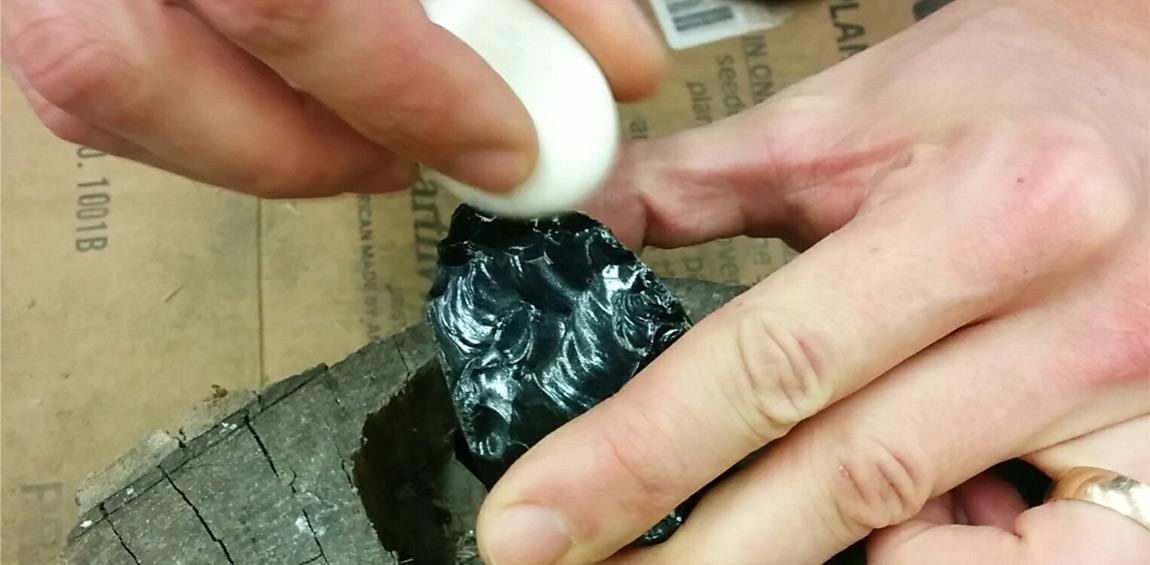
Sean Doyle crafted the set of 20 prismatic blades used in this study in 2016 at the McMaster Paleoethnobotanical Research Facility (MPERF) in Hamilton, Ontario (See Figure 1). He flaked these blades from a contemporary obsidian core purchased from Pachuca, Mexico. To craft the blades used for this project, he used a combination of antler and copper pressure flaking tools. Immediately after the tools were knapped, Doyle wore powder free gloves to place the blades in individual plastic bags. The blades were then used by three volunteers (Dana Hart, Sophie Reilly, and Éloi Bérubé) to cut and slice different botanical elements. The volunteers wore powder free gloves while manipulating the blades. The project was initially designed and later documented by Shanti Morell-Hart.
Using 20 obsidian blades, we were able to sample each of the eight botanical elements individually, using individual blades, and then combine several elements on other blades (See Table 1). While wearing powder free gloves, participants processed each botanical component for a total of seven minutes on each obsidian blade selected for that component. The total amount of time allotted to each component was intended to capture light usewear and residue deposition, instead of heavy and habitual use. Once this step was completed, the blade was either stored in a plastic bag or used to process a new botanical element. For example, OBS-19 served to process five different elements and was therefore used 35 minutes in total. All botanical components were cut, except for maize cobs that were used to clean some blades (one other maize cob was cut using a blade).
The three novice volunteers who processed the plants offered observations throughout the experiment, which gave a unique insight into how ancient processing practices might have unfolded using this specific kind of tool. Although far from skilled practitioners, and thus differently situated in the experience, the novice volunteers nonetheless offered helpful ideas about ancient obsidian blade use that are simply unattainable through contemporary ethnography, since there are no analogous tools in use today.
| Sample Number | Plant Component | Quantity of Residue Visible before Extraction | Degree of Damage Observed on Obsidian Blade |
| OBS-1 | Maize (Zea mays) leaf | Low | Light |
| OBS-2 | Maize cob | Low | Intensive |
| OBS-3 | Maize cob (Cleaned) | Low | Medium |
| OBS-4 | Purple sweet potato (Ipomoea batatas) | Moderate | Light |
| OBS-5 | Orange sweet potato | High | Light |
| OBS-6 | Acorn squash (Cucurbita pepo) | High | Light |
| OBS-7 | Butternut squash (Cucurbita moschata) | High | Light |
| OBS-8 | Wood (Unidentified dicot) | High | Light/Intensive |
| OBS-9 | Manioc (Manihot esculenta) | High | Light |
| OBS-10 | Butternut squash + Maize cob (Cleaned) | Low | Light/Intensive |
| OBS-11 | Wood + Maize cob (Cleaned) | Low | Intensive |
| OBS-12 | Purple sweet potato + Maize cob (Cleaned) | Moderate | Intensive |
| OBS-13 | Orange sweet potato + Maize cob (Cleaned) | High | Medium |
| OBS-14 | Acorn squash + Maize cob (Cleaned) | High | Intensive |
| OBS-15 | Maize leaf + Maize cob (Cleaned) | Low | Light |
| OBS-16 | Manioc + Maize cob (Cleaned) | High | Medium |
| OBS-17 | Sweet potato + Butternut Squash + Maize cob (Cleaned) | High | Light |
| OBS-18 | Manioc + Acorn squash + Maize cob (Cleaned) + Wood | High | Light |
| OBS-19 | Manioc + Sweet potato + Butternut squash + Maize cob (Cleaned) + Wood | High | Intensive |
| OBS-20 | Manioc + Orange sweet potato + Squash + Maize cob (Cleaned) | High | Medium |
Table 1. Plants Sampled and Initial Observations
The three participants who used the obsidian tools were asked to describe their experience throughout the process, and Morell-Hart documented their responses. At the start, one participant wondered what people in the past would have thought about handling obsidian blades. This person feared how sharp the tools were and approached them with a “mix of caution and trepidation.” They preferred to handle the thickest pieces of obsidian that seemed safer. Two of the participants held the blade lengthwise, while the third held the blade sideways. Such grip adjustments would likely be reflected in the direction of any usewear patterns in ancient tools.
Early in the process, the participants realised they had to adjust their grip according to each tool’s particularities (length, width, curvature, shape of ridges, sharpness, et cetera). One of the participants suggested that people might have assigned different functions to each tool based on those particularities. A thicker piece might have been used for a task where applying more force was needed (such as carving wood), while a thinner, more delicate blade might have been saved to cut through a softer, squishier material like a tomato. Such selections might sometimes be identified in archaeological tools, but in other cases cooks may have simply worked with the tool most readily available.
Numerous manipulations ended with the tip of the blade breaking off. This breakage mainly occurred when participants tried to cut slices of manioc or sweet potatoes (See Figure 2a, 2c), or when carving through squashes. Generally, the blades would stick in larger plant masses, and breakage happened when people used more force to remove the blade. While sawing into the maize cob and slicing through wood, microflakes spalled off the tool (See Figure 2b). Sometimes, microflakes of obsidian were visible in the plastic storage bags before being used. Such damage was not necessarily visible during the usewear analysis, as 45% of the blades were identified as having light damage and only 25% were placed in the intensive damage category. This signals the importance of additional experimental studies to create and enhance reference collections that encompass these types of damage.
For the maize leaves, participants used dry specimens. It may be less likely that people cut dried maize leaves in the past using an obsidian tool. But people may have cleaned implements using stiff dried maize leaves. In this study, using fresh maize leaves might have documented other kinds of use (e.g., husking after a harvest of green corn). Participants tended to use the midsection of the blade to peel and the distal end for slicing, which may be reflected in residue deposition. Peeling the sweet potato seemed like one of the easiest tasks to achieve with a sharp obsidian blade.
Participants observed that cleaning a stone tool using a maize cob seemed effective. After a few minutes, prior residues (squash, manioc, wood, et cetera) seemed to have disappeared completely. This was also true to a certain extent when the blades were examined using a low magnification microscope. While the butternut squash left a high amount of residue on OBS-7, it left a low amount of residue after having been cleaned with the cob (OBS-10). This pattern was also visible for wood (OBS-8 and OBS-11), but not for some other plants like orange sweet potato (OBS-13), acorn squash (OBS-14), and manioc (OBS-16). It is unclear if this discrepancy is due to the different users that cleaned the blades or due to the properties of the plants that might have varied in stickiness and viscosity. The ‘low’ quantity of deposited residues was noted primarily for dry elements (maize leaves and cobs, wood). These findings may have implications for the relative visibility of some archaeological residues, if tools were used to process dry plant parts.
Participants faced formidable safety challenges while manipulating the obsidian blades. There were numerous microcuts noticeable on the gloves after using each blade for seven minutes. Even with gloves on, participants ended with a fair number of cuts on their fingers, including some involving limited blood loss. When participants cut themselves, they tended to immediately drop the tool, which created an opportunity for additional breakage. However, participants became more cautious (and skilled) with time, holding the blades differently and slowing their pace as well. This seems to have reduced the number of injuries sustained. One participant still managed to accidentally cut cleanly through two pairs of gloves in one stroke, highlighting the importance of remaining cautious while using these incredibly sharp tools.
Participants hypothesised that people who used obsidian blades in the past either suffered a lot of cuts on their fingers or used some sort of protective gear to avoid these painful moments. Remarkably, however, no protective wrappings or haftings for obsidian blades have ever been identified in Maya contexts, in imagery (Taube. 1991) or as physical remains, even at the well-preserved site of Joya de Cerén. At this ancient community, Payson Sheets writes (2002b, p.115)
Each household had a relatively standard set of chipped stone artifacts, all of obsidian. Each kept a few prismatic blades stored at predictable locations in the thatched roofs, to be pulled down, used, and then put back up. Each maintained a cache of yet-to-be-used blades higher up in the thatch. And each had a scraper or two and a microblade. All evidently were used as they were, without benefit of hafting or wrapping.
Brian McKee further noted (2002, p.63), “Nearly all prismatic blades in good condition at Cerén were tucked into thatch. Two possible and not mutually exclusive reasons for this are to protect the blades and to protect people, particularly children, from the sharp edges.” In another study from Cerén, human blood was detected in obsidian blade residue (Newman, 1993; see also Stemp, et al., 2019; Walton, 2021), raising the question of deliberate bloodletting in sacred practice and/or “the result of an inadvertent cut during original manufacture or subsequent use” (Brown and Gerstle, 2002, p.101).
After completing experimental blade use, participants were asked to reflect on the level of attention that would have been required to prepare a meal using these tools. Could people do it while chatting, or did they need to be fully focused on the task at hand? Participants agreed that, after about an hour of practice, it became “fairly routine.” One of them compared it to “peeling a potato with a knife with slightly more attention required.” We suspect that, after years of experience and training with skilled practitioners, obsidian blade use probably became a routinised task that people could undergo fairly quickly and comfortably. For practiced cooks in the past, it is likely that they paid some attention to the task at hand, but could still talk and attend to other distractions (e.g., children, pets, thunderstorms) while preparing a meal.
Results
Reading through Obsidian - Microbotanical Analysis
After almost a decade in storage, the blades were analysed by Éloi Bérubé in 2024-25 at the Laboratoire de préhistoire du Québec de l’Université de Montréal. First, a visual inspection was conducted using the naked eye and a microscope (Olympus BX51) with low magnification, before proceeding to the microbotanical extraction of residues. Our goal was to estimate the quantity of visible residue left on the blades. The residue quantities on the tools were graded in three qualitative categories: low, moderate, and high. The low category consisted of residues where only a few small white dots were spotted on the blades. The moderate category consisted of blade residues where the beginning of a small white crust was visible. The high category encompassed the blade residues where huge chunks of residues and/or thick white crusts were present (See Figure 3).
Bérubé then proceeded to the extraction of the microbotanical residues following a standard three-wash process - the dry (DW), wet (WW), and sonicated (SW) washes (see Bérubé, 2023; ILAS, 2024). Each wash was completed while wearing clean powder free gloves. The dry wash consisted of gently rubbing the surface of each blade with gloved fingers. The residues were collected using clean Petri dishes and then placed into sterile centrifuge tubes to which distilled water was later added. The wet wash consisted of pouring distilled water on each obsidian blade and then gently rubbing the surface with freshly-gloved fingers. The solution was collected using disposable pipettes and transferred into sterile centrifuge tubes. Finally, the sonicated wash consisted of placing each obsidian blade in a Petri dish with distilled water and exposing the edges of the blade for five minutes to a SK GT sonication device (30,000 kHz per second). Each solution was collected using disposable pipettes and transferred to a sterile centrifuge tube. All tubes were then centrifuged at 3000 RPM for five minutes at L’Institut de Recherche en Biologie Végétale . This step concentrated the microbotanical residues at the bottom of the centrifuge tube.
The samples were then analysed at the Laboratoire de préhistoire du Québec. Each step was executed while wearing clean powder free gloves. First, a two-drop sample of each solution was mounted on a thin slide (No. 1, 22 x 40 mm) drawn directly from the manufacture box. Second, new cover slides were immediately placed atop the sample and the edges were sealed using opaque nail polish. Each slide was labelled according to sample number.
When the extractions and mounting were complete, one slide per sample was analysed using an Olympus BX51 polarising transmitted light microscope, with the first scan at 200x and later identification at 400x. Bérubé took pictures using the Olympus software and saved them as TIFF files . Every starch grain and phytolith was identified and counted. The scan of the slide ended when the total count of microbotanical remains recovered reached 100 or when the whole slide had been examined. The 100+ threshold was increased when wood was cut, as the arboreal spheres produced were highly ubiquitous. In total, 59 slides were examined. Unfortunately, the dry wash from the first sample (OBS-1 DW) could not be examined following a manipulation mishap in the lab.
After the residue observations and microbotanical analysis, the tools were sent to the Paleoethnobotany Laboratory at Brown (PEBLAB) in Providence, Rhode Island. There, undergraduate intern Eleanor Dushin (2024) examined the usewear of the blades and separated them into three categories of usewear, light, medium, and intensive (See Figure 4). She also described the type of usewear for each blade and photographed the blade edges.
In Table 2, we detail the microbotanical remains recovered from each sample examined (See Figure 5). It is important to note that plants may produce diagnostic phytoliths and/or diagnostic starch grains, or sometimes neither. In the case of maize, there are three diagnostic microremains: leaves produce cross-body phytoliths, cupules (cob) produce wavy-top rondels, and kernels produce starch grains (Bozarth, 1993; Mulholland, et al., 1988).
| Sample | Arboreal spheres | Maize starch (kernel) | Maize wavy-top rondel phytolith (cob) | Maize cross-shaped phytolith (leaf) | Manioc starch | Squash starch | Sweet potato starch | Total |
| OBS-1 DW | / | / | / | / | / | / | / | / |
| OBS-1 WW | 0 | 0 | ||||||
| OBS-1 SW | 0 | 0 | ||||||
| OBS-2 DW | 22 | 0 | 22 | |||||
| OBS-2 WW | 4 | 0 | 4 | |||||
| OBS-2 SW | 4 | 0 | 4 | |||||
| OBS-3 DW | 2 | 5 | 7 | |||||
| OBS-3 WW | 0 | 4 | 4 | |||||
| OBS-3 SW | 2 | 5 | 7 | |||||
| OBS-4 DW | 100+ | 100+ | ||||||
| OBS-4 WW | 100+ | 100+ | ||||||
| OBS-4 SW | 100+ | 100+ | ||||||
| OBS-5 DW | 100+ | 100+ | ||||||
| OBS-5 WW | 100+ | 100+ | ||||||
| OBS-5 SW | 100+ | 100+ | ||||||
| OBS-6 DW | 9 | 9 | ||||||
| OBS-6 WW | 34 | 34 | ||||||
| OBS-6 SW | 7 | 7 | ||||||
| OBS-7 DW | 3 | 3 | ||||||
| OBS-7 WW | 100+ | 100+ | ||||||
| OBS-7 SW | 46 | 46 | ||||||
| OBS-8 DW | 100+ | 100+ | ||||||
| OBS-8 WW | 100+ | 100+ | ||||||
| OBS-8 SW | 100+ | 100+ | ||||||
| OBS-9 DW | 100+ | 100+ | ||||||
| OBS-9 WW | 100+ | 100+ | ||||||
| OBS-9 SW | 70 | 70 | ||||||
| OBS-10 DW | 3 | 9 | 88 | 100+ | ||||
| OBS-10 WW | 3 | 4 | 93 | 100+ | ||||
| OBS-10 SW | 1 | 6 | 33 | 40 | ||||
| OBS-11 DW | 100+ | 5 | 0 | 5 | ||||
| OBS-11 WW | 100+ | 12 | 1 | 13 | ||||
| OBS-11 SW | 100+ | 3 | 1 | 4 | ||||
| OBS-12 DW | 4 | 0 | 96 | 100+ | ||||
| OBS-12 WW | 2 | 1 | 97 | 100+ | ||||
| OBS-12 SW | 0 | 12 | 88 | 100+ | ||||
| OBS-13 DW | 5 | 1 | 94 | 100+ | ||||
| OBS-13 WW | 7 | 1 | 92 | 100+ | ||||
| OBS-13 SW | 4 | 1 | 95 | 100+ | ||||
| OBS-14 DW | 2 | 5 | 8 | 15 | ||||
| OBS-14 WW | 0 | 6 | 5 | 11 | ||||
| OBS-14 SW | 0 | 2 | 1 | 3 | ||||
| OBS-15 DW | 3 | 1 | 2 | 6 | ||||
| OBS-15 WW | 5 | 3 | 2 | 10 | ||||
| OBS-15 SW | 3 | 1 | 0 | 4 | ||||
| OBS-16 DW | 8 | 0 | 92 | 100+ | ||||
| OBS-16 WW | 4 | 0 | 96 | 100+ | ||||
| OBS-16 SW | 0 | 0 | 100+ | 100+ | ||||
| OBS-17 DW | 4 | 3 | 0 | 3 | 10 | |||
| OBS-17 WW | 7 | 3 | 61 | 29 | 100+ | |||
| OBS-17 SW | 2 | 1 | 6 | 22 | 31 | |||
| OBS-18 DW | 100+ | 0 | 3 | 57 | 0 | 60 | ||
| OBS-18 WW | 100+ | 4 | 2 | 81 | 13 | 100+ | ||
| OBS-18 SW | 100+ | 0 | 0 | 17 | 2 | 19 | ||
| OBS-19 DW | 100+ | 2 | 2 | 20 | 32 | 44 | 100+ | |
| OBS-19 WW | 100+ | 0 | 0 | 19 | 10 | 71 | 100+ | |
| OBS-19 SW | 100+ | 0 | 0 | 5 | 6 | 21 | 32 | |
| OBS-20 DW | 4 | 3 | 14 | 18 | 61 | 100+ | ||
| OBS-20 WW | 5 | 3 | 9 | 22 | 60 | 100+ | ||
| OBS-20 SW | 1 | 5 | 9 | 31 | 54 | 100+ |
Table 2. Results of the Microbotanical Analysis
Maize (OBS-1, OBS-2, OBS-3)
All the botanical specimens were sliced while fresh, with the exception of maize. In this case, we used dry cobs and leaves. We did not encounter a single cross-shaped (or Panicoideae bilobate) phytolith in the slides coming from the wet and sonicated washes of OBS-1 (maize leaves). This was surprising, as these phytoliths are quite common in the archaeological record and/or in experimental studies (see Dickau et al. 2012; Iriarte 2003; Piperno 1984; Shillito 2013; Soleri et al. 2013). For OBS-2, one participant cut through a maize cob. In total, there were 30 maize starch grains on the three thin slides, most of them (22) in the dry wash. For OBS-3, another participant cleaned an unused blade using a maize cob. This produced a total of 4 starches and 14 wavy-top rondel phytoliths. The amount of residue recovered from each wash was relatively the same. Here, again, the low presence of wavy-top rondel phytoliths is surprising when compared to their regular presence in archaeological and/or experimental studies (see De Lucia and Scott Cummings 2021; Gates St-Pierre and Thompson 2015; Pearsall et al. 2004). For this reason, we might expect low visibility of dried maize cob and leaf phytoliths on obsidian blades, when compared to fresh specimens.
Sweet Potatoes (OBS-4, OBS-5)
We sampled two varieties of sweet potato ( Ipomoea batatas ). Both produced a high number of starch grains. We were easily able to reach the 100+ starch grain threshold on each slide. However, there were differences in the distribution of starch grains on the slides. For both dry washes, starch grains were lightly scattered throughout. In the wet washes, starch grains were even more frequent. In both sonicated washes, there were fewer starches than in the wet washes, but considerably more than in the dry washes (See Figure 6). It is likely that sweet potatoes would be highly visible in microbotanical assemblages, perhaps more so than other species.
Squashes (OBS-6, OBS-7)
We sampled two different species of squash, acorn ( Cucurbita pepo ) and butternut ( Cucurbita moschata ). Both types of squash produce diagnostic phytoliths and starch grains. Phytoliths are found “at the interface between the epidermis and parenchyma of the fruit rind” (Piperno, et al., 2000, p.193; see also Holst and Piperno, 1998), while starches can be found mainly in the flesh. The results varied greatly between the two samples. In total, there were 50 starches on the three slides of OBS-6 (acorn squash), while there were at least 149 starches on a single slide of OBS-7 (butternut squash). In both cases, the wet washes recovered the highest quantity of residues. The absence of squash phytoliths was remarkable, considering that the participants began by cutting the outside of the squash (where the phytoliths are located) before moving towards the flesh (where starches can be found). It may be that subsequent use helped to dislodge the initial phytolith deposits, or it may be that the rind phytoliths were only lightly distributed in these two species. Regardless, we might expect low squash phytolith visibility on archaeological obsidian blades, even in cases where these tools may have been used frequently in processing squashes. The starch deposition, however, would ideally compensate for this absence, as squash starches had high numbers and thus greater visibility.
Wood (OBS-8)
Unsurprisingly, we tabulated 100+ arboreal spheres from the three slides related to wood processing. Wood would have been a common presence across many sites, and dicot woods produce a high number of spherical phytoliths. Arboreal spheres from archaeological contexts were likely incorporated into residues through a number of routes-- ubiquitous wood ash, cleaning using wooden implements, stripping bark from wood, carving wooden implements and effigies, and through other uses.
Manioc (OBS-9)
Our final botanical specimen subject to slicing, manioc, also produced a high number of starch grains. The thin slide from the dry wash sample contained the highest concentration of starch grains and we easily reached the 100+ threshold. The wet wash also met the 100+ category, thanks to a huge agglomerate noted on the slide. Otherwise, starch grains were spread thinly, and it would have been difficult to reach the 100+ threshold. The slide from the sonicated wash sample contained 70 starches. As with sweet potatoes, manioc would be likely to have high microbotanical visibility.
Cleaning with a Cob (OBS-10, OBS-11, OBS-12, OBS-13, OBS-14, OBS-15, OBS-16)
To document effects of cleaning using a maize cob, the participants first selected a set of blades previously used to cut the two squashes, the two sweet potatoes, wood, manioc, and maize leaves. Each blade was cleaned using a maize cob for the same amount of time (seven minutes). We attempted to track whether microbotanical remains from the initial steps were still adhering to the blades, or if they had been removed (and perhaps even replaced) by the maize cob. In all cases, remains from the previous botanical specimen were still present on the blades, with the addition of maize starches and/or phytoliths. The butternut squash, wood, both sweet potatoes, and the manioc reached the 100+ threshold on each of the three mixed use slides. Only the acorn squash and the maize leaves did not yield that amount of residue. We observed only four cross-shaped phytoliths coming from the maize leaves in both the dry and the wet washes. The number of maize microbotanical remains on the slides varied from 0 to 13, with an average of six microremains per slide.
The level of concentration of starches varied greatly from one sample to another. For both sweet potatoes, the slide with the highest concentration of starches came from the dry wash. For the butternut squash, wood, and the manioc, the biggest concentration came from the wet wash. Even though they were not visible to the naked eye, there were still many adhering starch grains from plants processed before cleaning the blade, with numbers often reaching over 90 per slide. This finding demonstrates that, even if artefacts were scrubbed with a maize cob after primary use, it is very likely that some previous microbotanical remains would still adhere to the tool.
Combining Plants (OBS-17, OBS-18, OBS-19, OBS-20)
For the last four samples, we sequentially processed numerous plants using a single tool to simulate multiple meal preparations. We expected to see fewer elements of the plants prepared during the first steps as compared to those processed in the final steps. Surprisingly, we often observed the opposite phenomenon. For OBS-17, the same blade was used to process two plants in succession (sweet potato, then butternut squash), and then the blade was cleaned using a maize cob. Even so, in the slide from the dry wash, there were more remains from the earlier sweet potato (3 starches) than from the later squash (no remains). In the wet wash, there were more remains of squash (61) than sweet potato (29) and maize (10) combined. However, for the sonicated wash, sweet potato was again the most prevalent species (22), followed by squash (6) and maize (3). The microbotanical visibility of certain plants, as seen in the previous examples, would thus not be directly tied to sequence of use or the process of cleaning, but rather the general overall visibility of some species (such as sweet potato).
For OBS-18, we exposed the blade to four plants: manioc, acorn squash, maize cob, and then wood. Wood reached 100+ microremains for each wash, but manioc surprisingly came in second in all of them. For OBS-19, we sampled five botanical elements: manioc, sweet potato, butternut squash, maize cob (cleaning), and then wood. While wood once again finished first, it was followed by sweet potato. The butternut squash and manioc were neck and neck for third place. Finally, OBS-20 was used to process four plants (sequentially identical to OBS-19, without carving wood at the end). Sweet potato still prevailed over the other plants, but the squash was much more present in these three samples than in OBS-19. In terms of archaeological visibility, in each of these cases processing wood would lead to wood phytoliths dominating the assemblage, while starchier elements like manioc and sweet potato would be only slightly less visible, and squash less visible still.
Discussion
Our study documented depositional processes of microbotanical remains (phytoliths and starches) on obsidian tools, yielding a few key findings with implications for archaeological analyses. First, it seems that the nature of the plants processed plays a large role in deposition processes, and ultimate residue recovery. We encountered many more remains from fresh plants as compared to dry samples, with the sole exception of wood. Moisture improves the ability of microbotanical remains to adhere to obsidian tools, and squish into small pores and crevices. If dried plants were processed in the past using obsidian blades, their recovery rate is likely much lower than for other plants. There is also a strong discrepancy regarding the number of remains produced by different plants, even at the genus level (in this case, the two squash species). Some plants like sweet potato seem to have produced many more remains than others like squash or manioc. It would be useful to sample different elements from the same species to examine if an individual plant part might also have an impact on recovery rates. Or it may be that certain varieties of sweet potatoes are simply starchier than others. Those observations are critical for paleoethnobotanists as they highlight potential recovery biases that need to be considered when interpreting botanical assemblages.
Second, the role of these tools in culinary practices had a strong impact on deposition processes. This finding is perhaps the most apparent when we compare OBS-2 and OBS-3. Cutting through a maize cob left many more remains on the blade than using a maize cob to clean a tool. This likely means that some steps of culinary practice might be more tenuous in the archaeological record. It would be useful to compare microremains recovered from peeling a sweet potato using an obsidian blade to residues from cutting the sweet potato flesh. That is, certain steps might tend to leave more residues on blades.
We also examined the remains from blades that were cleaned using a maize cob after food processing. While the number of remains from previously processed plants diminished, there was still a lot of material adhering to the blade after a seven-minute cleaning process. This finding is very encouraging when we attempt to identify multiple plants processed using a single tool. However, this finding confirms that it is currently impossible to differentiate distinct uses of the same object (see Belmar et al. 2020), as sequential use (and cleaning) creates a cumulative palimpsest (see Bailey 2007).
From other studies, we know that processes like cooking (Henry, et al., 2009) and fermentation (Wang, et al., 2017) also impact starch grain recovery and identification. Future experimental studies could use obsidian blades to slice cooked and fermented foods and compare these residues to those of raw specimens. It would also be interesting to replicate this study using other types of materials, such as basalt and limestone (grinding stones), chert (flake and blade tools), and ceramic (vessels and strainers), to see how the characteristics of the different materials might impact deposition and adherence of residues.
Third, and unsurprisingly, taphonomy plays an important role in our ability to recover microbotanical remains from artefacts. The number of remains found on these slides is far higher than numbers we encounter in archaeological contexts. The hiatus of eight years between the food processing step and the analysis slightly simulates the passage of time in the archaeological record. Still, this simulation is nothing close to an artefact patiently waiting in the ground for decades, centuries, or millennia. Exposed starch grains are quite fragile under certain conditions (see Berman and Pearsall, 2000; Torrence and Barton, 2006). Furthermore, the residues we recover from archaeological contexts have faced many challenges along the way to extraction and analysis, including potential exposition to rainwater that might have washed off some residues initially deposited on the artefacts. Additional studies that include such taphonomic processes would be a welcome addition.
Fourth, there seems to be a bit of randomness in the distribution of microremains in the samples. Some slides did not exhibit a high concentration of remains until we hit a chunk of tissue that contained dozens of starches (e.g., See Figure 7). These lumps of tissue were not visible in the centrifuge tubes, making it impossible for analysts to arbitrarily target such residues when mounting samples on a slide.
Fifth, the results demonstrate that focusing solely on microbotanical residues might sometimes impact the results obtained. When possible, we encourage research projects to focus on multiple types of analyses (see Morell-Hart, 2019), such as usewear, macrobotanical studies, zooarchaeology, entomoarchaeology, and isotopic studies, which allow us to obtain a more robust dataset for interpretation.
Finally, we found that participant observations offered helpful insights into ancient practices, archaeological usewear, and microbotanical recovery. Participants described having to adjust their grip based on each tool's unique characteristics and the task at hand, situated practices that would likely be reflected in usewear patterns. Further, the particularities of each tool (e.g., size, thinness, sharpness) might have pushed them into different culinary uses. It is important to remember, however, that tools, as with other kinds of artefacts and activity areas, played numerous and overlapping roles. Breakages and injuries happened relatively often in this study, demonstrating the higher level of skill needed by ancient practitioners to ensure safe and efficient processing without damage to themselves. Even with these challenges, participants in our study noted the high potential (after some practice) to multitask and engage in other activities simultaneously without needing full attention for the task at hand.
Conclusion
Our study supports previous findings in the published literature. As mentioned, we followed a three-step wash process for this study, which is a technique quite common in the field (see Logan, et al., 2012; Morell-Hart, et al., 2014; Pearsall, et al., 2004). Atchinson and Fullagar (1998) have demonstrated that starch grains recovered from soils surrounding artefacts are often different from those recovered through artefact extractions. This finding is encouraging, as it suggests that sediment-borne starches do not tend to contaminate samples collected from artefacts (see Morell-Hart, et al., 2014). Still, following a three-wash strategy allows researchers to mitigate potential contamination. The dry wash combines residues likely adhering to the soil matrix and some residue that could be associated with the artefact itself. This sample thus tends to provide information about the environment in which the artefact was deposited and potentially the plants discarded in its vicinity. The wet wash allows researchers to collect residues from the surface of the artefact, offering results more likely associated with the object’s use but also including elements form the surrounding matrix. Finally, the sonicated wash targets the crevices and the pores of the artefact, providing results most closely associated with the artefact’s use (see Bérubé, 2023; Reilly and Roddick, 2022).
In our study, unsurprisingly, botanical remains were recovered from all three washes. In 33% of the samples, the dry wash contained more remains than the other slides. In 56% of the samples, the wet wash had the lead, and in only 11% of the slides did sonicated wash contain the greatest amount of microbotanical remains. This suggests that starch grains and phytoliths extracted from the dry and wet washes are indeed sometimes linked with artefact use. However, in archaeological contexts it is best to remain cautious by considering potential contamination from surrounding matrices, when interpreting the residues recovered from the first two washes of the artefact.
This study has allowed us to better understand the deposition of microbotanical elements on prismatic blades and consider how microremain assemblages might be affected by the processing of different plant taxa. Microbotanical analyses can offer insight into quotidian foodways, specialised culinary techniques, rituals including feasts and funerary offerings, agricultural practices and procurement strategies, and broader ethnoecological relationships (Aceituno and Loaiza, 2014; Aceituno and Martín, 2017; Ciofalo, et al., 2018; Dickau, et al., 2007; Duncan, et al., 2009; Hardy, et al., 2013; Musaubach and Berón, 2016). Microbotanical analysis is gaining momentum worldwide but is still relatively rare when compared to other types of analysis (see Pearsall, 2015). We hope that this kind of experimental study reaches a new audience that might want to integrate microbotanical analyses in future research (see Morell-Hart, 2019). Without guaranteeing success in obtaining results from every artefact, we can say that the potential for recovery is high and the resulting yields are valuable fodder for interpretation.
Archaeologists and paleoethnobotanists have already been documenting the relationship between people, their environment, and local climates through analysis of plant proxies (e.g., Castillo, et al., 2018; Galop, et al., 2003; von Baeyer, et al., 2021). These studies allow us to better understand cropping strategies (plants cultivated or agrarian techniques) used in the past when people were confronted with recurrent episodes of drought or flooding (Smith, 2014) or abrupt changes in the climate (d’Alpoim Guedes, et al., 2018; Riehl, 2009). We are convinced that, by incorporating multiple types of environmental analyses--including microbotanical residues--we will obtain meaningful data about long-term plant use that could help our current transition toward more resilient agricultural practices (see Shukla, et al., 2019; Pörtner, et al., 2022). At a very basic level, however, by attending to direct proxies of plant processing and consumption, we are better able to align our expectations of food sources with the actual residues they leave behind.
Statements and Declarations
Funding details
This work was supported by the Conseil de recherches en sciences humaines under Grant 756-2024-0518 and L’Équipe de recherche ArchéoScience-ArchéoSociale (AS2). Some infrastructure was funded through the Canada Foundation for Innovation John R. Evans Leaders Fund and the Ontario Research Fund for Small Infrastructure Funds (CFI's Leaders Opportunity Fund).
Declaration of competing interests
The authors report there are no competing interests to declare.
Declaration of generative AI in scientific writing
Generative AI was not use in any step of this project.
Acknowledgements
The authors would like to thank all the participants in this project: Sean Doyle (production of prismatic obsidian blades), Dana Hart (plant processing), Sophie Reilly (plant processing), and Eleanor Dushin (usewear observations). We would also like to thank Dr. Daniel Kierzkowski and Martin Lefrançois from L’Institut de Recherche en Biologie Végétale and Dr. Christian Gates St-Pierre from the Département d’anthropologie de l’Université de Montréal for their support.
Keywords
Country
- Canada
- USA
Bibliography
Archaeobotany/Paleoethnobotany and Modern Relationship with Environment
Abramiuk, M. A., Dunham, P. S., Scott Cummings, L., Yost, C., and Pesek, T. J., 2011. Linking Past and Present: A preliminary paleoethnobotanical study of Maya nutritional and medicinal plant use and sustainable cultivation in the Southern Maya Mountains, Belize. Ethnobotany Research and Applications , 9, pp. 257-273.
Aceituno, F. J., and Loaiza, N., 2014. Early and Middle Holocene evidence for plant use and cultivation in the Middle Cauca River Basin, Cordillera Central (Colombia). Quaternary Science Reviews , 86, pp. 49-62.
Aceituno, F. J., and Martín, J. G., 2017. Plantas Amerindias en la Mesa de los Primeros Europeos en Panamá Viejo. Latin American Antiquity , 28(1), pp. 127-143.
Aceituno, F. J., Piazzini, C. E., and Posada, W. A., 2022. Tabladito, Evidencias de un asentamiento del Holoceno temprano en el noroccidente de Colombia. Latin American Antiquity , 33(2), pp. 297-317.
Atchinson, J. and Fullagar, R., 1998. Starch Residues on Pounding Implements from Kimnium Rock-Shelter. In R. Fullagar (Ed.), A Closer Look, Recent Australian Studies of Stone Tools (pp. 109–126). Archaeological Computing Laboratory, School of Archaeology, University of Sydney.
Balme, J. and Beck, W. E., 2002. Starch and Charcoal: Useful Measures of Activity Areas in Archaeological Rockshelters. Journal of Archaeological Science , 29 , 157–166.
Belmar, C. A., Quiroz, L. D., Carrasco, C. and Pavlovic, D., 2020. Ofrendas para los difuntos, Rescatando los ritos culinarios desde el interior de los ceramios de Quilicura 1, un sitio del periodo Tardío de Chile central. Latin American Antiquity , 31 (1), Article 1.
Berman, M. J. and Pearsall, D. M., 2000. Plants, People, and Culture in the Prehistoric Central Bahamas, A View from the Three Dog Site, an Early Lucayan Settlement on San Salvador Island, Bahamas. Latin American Antiquity , 11 (3), Article 3.
Bérubé, É., 2023. Connecting the Dead and the Living, Paleoethnobotanical Evidence of Mortuary Practices and Public Ceremonies at Monte Albán. PhD. McMaster University.
Bérubé, É., Hepp, G. D. and Morell-Hart, S., 2020. Paleoethnobotanical evidence of Early Formative period diet in coastal Oaxaca, Mexico. Journal of Archaeological Science, Reports , 29 , 1–13.
Bérubé, É., Martínez López, C. and Carpenter, L. B., 2025. Caring for the Dead, Plant Uses as Mortuary Offerings at Monte Albán. Latin American Antiquity - EarlyView , pp.1–18.
Bozarth, S., 1993. Maize (Zea mays) cob phytoliths from a central Kansas Great Bend Aspect archaeological site. Plains Anthropologist , 43 (166), Article 166.
Brown, L. A. and Gerstle, A. I., 2002. Structure 10, Feasting and Village Festivals. In P. Sheets, ed. Before the Volcano Erupted, The Ancient Cerén Village in Central America . University Press of Texas. pp. 97–103.
Cagnato, C., 2018. Shedding Light on the Nightshades (Solanaceae) Used by the Ancient Maya, A Review of Existing Data, and New Archeobotanical (Macro- and Microbotanical) Evidence from Archeological Sites in Guatemala. Economic Botany , 72 , pp.180–195.
Cagnato, C., Goepfert, N., Elliott, M., Prieto, G., Verano, J. and Dufour, E., 2021. Eat and Die, The Last Meal of Sacrificed Chimú Camelids at Huanchaquito-Las Llamas, Peru, as Revealed by Starch Grain Analysis. Latin American Antiquity , 32 (3), pp.595–611.
Castillo, C. C., Higham, C. F. W., Miller, K., Chang, N., Douka, K., Higham, T. F. G. and Fuller, D. Q., 2018. Social responses to climate change in Iron Age north-east Thailand, New archaeobotanical evidence. Antiquity , 92 (365), pp.1274–1291.
Chen, R., He, Y., Li, X., Ramos, J., Li, M. and Liu, L., 2022. Fermented maize beverages as ritual offerings, Investigating elite drinking during Classic Maya period at Copan, Honduras. Journal of Anthropological Archaeology , 65 , 101373.
Ciofalo, A. J., Keegan, W. F., Pateman, M. P., Pagán-Jiménez, J. R. and Hofman, C. L., 2018. Determining precolonial botanical foodways, Starch recovery and analysis, Long Island, The Bahamas. Journal of Archaeological Science, Reports , 21 , pp.305–317.
D’Alpoim Guedes, J. and Bocinsky, R. K., 2018. Climate change stimulated agricultural innovation and exchange across Asia. Science Advances , 4 (10), pp.1–12.
De Lucia, K. and Scott Cummings, L., 2021. Residue Analysis of Cooking Vessels from Early Postclassic Xaltocan, Central Mexico. Latin American Antiquity , 32 (4), pp.800–818.
Devio, J., 2016. Reconstructing Late Classic Food Preparation at Xunantunich, Belize, Using Starch Grain Analysis MA thesis. The University of Texas.
Dickau, R., 2010. Microbotanical and Macrobotanical Evidence of Plant Use and the Transition to Agriculture in Panama. In Integrating Zooarchaeology and Paleoethnobotany, A Consideration of Issues, Methods, and Cases . Springer. pp. 99-134.
Dickau, R., Bruno, M. C., Iriarte, J., Prümers, H., Betancourt, C. J., Holst, I. and Mayle, F. E., 2012. Diversity of cultivars and other plant resources used at habitation sites in the Llanos de Mojos, Beni, Bolivia, Evidence from macrobotanical remains, starch grains, and phytoliths. Journal of Archaeological Science , 39 , pp.357–370.
Dickau, R., Ranere, A. J. and Cooke, R. G., 2007. Starch grain evidence for the preceramic dispersals of maize and root crops into tropical dry and humid forests of Panama. PNAS , 104 (9), Article 9.
Dixon, C. C., 2009. Manioc Agriculture. In P. Sheets, ed. Report of the 2009 Maya Agriculture Project, South of Joya de Cerén. El Salvdor . Enlace Academic Centroamericano. pp. 50–82.
Galop, D., Mazier, F., Lopez-Saez, J. A and Vannière, B., 2003. Palynologie et histoire des activités humaines en milieu montagnard. Bilan provisoire des recherches et nouvelles orientations méthodologiques sur le versant nord des Pyrénées. Archéologie Du Midi Médiéval , 21 , pp.159–170.
Gates St-Pierre, C. and Thompson, R. G., 2015. Phytolith Evidence for the Early Presence of Maize in Southern Quebec. American Antiquity , 80 (2), pp.408–415.
Goman, M., Joyce, A. A. and Mueller, R. G., 2013. Paleoecological Evidence for Early Agriculture and Forest Clearance in Coastal Oaxaca. In A. A. Joyce (Ed.), Polity and Ecology in Formative Period Coastal Oaxaca . University Press of Colorado. pp. 43–64.
Hardy, K., Blakeney, T., Copeland, L., Kirkham, J., Wrangham, R. and Collins, M., 2009. Starch granules, dental calculus and new perspectives on ancient diet. Journal of Archaeological Science , 36 , pp.248–255.
Hardy, K., van de Locht, R., Wilson, J. and Tugay, O., 2013. Starch Granules and Complex Carbohydrates at Çatalhöyük. In I. Hodder, ed. Humans and landscapes at Çatalhöyük, Reports from the 2000-2008 seasons . British Institute of Archaeology at Ankara. pp.191-211.
Haslam, M., 2003. Evidence for maize processing on 2000-year-old obsidian artefacts from Copán, Honduras. In D. M. Hart and L. A. Wallis, eds. Phytolith and Starch Research in the Australian-Pacific-Asian Regions, The State of the Art . Pandanus Books. pp. 153-161
Heindel, T., 2012. The Mystery of Malanga, Possible Roles of Xanthosoma violaceum in Ancient Maya Diet, Culture, and Agriculture. MA thesis. University of Colorado.
ILAS. 2024. Microbotanical Residue Extraction from Artifacts, Floor Plasters, and Teeth, Protocols . Integrated Laboratory of Archaeological Sciences. < https,//sites.brown.edu/ilas/facilities-and-equipment/protocols-and-sops/ > [Accessed 01 August 2024].
Iriarte, J., 2003. Assessing the feasibility of identifying maize through the analysis of cross-shaped size and three-dimensional morphology of phytoliths in the grasslands of southeastern South America. Journal of Archaeological Science , 30 , pp.1085–1094.
Lasso Silva, L. M. and Trabanino, F., 2015. Ts’ijn waj, Tortillas con yuca. Antrópica. Revista de Ciencias Sociales y Humanidades , 1 (2), pp.119–129.
Logan, A. L., Hastorf, C. A. and Pearsall, D. M., 2012. “Let’s Drink Together”, Early Ceremonial Use of Maize in the Titicaca Basin. Latin American Antiquity , 23 (3), Article 3.
Lohse, J. C., Morgan, M., Jones, J. G., Brenner, M., Curtis, J., Hamilton, W. D. and Cardona, K., 2022. Early Maize in the Maya Area. Latin American Antiquity , 33 (4), pp.677–692.
Matos Llanes, C. M. and Acosta Ochoa, G., 2015. El patio, un estudio etnoarqueológico de actividades, Conjunción interpretativa de análisis químicos de suelos y gránulos de almidón. Temas Antropológicos, Revista Científica de Investigaciones Regionales , 38 (1), Article 1.
Melton, M. A., Alaica, A. K., Biwer, M. E., González La Rosa, L. M., Gordon, G., Knudson, K. J., VanDerwarker, A. M. and Jennings, J., 2023. Reconstructing Middle Horizon Camelid Diets and Foddering Practices, Microbotanical and Isotope Analyses of Dental Remains from Quilcapampa, Peru. Latin American Antiquity , 34 (4), pp.783–803.
Mercader, J., Belev, G., Bushozi, P., Clarke, S., Favreau, J., Itambu, M., Jianfeng, Z., Koromo, S., Larter, F., Lee, P., Maley, J., Fernández-Marchena, J. L., Mohamed, A., Mwambwiga, A., Ngisaruni, B., Kingi, M., Olesilau, L., Patalano, R., Pedergnana, A., Sammynaiken, R., Siliedal, J., Soto, M,. Tucker, L., Walde, D. and Ollé, A., 2022. Microbotanical residues for the study of early hominin tools. Scientific Reports , 12 (1), 2951. https,//doi.org/10.1038/s41598-022-06959-1
Morell-Hart, S., 2019. Techniques for Integrating Macrobotanical and Microbotanical Datasets, Examples from Pre-Hispanic Northwestern Honduras. Journal of Field Archaeology , 44 (4), Article 4.
Morell-Hart, S., Joyce, R. A. and Henderson, J. S., 2014. Multi-Proxy Analysis of Plant Use at Formative Period Los Naranjos, Honduras. Latin American Antiquity , 25 (1), Article 1.
Morell-Hart, S., Pugliese, M., McNeil, C. L. and Barrios, E., 2021. Cuisine at the Crossroads. Latin American Antiquity , 32 (4), pp.689–704.
Morell-Hart, Shanti, Dussol, L. and Fedick, S. L., 2023. Agriculture in the Ancient Maya Lowlands (Part 1), Paleoethnobotanical Residues and New Perspectives on Plant Management. Journal of Archaeological Research , 31 , pp.561–615.
Morell-Hart, Shanti, Joyce, R. A., Henderson, J. S. and Cane, R., 2019. Ethnoecology in Pre-Hispanic Central America, Foodways and Human-Plant Interfaces. Ancient Mesoamerica , 30 (3), pp.535–553.
Mulholland, S. C., Rapp Jr., G. and Ollendorf, A. L., 1988. Variation in phytoliths from corn leaves. Canadian Journal of Botany , 66 (10), Article 10.
Musaubach, M. G. and Berón, M. A., 2016. El Uso de Recursos Vegetales entre los Cazadores-Recolectores de la Pampa Occidental Argentina. Latin American Antiquity , 27 (3), Article 3.
Pearsall, D. M., 2015. Paleoethnobotany, A Handbook of Procedures (Third edition). Left Coast Press.
Pearsall, D. M., Chandler-Ezell, K. and Zeidler, J. A., 2004. Maize in Ancient Ecuador, Results of Residue Analysis of Stone Tools from the Real Alto Site. Journal of Archaeological Science , 31 , pp.423–442.
Piperno, D. R., 1984. A Comparison and Differentiation of Phytoliths from Maize and Wild Grasses, Use of Morphological Criteria. American Antiquity , 49 (2), pp.361–383.
Piperno, D. R., 2006. Phytoliths, A Comprehensive Guide for Archaeologists and Paleoecologists . AltaMira.
Piperno, D. R., Andres, T. C. and Stothert, K. E., 2000. Phytoliths in Cucurbita and other Neotropical Cucurbitaceae and their Occurrence in Early Archaeological Sites from the Lowland American Tropics. Journal of Archaeological Science , 27 , pp.193–208.
Piperno, D. R. and Holst, I., 1998. The presence of starch grains on prehistoric stone tools from the humid neotropics, Indications of early tuber use and agriculture in Panama. Journal of Archaeological Science , 25 (8), Article 8.
Pörtner, H.-O., Roberts, D. C., Tignor, M., Poloczanska, E. S., Mintenbeck, K., Alegría, A., Craig, M., Langsdorf, S., Löschke, S., Möller, V., Okem, A. and Rama, B., eds., 2022. Climate Change 2022, Impacts, Adaptation, and Vulnerability. Contribution of Working Group II to the Sixth Assessment Report of the Intergovernmental Panel on Climate Change . Cambridge University Press.
Reilly, S. and Roddick, A. P., 2022. Plants in Transit Communities, Circulating Tubers and Maize in the Lake Titicaca Basin, Bolivia. Latin American Antiquity , 33 (4), pp.791–808.
Riehl, S., 2009. Archaeobotanical evidence for the interrelationship of agricultural decision-making and climate change in the ancient Near East. Quaternary International , 197 , pp.93–114.
Scott Cummings, L. and Magennis, A. 1997. A Phytolith and Starch Record od Food and Grit in Mayan Human tooth Tartar. In A. Pinilla, J. Juan-Tresserras, & M. J. Machado (Eds.), The State-of-the-Art of Phytoliths in Soils and Plants . Monografias del Centro de Ciencias Medioambientales. pp. 211–218
Shillito, L.-M., 2013. Grains of truth or transparent blindfolds? A review of current debates in archaeological phytolith analysis. Vegetation History and Archaeobotany , 22 , pp.71–82.
Shukla, P. R., Skea, J., Calvo Buendia, E., Masson-Delmotte, V., Pörtner, H.-O., Roberts, D. C., Zhai, P., Slade, R., Connors, S., van Diemen, R., Ferrat, M., Haughey, E., Luz, S., Neogi, S., Pathak, M., Petzold, J., Portugal Pereira, J., Vyas, P., Huntley, E., Kissick, K., Belkacemi, M. andMalley, J. eds., 2019. Climate Change and Land, An IPCC special report on climate change, desertification, land degradation, sustainable land management, food security, and greenhouse gas fluxes in terrestrial ecosystems . Cambridge University Press.
Simms, S. R., 2014. Prehispanic Maya Foodways, Archaeological and Microbotanical Evidence from Escalera al Cielo, Yucatan, Mexico [PhD Dissertation]. Boston University.
Smith, A., 2014. Examining Agriculture and Climate Change in Antiquity, Practical and Theoretical Considerations. In M. Madella, C. Lancelotti and M. Savard, eds. Ancient Plants and People, Contemporary Trends in Archaeobotany . The University of Arizona Press. pp. 47–70.
Torrence, R. and Barton, H., 2006. Ancient Starch Research . Left Coast Press.
Venegas Durán, B. J., Herrera-Parra, E. M. and Novelo Pérez, M., 2021. Análisis e identificación de almidones arqueológicos en instrumentos líticos y cerámica del Conjunto Residencial Limón de Palenque, Chiapas, México. Revista de Arqueología , 25 (1), pp.25–44.
von Baeyer, M., Smith, A. and Steadman, S. R., 2021. Expanding the plain, Using archaeobotany to examine adaptation to the 5.2 kya climate change event during the Anatolian Late Chalcolithic at Çadır Höyük. Journal of Archaeological Science, Reports , 36 , pp.1–11.
Watson, S., Schnell, J. T., Morell-Hart, S., Scherer, A. K. and Dussol, L., 2022. Health Care in the Marketplace, Exploring Medicinal Plants and Practices at Piedras Negras, Guatemala. Ancient Mesoamerica , 4 (2), pp.383–406.
Experimental Archaeology
Bofill, M., Chondrou, D., Palomo, A., Procopiou, H. and Valamoti, S. M., 2020. Processing plants for food, Experimental grinding within the ERC-project PLANTCULT. Journal of Lithic Studies , 7 (3), pp.1–26.
Cadalen, N., Beyries, S., Trabanino, F. and Andrieu, C., 2023. When Che’ (wood) meets tun (stone), Experimental programs and functional analysis of stone tools. The case of the Classic Maya site of Cancuén (Guatemala). Journal of Archaeological Science, Reports , 49 , 103991.
Chabot, J., Dionne, M.-M., Duval, I. and Gosselin, C., 2014. Décoder l’outil, Usure, utilisation et fonction de l’outillage lithique en préhistoire du Nord-Est. Archéologiques , 27 , pp.48–68.
Chabot, J., Dionne, M.-M., Shahsavarani, S. and Maldague, X., 2020. Vers une tracéologie 2.0, le projet TONUS_PC , bilan de la phase 1 et poursuite des travaux. Archéologiques , 33 , pp.117–127.
Cnuts, D. and Rots, V., 2024. Examining the effect of post-depositional processes on the preservation and identification of stone tool residues from temperate environments, An experimental approach. PLOS ONE , 19 (10), e0309060.
Colobig, M. d.l.M., Zucol, A. F., Passeggi, E., Azkarate, A., Cocco, G. and Sánchez-Pinto, I., 2023. La colonización española en Sudamérica, Estudio del primer asentamiento en la Cuenca del Plata mediante el registro de los microrrestos biosilíceos. Latin American Antiquity , 34 (4), pp.873–890.
Dushin, E., 2024. Experimental Obsidian Use-Wear Analysis, Tabulation of Results . Unpublished dataset, submitted to the Integrated Laboratory for Archaeological Sciences, Brown University, Providence. < https,//sites.brown.edu/ilas/files/2025/05/Dushin-2025-experimental-obsidian-usewear-table.xlsx > [Accessed 01 June 2025].
Henry, A. G., Hudson, H. F. and Piperno, D. R., 2009. Changes in starch grain morphologies from cooking. Journal of Archaeological Science , 36 (3), Article 3.
Kononeko, N., 2011. Experimental and archaeological studies of use-wear and residues on obsidian artefacts from Papua New Guinea. Technical Reports of the Australian Mueum,, Online , 21 , pp.1–244.
Kononeko, N., Torrence, R. and White, P., 2015. Unexpected uses for obsidian, Experimental replication and use-wear/residue analyses of chopping tools. Journal of Archaeological Science , 54 , pp.254–269.
Liu, L., Wang, J. and Levin, M. J., 2017. Usewear and residue analyses of experimental harvesting stone tools for archaeological research. Journal of Archaeological Science, Reports , 14 , pp.439–453.
Newman, M., 1993. Organic Residues on Obsidian Blades. In P. Sheets and S. E. Simmons, eds. Preliminary Report of the Cerén Research Project. Manuscript at the Department of Anthropology, University of Colorado. pp. 182–184.
Setzer, T. J., 2004. Use-Wear Experiments With Sardinian Obsidian, Determining Its Function In The Neolithic. Masters thesis. University of South Florida.
Soleri, D., Winter, M., Bozarth, S. R. and Hurst, W. J., 2013. Archaeological Residues and Recipes, Exploratory Testing for Evidence of Maize and Cacao Beverages in Postclassic Vessels from the Valley of Oaxaca, Mexico. Latin American Antiquity , 24 (3), pp.345–362.
Walton, D. P., 2019. An Experimental Program for Obsidian Use-Wear Analysis in Central Mexican Archaeology. Journal of Archaeological Method and Theory , 26 , pp.895–942.
Wang, J., Liu, L., Georgescu, A., Le, V. V., Ota, M. H., Tang, S. and Vanderbilt, M., 2017. Identifying ancient beer brewing through starch analysis, A methodology. Journal of Archaeological Science, Reports , 15 , pp.150–160.
Lithic Analyses
Aoyama, K., 1995. Microwear Analysis in the Southeast Maya Lowlands, Two Case Studies at Copan, Honduras. Latin American Antiquity , 6 , pp.129–144.
Aoyama, K., Inomata, T., Triadan, D., Pinzón, F., Palomo, J. M., MacLellan, J. and Sharpe, A., 2017. Early Maya Ritual Practices and Craft Production, Late Middle Preclassic Ritual Deposits Containing Obsidian Artifacts at Ceibal, Guatemala. Journal of Field Archaeology , 42 (5), pp.408–422.
Carter, T., Campeau, K. and Streit, K., 2020. Transregional Perspectives, Characterizing Obsidian Consumption at Early Chalcolithic Ein el- Jarba (N. Israel). Journal of Field Archaeology , 45 (4), pp.249–269.
Carter, T. and Kilikoglou, V., 2022. Raw material choices and technical practices as indices of cultural change, Characterizing obsidian consumption at ‘Mycenaean’ Quartier Nu, Malia (Crete). PLOS ONE , 17 (8), e0273093.
Clark, J. E., 1987. Politics, Prismatic Blades, and Mesoamerican Civilization. In J. K. Johnson & C. A. Morrow (Eds.), The Organization of Core Technology. Westview Press. pp. 259–284.
Hirth, K. G., 2006. Obsidian Craft Production in Ancient Mexico . The University of Utah Press.
Lewenstein, S. M., 1987. Stone Tool Use at Cerros, The Ethnoarchaeological and Use-Wear Evidence . University of Texas Press.
Márquez Morfín, L. and González Licón, E., 2018. Prácticas funerarias diferenciales y posición social de los niños en dos unidades domésticas de Monte Albán, Oaxaca. Ancient Mesoamerica , 29 (1), pp.63–80.
McKee, B. R., 2002. Household 2 at Cerén, The Remains of an Agrarian and Craft-Oriented Corporate Group. In P. Sheets, ed. Before the Volcano Erupted, The Ancient Cerén Village in Central America. University Press of Texas. pp. 58–71.
Pastrana, A. and Carballo, D. M., 2017. Aztec Obsidian Industries. In D. L. Nichols and E. Rodríguez-Alegría, eds. The Oxford Handbook of the Aztecs. Oxford University Press. pp. 329–342.
Pérez Martínez, P. and Acosta Ochoa, G., 2018. Análisis funcionales en artefactos líticos de grupos cazadores-recolectores en regiones tropicales durante la transición Pleistoceno final-Holoceno temprano, El Abrigo Santa Marta, Chiapas, México. Arqueología Iberoamericana , 37 , pp.23–30.
Sheets, P., 2009. Artifacts and Soils. In P. Sheets, ed. Report of the 2009 Maya Agriculture Project, South of Joya de Cerén. El Salvdor. Enlace Academic Centroamericano. pp. 83–105.
Sheets, P., 2011. Introduction. In P. Sheets and C. C. Dixon, eds. Maya Agriculture South of the Ceren Site, El Salvador. Enlace Academic Centroamericano. pp. 3–13.
Sheets, P., 2002a. The Chipped Stone Artifacts of Cerén. In P. Sheets, ed. Before the Volcano Erupted, The Ancient Cerén Village in Central America. University Press of Texas. pp. 139–144.
Sheets, P., 2002b. Part 4. Introduction. In P. Sheets, ed. Before the Volcano Erupted, The Ancient Cerén Village in Central America. University Press of Texas. pp. 115–116.
Stemp, W. J., 2016. Coastal Maya Obsidian Tool Use and Socio-Economy in the Late Postclassic-Early Spanish Colonial Period at San Pedro, Ambergris Caye, Belize. Journal of Field Archaeology , 41 , pp.162–176.
Stemp, W. J., Braswell, G. E., Helmke, C. G. B. and Awe, J. J., 2019. Technological, use-wear, and residue analyses of obsidian blades from Classic Maya burials at Pook’s Hill, Belize. Journal of Archaeological Science, Reports , 26 , 101859.
Stemp, W. J., Peuramaki-Brown, M. and Awe, J. J., 2019. Ritual economy and ancient Maya bloodletting, Obsidian blades from Actun T Uayazba Kab (Handprint Cave), Belize. Journal of Anthropological Archaeology , 53 , pp.304–324.
Taube, K. A., 1991. Obsidian Polyhedral Cores and Prismatic Blades in the Writing and Art of Ancient Mexico. Ancient Mesoamerica , 2 , pp.61–70.
Walton, D. P., 2017. Lithic Production and Consumption Patterns from the Great Platform at Late Postclassic Period (A.D. 1350-1525) Tzintzuntzan, Mexico. Journal of Field Archaeology , 42 (2), pp.97–114.
Walton, D. P., 2021. Bloodletting in Ancient Central Mexico, Using Lithic Analyses to Detect Changes in Ritual Practices and Local Ontologies. Journal of Archaeological Method and Theory , 28 , pp.274–306.
Walton, D. P., 2022. The Household Functions of Obsidian Tools from the Early-Middle Formative Village of Altica, Mexico. Ancient Mesoamerica , 33 , pp.227–260.
Walton, D. P., 2023. Stone Tool Functions, Household Activities, and Formative Lithic Economies in Northern Tlaxcala, Mexico. Ancient Mesoamerica , 34 (2), pp.316–337.
Walton, D. P. and Carballo, D. M., 2016. The Domestic and Ritual Economies of Chipped-Stone Tools at La Laguna, Tlaxcala, Mexico. Ancient Mesoamerica , 27 (1), pp.109–132.
Theory
Bailey, G., 2007. Time perspectives, palimpsests and the archaeology of time. Journal of Anthropological Archaeology , 26 , pp.198–223.