

The content is published under Creative Commons Attribution 4.0 International license (CC BY 4.0).
Unreviewed Mixed Matters Article:
Prehistoric Immersions - Living, Experimenting and Feeling the Prehistory
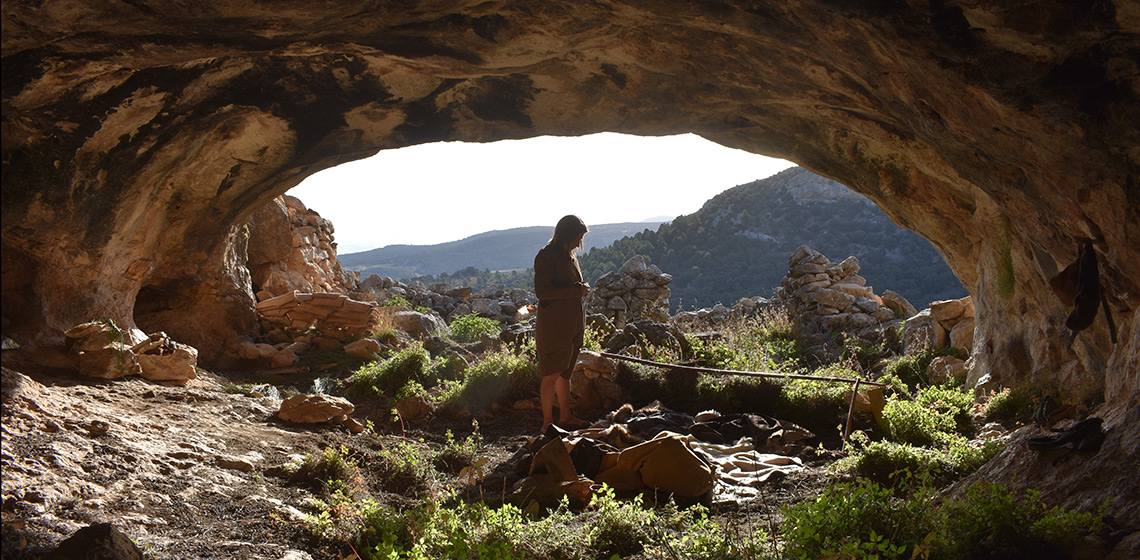
Prehistoric immersion as a resource to test all the technical knowledge of ancient times, as well as the social relationships in that context. We present our experience across six of these activities, showing how experience varies by site, weather, and social relationships.
Introduction
Prehistoric immersions are activities that emulate human life in a prehistoric context within a natural environment. A group of people specialised in different handicrafts and skills try to manage a situation in which they develop abilities for daily life production, in which social relationships are the vehicle for sharing, learning, enjoyment, meeting necessities, and finding well-being within the collective.
This free and non-commercial activity allows participants to practice the theory of productivity, test materials, and share scientific knowledge that comes from studies of archaeology and anthropology. This is possible in a context without modern objects, meaning the use of plastic, metal, glass, etc., is not allowed. And people have to make their own clothes, huts, food and instruments to recreate an integral experience, and try to be as close as possible to the prehistoric context chosen, in this case, the Neolithic period.
This research is multidisciplinary and will be approached with a holistic methodology, exploring the experience of prehistoric learning within an anthropological and ethnographic subject.
Precedents
After fifteen years of working on prehistory in museums and other sites, we had our first contact with this activity through our partner Werner Pfeifer, who has been preparing in Albersdorf since 2012, a modality focused on specialists and beginners. After some activities, like workshops or recreations at Danish Museums and expeditions to Namibia, Pfeifer started to offer an immersion at Steinzeitpark prehistoric park, where large numbers of people, up to more than fifty, shared experiences living in recreated Mesolithic, Neolithic and Iron Age contexts. Werner took the idea from some similar experiences in Spain and Portugal, and also from the activities that Lynx Vilden had developed some semi-immersive spaces around 2001.
The Experiences
We have known three different sites that differ in managing the activity and the environment consisting of the following:
- The experiences in Steinzeitpark (SAT.1 REGIONAL, 2025) from Albersdorf (Germany). Between 2022 and 2024, we found space in Albersdorf to begin these activities. They offer one-week full immersion, where you can learn from workshops such as bartering, prehistoric cooking, gathering, tanning, flintknapping, etc. or simply resting in recreational huts. The site is next to the town, so it is convenient for resources and comforts such as showering, medical attention, or buying from a supermarket if needed. Therefore, for beginners, it is made easier, and allows the presence of young, old people and families.
- The experience in the Ocreza River (ARTE.tv, 2024). In 2024, ten people participated in a full immersive activity in the Ocreza River, Portugal. The settlement resisted the Atlantic storms and the weather inclemency, and we could complete 21 days testing all the different stuff and learning to use the resources of this wet environment.
- The experiences in Moratalla. In 2024 and 2025, we began testing areas around the mountains, which are environmentally Mediterranean. The first year, the activity was done by the two of us alone in a cave, which was a monumental effort for two people doing all of the work. But in the second year, our group increased to four, introducing more experiences and socialisation for our recreation.
Environment
What environment is used is an important factor in recreations. The site’s conditions, including its geology, the weather, the flora and fauna, the presence of water and wood, are important factors that can change the way of living and the relationship between people.
The experience at Steinzeitpark was limited by what was available at the park; as we don’t have caves or rock shelters, the activity was developed in the cottages and around the fire at night. On the other hand, we have the experience in Ocreza, where the dispersion of the huts was the characteristic of the settlement, and the use of little fires in each place, apart from the central fire, where everyone can cook or dry clothes. The use of caves was a very different experience because everyone shared the same space and resources, so relationships are closer and the work can be done more collectively.
Productivity and Methodology
During the immersions, people developed different jobs, crafts and productivity.
Food
Unfortunately, the sites have no easy way of hunting or fishing, so the basic aliments were brought individually, respecting the Neolithic context. We preserved them using rawhide bags, esparto baskets and birchbark.
- Fish. Salted cod, mine, roe, dry tuna, roasted salmon, anchovies in vinegar, and dry octopus.
- Meat. Serrano ham, wild boar leg, kid, dry sausage (cow and pig), dried cow meat, dry loin, fats, black puddings, bacon and snails.
- Greens and Fruits. Apples, pears, grapes, strawberries, blueberries, blackberries, peas, fabs and garlic. Olives and capers in brine. Broad beans.
- Dry fruits. Figs, strawberries, plums, raisins, cranberries, walnuts, hazelnuts and pinions (pine nuts). Lentils, chickpeas and michirones.
- Infusions: camomile, liquorice, acorn coffee, rosemary, thyme.
- Others. Mushrooms (boletus), olive oil, honey, salt, eggs.
The use of flint blade knives was common for slicing meat and cheese for everyday cooking. In this last case, we needed to use a wooden base to cut square pieces of fresh goat or wild boar meat.
Fire and Cooking
Fire starting
The fire was done through the two main techniques. In Alberdorf and Portugal, we started the fire usually by the arch, and in Moratalla, we used the spark pyrite method and maintained the fire active for six days.
Glue
We prepared some glue from pine resin and bees wax, applying some carbon in some cases. The main use was repairing knives and tools, but we could test a torch to see in the night, and to share the fire from hut to hut.
Cooking System
The cooking system used a round fireplace that alternated between variants for each type of recipe. Every day we got the infusions in the morning in the pottery, at midday we used them to prepare a big bowl of soup or a barbecue, using the stick system or the loop tripods in the case of rabbit. If the meat was raw inside, we used to finish cooking over the ashes or over a slatestone. At night we used to cook the eggs without water, carefully turning them around for approximately thirty minutes.
Handcrafts
Some materials were brought to produce some useful prehistoric objects.
Pottery
The production of pottery was made from red clay with chamotte. In one case, we mixed with a lot of sand from the site soil, but the pot broke. In the other two cases, the baking was successful, one of which was done with no oxygen, which turned into a black colour, decorated in the cardinal style. The other, which was also decorated, had an oxidant process with more oxygen, but with a prebaking using ashes. Our use for pottery was for carrying water and cooking. Other objects that we made were a pout spoon to serve the soap, pipes for smoking and fishing artifacts.
We developed a warfare pottery system that can get the bowl done in less than twelve hours, and it is suggested to be prepared as soon as the activity starts so you can use the pottery during the immersion (in southern Spain can be done in 12 hours of pre-drying, in Germany we need two or three days to have a complete drying before cooking the clay). As we cannot have thermometers in the Neolithic context, we learnt how to control the temperature through approximate calculations. The methodology consists of raising the temperature progressively for five hours, aiming for the six hundred to seven hundred centigrade mark. The principle was to raise the temperature by 100 degrees per hour, so we had to manage the temperature accordingly: in the first hour, you can touch the pottery with your hands and turn it to accelerate the drying process; in the second hour, you cannot touch the pottery, so we assumed it was near 100 degrees, and therefore had to use leather gloves to move the pieces; in the third hour, the ashes are near the pottery, but the flame never touches them, and therefore one can put an incandescent ash inside and move the pot around to get higher degrees; in the fourth hour, little branches are progressively added to create contact between the flames and the clay; finally, in the fifth hour, one can add large wood pieces to make the clay turn a red, incandescent appearance, so it is supposed to go over 500 degrees.
We tested the preparation of clay with goat excrement and found that it resists higher temperatures and dries more quickly, but in the end, the pieces are more fragile and less resistant. The process of learning comprises a series of failures where we had to figure out the origin of the problem, so that next time we can avoid these mistakes.
Esparto
The use of esparto was diverse: soles for shoes, rope, baskets, fishing traps, food containers and as a strong fire starter. It is a very light material, but it does not perform well in a very wet environment. The basket was made by pleita and punto cofin patterns, and also some with the crossed system. The soils were made with a 10 to 12 meters of recincho pattern, and sewn with a bone awl with an eyelet at the tip, using the Spanish esparteñas shoemaker system.
Tanning
We experimented with both methods for tanning salmon skins. First, we fast tanned with eggs, only deepening the skin for five hours before working the surface. Then we gathered some willow bark to make a tea and dip the skins in the cold liquid, repeating this process for seven days. We also tried deer skin tanning with potassium hydroxide, and used a bone tool and an abrasive rope, finishing it with smoke. (Bushcraft Survival Australia, 2025).
Woodcarving
The technique to craft wooden plates was to use two or three ashes between the two wood pieces, as in a tunnel, so that the flow of air continuously burns the surface. After this, one only has to use a flint scraper to remove the carbonised parts, making a convex shape.
Rope
Rope making was undertaken with torvisco plant and esparto. We had the opportunity to extract its bark and work on it to make it more flexible so we can use the fibres as the same way as the esparto, but they were less resistant and shorter.
Loom
A loom was developed with stone weights for the tension of the weft and a wood stick for the warp. We prepared a fuller tied to the odds, esparto cords to pull it and make the web. This kind of textile is called arpillera or burlap.
Hunting simulation
Unfortunately, due to bureaucracy and local laws, we were not allowed to hunt, but in Steinzeitpark we tested some atlatls and bows made in a prehistoric way, shooting at different fake animal figures in the forest.
Clothes
The main material is leather, and almost every day, the clothes should be repaired. We used our bone needles, cannabis and esparto thread, depending on the object. For the legs, we use leggings, skirts, overalls and lately, trousers. At the beginning, trousers were not accepted as no evidence has been found until the Bronce Ages, but after examining dozens of examples in the Levantine rock art from Spanish Epipalaeolithic period, we let the use of trousers. For the upper part of the body, a vest or some kind of t-shirt, covered in the coldest moments with fur skins. At the beginning, we got some suede skins and traditional leather, but we have learnt to tan, so we were able to make more skins every time we meet. We improved the sewing, developing stronger running stitches instead of the blanket stitches we used previously. For other little works, we also use the French (or English) stitch.
Conclusions
The environment
The two main factors that we found more important to bear in mind are geology and weather. The differences between places are quite significant, as we had to adapt to landscapes with multiple variables and a variety of resources. It is a drastically different way of life in a cave in Moratalla, where the cavity is a central place with specific characteristics; as in Ocreza, where the river is the main character, and everything is around it; or in the Steinzeitpark “settlement”, where the social relationships are bigger and mark the way of life.
The weather is also an important factor that marks the way of life; there are differences between living in a continental cold DANA in Portugal, or a Mediterranean warm climate in Spain, or long light days and rain in July in Germany.
We realised at the end of the activities that it would be a big problem if we had to live for several months in the same place, as we cannot access dry wood, and we would have had to start deforesting.
Human relationships
Some factors regulate the relationships of a group, as we are always concerned with not establishing power in relationships, and try to be as egalitarian as we can. We know that in prehistory there was a wide variety of social organisations, but democracy, personal freedom and solidarity with others fit perfectly into some context of the Neolithic period.
Also, we found three main factors that probably regulate the status in a group: acquired technical knowledge, ownership of resources and materials, and experience in life relationships and life in the mountains.
The social experiences were so different, depending on whether the group was bigger or smaller, or whether the weather was good or bad. For example, in Portugal, with all the rain, we spent a lot of time separated, each one in their own cottage; in Moratalla, we were like a little family in a cave, with good weather, and in Germany, we almost reached sixty people, so the subgroups and the diversity of cultural contexts define the convivence.
We also found that our modern way of thinking greatly affected the immersion; we do not support misogyny, xenophobia, totalitarian conduct, or other issues, and we really think that in prehistory they dealt with those matters. In summary, we have similar problems to those of the Neolithic period, but we cannot renounce our modern way of thinking to resolve them, which can be an advantage for good relationships.
Technology and learning processes
Every time we met someone in an immersive context, we also learnt the handcrafted abilities and knowledge they held. Your own learning process with these experimental prehistories always has an observational element on what others do, how they do it, and why they do it like this.
As we have learnt all the basics in the last fifteen years, for us it was easy to start working prehistorically in their relative context. But for others who maybe did not have the experimental experiences as often, it probably took longer to adapt, or to assimilate the change that living in an immersion brings. But anyway, we were there to learn and to teach, to share knowledge. So, anyone can ask others about teaching any speciality or giving the resources to produce what some need. For example, we prepared a loom for our partner Vicente, so he can elaborate some esparto textile, and later he helped us with the loads of wood; in Steinzeitpark we had the opportunity to learn new esparto patterns using the explanation of our partner Imbar about how they weave other kinds of vegetable fibres in Israel; also, while preparing rope with our partner Jose Ignacio, we realized that others materials are more practical than esparto in some contexts like building a hut, because he show us how to extract and prepare the torvisco bark to obtain strong fibres, longer that ours, that does not need to be rolled, and consequently you can save time to obtain a similar result.
Gastronomy
We were not allowed to hunt due to the local laws, so we only gathered some resources to eat (less than 10%), because most of the meals were prepared beforehand, although we prepared them using traditional methods. We did not have any problem with food, and always stored more than we used, so we were living in a context where there is abundance of meals.
Nobody got sick during any of the immersions, so our preservation systems ran well. In some cases, we had to remove some meat or fish due to flies that laid larvae on them, as we did not cover them properly.
We were concerned about the human waste and rubbish locations, especially in Spain, where mosquitoes and flies can be a problem for wellness and health.
The fireplace was used to cook and also to heat the area. The cooking systems were so simple and easy to manage, as we had plenty of wood. We learnt the use of cooking in pottery, where water is lost a lot faster. Salt was not always present in meals; most of them were supported by the natural conservation of ham and cod in the recipes. Also, raw ingredients were an important factor in maintaining health.
Keywords
Country
- Spain
Bibliography
Bushcraft Survival Australia, 2025. Interview with Dra. Theresa Emmerich Kamper - Habilidades de vida tradicionales [YouTube]. Available at: <https://www.youtube.com/watch?v=Ri2kM-fRhqk> [Accessed 27 February 2026].
ARTE.tv, 2024. Documentales “Zurück in die Steinzeit” [YouTube]. Available at: <https://youtu.be/tIYBh4nM6II?si=LrCzJQKe5KbeAKLw> [Accessed 27 February 2026].
SAT.1 REGIONAL , 2025. Im Steinzeitpark Dithmarschen leben Menschen wie vor 6000 Jahren [YouTube]. Available at: <https://www.youtube.com/watch?v=M3wP4c7-Fqk> [Accessed 27 February 2026].