
The content is published under Creative Commons Attribution 4.0 International license (CC BY 4.0).
Reviewed Article:
Spindling for Weaving: Incorporating Intentionality into Textile Studies
The Spindling for Weaving project synthesised approaches from previous experiments (Grömer (2005), Kania (2015), and Ibarra, et al. (2018)) while tackling assemblage-specific queries arising from Danebury, a British Iron Age hillfort (Hampshire, UK), to generate a comprehensive experiment following a SMART methodological framework (Malcolm-Davies, 2023). This addressed concerns about the over-emphasis of woven products in archaeological textile studies by highlighting the impact yarn production techniques could have on subsequent stages of the chaîne opératoire and allowing distinctions between tool and/or spinner affordances to become visible. The Spindling for Weaving project used six replica spindle whorls to create yarn samples following proscribed guidelines, resulting in 72 samples for analysis. Combined with experiential data, the technical outcomes demonstrated distinct intentionality from the hands of the spinner, not the tool, in the majority of the samples. The results produced from this experiment lend further support the importance of a comprehensive methodological approach and sets the stage for continued research on the topic of yarn products.
Thematic Overview
There remains a strong need to expand on experimentation involving textile production, due to the presence of numerous variables inherent in the chaîne opératoire. This is compounded in the archaeological record by differential preservation and differing modes of production (Costin, 1991), temporally and spatially, and especially for prehistoric textile production. For Iron Age Britain (800 BC - 43 AD), the difficulties are intensified by social behaviours surrounding depositional strategies that can alter a correlative analysis of textile production, as early studies on this subject have revealed (Cunliffe, 1995; Hill, 1995a; 1995b). The circumstances surrounding discard practices/behaviours in Iron Age Britain specifically alter the approaches normally used in textile studies, as textile tools are rarely discovered in contexts of production. Dee DeRoche (1995), a textile tool specialist, suggested that a more thorough analysis of the relationships between the tools as both utilitarian and social objects would be necessary to better characterise the modes of production visible in the tool assemblage of later prehistoric Britain. This task has subsequently been addressed through the doctoral study of the author (see Beamer, 2022, Chapter 10) with a depositional analysis from Danebury hillfort (Hampshire, UK) examining the range of behaviours visible at the time of textile tool discard and applying these insights to each individual artefact. The result of a depositional analysis revealed that some textile tools may have been selected for disposal in a patterned way (Beamer, 2022, pp. 276-279), requiring a nuanced approach to qualifying the data through an anthropological lens (Beamer, 2022, Chapter 3). Rather than considering textile tool finds in pits solely as production waste, the depositional analysis showed that approximately 50% of the recovered tool assemblage may have been deliberately selected for disposal, being transformed into a primarily social object through acts of deposition (following Fontijn, 2008, Garrow, 2012; 2013). Prior statements about textile production (Cunliffe, 1984) were criticised (Marchant, 1989) since the material evidence did not clearly support the conclusions being made about how it was organised. To claim that Danebury was a textile production centre required more data of spindling technology, which was not the case, and, through the depositional analysis carried out by Beamer (2022), solidified the notion that the textile tools from Danebury must be interpreted through the social dimension as part of their utilitarian function. This new narrative on the social perspective of textile tools during acts of deposition potentially obscured what could be inferred about textile production at Danebury. In the absence of extant textiles, the tools can be used to reasonably predict which textile fabrics may have been possible to produce with a given tool assemblage - in other words, gaining insights into perishable material culture through inorganic remains (Hurcombe, 2008; 2014). The comprehensive programme at the Centre for Textile Research (CTR), Denmark, for instance, provided researchers with a range of possibilities that could be applied to a selection of textile-related tools from the Mediterranean Bronze Age (Andersson Strand and Nosch, 2015; following Andersson, 2003; Andersson Strand, 2011).
The extent to which the CTR experiment results can be directly applicable to all archaeological assemblages remains limited. This was evident in that the Danebury (Beamer, 2022) assemblage which contained comparatively heavy loomweights and spindle whorls, a mass range which was not considered in the experiments by Olofsson, et al. (2015) (see Loughran-Delahunt 1996 for ethnographic accounts of heavy whorls; Tomasic 2012 for experiments involving thigh spinning). Additionally, there was a disproportionate emphasis on the weaving experiments and the woven products, yet it must be emphasised that the selection of fibre, preparation, and spinning methods, all factor into the appearance and functional utility of a woven textile (Hudson, 2014). Furthermore, the contexts in which textile tools are typically found at Danebury, for example, complicate a correlative understanding of how they relate to the chaîne opératoire. As part of a series of experiments, the author’s experiments involving the Danebury loomweight assemblage, for example, have provided the crucial context for extending the original CTR experiments and refining how conclusions from experimentation can be applied. Further experimental and ethnographic research by subsequent scholars (for example, Andersson Strand, 2003; Chmielewski and Gardyński, 2010; Kania, 2015; Ibarra, et al., 2018) has demonstrated the influence of intentionality introduced from the perspective of the spinner can have on the spun yarn. To continue this trend, a logical next experiment should focus upon extending the available whorl data to include comparatively heavy examples, which the Danebury assemblage can provide, and explore the impact of spindling technique, a point raised in Beamer (2022, Chapter 7), while pinpointing how to assess a practitioner’s influence over the production sequence. Other whorl assemblages may contain similar artefacts as that of Danebury (for example, Grömer, 2005, p.109, with whorls weighing between 120-140 g). Consensus by textile scholars largely attributes spindle whorl morphology to regional or socially proscribed connections, with the possibility of extremes in masses being created for more specific types of yarn gauges/cloth desired (see also Grabundžija and Russo, 2016). Most of the prehistoric textile assemblage analysed by Grömer, et al. (2016) from the Hallstatt mines, for instance, indicated that most yarns could have been spun with a 40 g whorl (Grömer, 2005, p.111). As well, most textile scholars accord that heavy whorls are useful for spinning long staple fibres and plying, and for thick yarns, while lighter whorls are best for short staple fibres (Grabundžija and Russo, 2016, p.309, specifically noting 33 g whorls as a dividing boundary).
Material agency influences morphology, as does utilitarian function, and the use of chalk for creating whorls in the Danebury assemblage can reveal pertinent insights across metrical parameters, like mass and social dimensions (Wolfe, 2019; Beamer, 2026; see also Lin, et al. 2018 for importance of scientific exploration). Since chalk is a rarely used material for textile tools across known archaeological assemblages worldwide (cf. Cecconi et al. 2025; Levy and Gilead 2012), its use within the Danebury tool assemblage is of consequential value. The friable nature of chalk (Bloomfield, et al., 1995) may indicate that whorls were generally constructed to be heavier to mitigate against accidental damage or breakages. Creating and using replicas will, therefore, generate useful insights about manufacture as well as the yarn products. The application of moment of inertia (MI, or MOI), the amount opposition a body of mass exerts and in ratio to the torque required to set an object into rotational motion along an axis, considers spindle whorls as active objects, which are acted upon by external forces like spindling techniques, practitioner ability, and the material properties of fibres, and has been a recent advancement in the study of spindle whorls (Beamer, 2022; following Chmielewski and Gardyński, 2010; Verhecken, 2010; 2013). MI needs to be contextualised against the method of twist insertion, namely that a high MI - which corresponds to a significant amount of activation energy required to set the whorl into motion - does not necessarily assert that a thick yarn was produced, or suitable only for working with long staple fibres or plying. Rather, it could imply that such a whorl may have been more useful for supported spindling methods instead. Generally, there have been too few replications of these experiments to state their robustness in textile studies, nor is there a sense of the range of or potential hidden biases emanating from modern practitioners. The recent work of Malcolm-Davies (2023) critiqued the process of how experimental research in textile studies has been conducted, and that a more systematic and scientific approach in recording information has been needed. By using a SMART methodology, Malcolm-Davies designed and delivered meaningful outcomes from two different experiments. This methodology requires the research questions to be specific, measurable, attainable, relevant and realistic, and given an appropriate timeline. Though the Spindling for Weaving project began independently of the SMART methodology, it has been modified to align with the structure and terminology as set out by Malcolm-Davies (2023).
As a continuation of existing, unpublished weaving experiments conducted by the author, the spindle whorl assemblage from Danebury hillfort was a reasonable choice for the Spindling for Weaving project. Danebury hillfort has been well excavated, researched, and archived, making this experiment an important contribution to that existing narrative. The corresponding dates of occupation (circa 500 BC100 AD) place this period well within textile tool studies, which have generally focussed on the earlier periods of prehistory and those from the Roman period and onwards, from the western European perspective (see Beamer, 2022, pp.16-22, for a brief discussion). Additionally, the experiments herein could lend additional evidential backing to claims outlined in Beamer (2022, Chapter 7) about morphological characteristics which distinguish textile tools from other find types. During the active period of archaeological investigation at Danebury (1969-1988), hundreds of textile tools were recovered, though the conditions were not sufficient for the recovery of textile remains. At this time, there were no textile tool specialists to study the assemblage directly, leaving several open questions unanswered. One contemporary dissenting analysis of the textile tool assemblage was produced by Marchant (1989), indicating that the artefactual data did not comport amicably with the interpretation provided in the official reports (Cunliffe, 1984). Until recently, few studies systematically and comprehensively addressed complex questions about textile production by using textile tools as a primary investigatory approach. A synthesis of the textile production traditions has been discussed elsewhere (Beamer, 2022, Chapter 11), and the results of the Spindling for Weaving project will deepen our understanding of textile production at Danebury by capitalising on nuance through gestures, experiences, and embodied insights.
These questions form the basic actionable concepts explored in the following experiment:
- What is the range of yarn grists that could be produced from three different whorl masses, comprised of two different materials - chalk and clay, which are based on reproductions of the Danebury whorl assemblage?
- Can the heavy spindle whorls from Danebury produce viable yarn suitable for weaving, using both supported and suspended spindling methods, using artefactual data from Hallstatt?
- Can the turn tests demonstrated by Grömer (2005) be replicated, and how do these new results compare to the original experiment?
- Can spinner intentionality be quantified through comprehensive experimentation to highlight the importance of knowledge relating to the operational sequence?
These questions were formulated following a critical analysis of previous experiments and combining relevant features of those experiments into a design that would address a targeted investigation of the Danebury hillfort whorl assemblage. The following section provides an overview of experiment design of prior investigations and how this shaped the foundation of the Spindling for Weaving project.
Previous Textile Tool Experiments
Previous research by Grömer (2005), Kania (2015), and Ibarra, et al. (2018) have commendably expanded the work originally conducted by the CTR. The goal of the Spindling for Weaving experiment, as an integrated collation of previous experiments, endeavoured to (1) enhance and expand knowledge of yarn production with spindle whorls of disparate form and mass, (2) address criticisms of the methodologies used, and (3) demonstrate the utility of the SMART methodology beyond the original creator (Malcom-Davies, 2023). To understand the framework of this project, a summary of previous experiments follows. Grömer (2005) conducted two types of experiments with original Hallstatt and Meidling (Austria) whorls: one examined yarn gauges produced with heavy/light whorls and ‘free hanging’ and supported spinning methods, and the second experiment examined the number of rotations over timed intervals (called ‘turn tests’). The results suggested that heavy whorls produce threads most easily in the 0.7-2.0 mm range when ‘free hanging’, and as thin as 0.3 mm when spun supported. Ultimately, it was easiest to produce threads 0.8-1.5 mm in diameter, presumably as ‘free hanging’ because they mention ‘performed while walking’ in the same paragraph (Grömer, 2005, p.110). As for the lighter whorls, there was difficulty in making yarns thicker than 1.5mm, regardless whether wool or flax was used, noted as an inefficient method for making such thick yarns. They indicated that the lower limit of 0.2 mm was easiest with the supported method. The second phase of the experiment conducted by Grömer (2005) revealed differences in efficiency, comparing activation energy over three tests, averaged together, and another counting the number of total twists after a single activation of the spindle. These ‘turn tests’ were useful in understanding how the spindle apparatus functioned while suspended, mimicking the behaviour of hand spinning in a more controlled environment. The results of these experiments were instrumental in confirming yarn characteristics that are based on known spindle parameters, and conducted in a systematic fashion. The turn tests were influential in driving the direction of whorl analysis towards using MI as a method of investigation, considering spindles as active objects.
The experiment conducted by Kania (2015) utilised citizen science and incorporated moment of inertia to formulate a method of technical investigation that would quantify the subjective evidence produced by fourteen volunteer hand spinners. These experiments used one spindle whorl from the 12th C medieval period as a base example (Kania, 2015, p.115), then four additional whorls were created based on this original. The premise for this experiment was to isolate the effects of mass and MI, whereby two examples had the same mass but different MI, and two examples had the same MI but different masses. Kania (2015) used theoretical examples whose design was strictly controlled, which is why some of the whorl shapes look visibly strange when compared to the original archaeological examples. There were 140 samples produced in the study by Kania (2015). Instruction was given as “The spinners were also asked to spin whatever yarn type and thickness would work best or felt most suitable for each spindle–fibre combination, using the techniques for spinning they were used to or that they deemed best.” (Kania, 2015, p.117). This revealed spinner bias and became a difficult detail to incorporate due to there being no discernible pattern relating yarn grist to whorl mass (Kania 2015, pp.120-123). In a following study by Ciccarelli and Perilli (2017), the authors noted the most impactful variable to be the individual spinner followed by technique. The primary issue with experimental work is its isolation and need for replications by others to enhance the results, and difficulty quantifying human factors, such as skill level, experience with hand spinning or range of techniques, and response to material or preparation methods, especially with limitations on standardisation and evaluation. Kania’s experiment, therefore, fits well into the overall need for comprehensive data, as well as setting an example for how to coordinate the objectives of the experiment for a broad audience, which may not be academically inclined (or familiar with the requirements of experimental archaeology). A similar sentiment was conveyed by Ciccarelli and Perilli (2017) arising from the specific crafting background of the participants, whereby those who had expertise with one technique over another (or experience with a particular fibre) tended to prefer the familiar option. These results reveal spinner bias, which is something potentially present in the archaeological record, though there is a need to attenuate these subjective attributes so they can be objectively studied.
Ibarra, et al. (2018) created a broadly similar experiment as Kania but used archaeologically authentic replicas based on the Puebla-Tlaxcala valley in Mesoamerica and indigenous hand spinners for creating the yarns. During the experiment, the researchers observed the professional Zapotec spinners oscillating between supported and suspended spinning techniques, based purely on experience and craft-based expertise associated with the material affordances of the fibres. This exploratory approach by the researchers meant that the spinner exerted substantial influence over tool selection, spinning technique, and the final yarn. They observed that some relationships could be visible when comparing spinners as individuals against their own spun samples, but this relationship became blurred when the differential abilities of other spinners were factored into the analysis. This implied that the same tool, technique, and fibre could produce yarns of vastly different qualities. Ultimately, they rejected the notion that whorl could be connected to quality of yarn or fibre type.
Methodology
These previous experiments were selected for the Spindling for Weaving project because those results and insights could be enhanced with a new experiment and making key elements, such as identifying spinner intentionality, more explicit. As shown by Kania (2015), spinners exert substantial influence over the production of yarn though no subsequent publications have demonstrated how to capture or evaluate this effect. There has been an increasing emphasis on demonstrating the interpretive value of experimental work (Meo, 2024) though the robustness of the outcomes can only be bolstered through careful and meaningful selection of variables, such as wool (or fibre) selection, construction of a reference collection that creates all possible outcomes within two extremes, and relates the results to contemporary archaeological material with a demonstration of how these results can be interpreted without overstating their influence in our conclusions. Several considerations influenced the design of the experiment. Fibre choice significantly impacts the outcomes of the experiment. Though each prior experiment did consider the differences in wool or plant fibres, or different wools to accommodate the expertise of modern spinners, this fact required consolidation. While wools with widespread commercial reach may create a collaborative environment for research, such as the case of merino wool, its use may be of limited interpretive value with experiments examining prehistoric tools and/or evidence of different sheep breeds, which is likely the case for Danebury hillfort. Three different wools were used in the Spindling for Weaving project for relatability to previous experiments and to nurture the collaborative research environment, and a third for its sympathetic relationship to prehistoric cognates.
How a yarn is intended to be spun can influence the fibre preparation selected and how the resulting yarn behaves in further stages of the chaîne opératoire. Two spindling techniques were used, supported and suspended, for investigation. While spindling technique did not influence how the wool was prepared in this project, it is worth highlighting for future experiments. Additionally, upper and lower boundaries for yarn grist needed to be established to discern how much influence the mass of the whorl exerts over this parameter, and comparisons needed to be made regarding the tensile abilities of different wools, if visible in the data. To measure the impact of spinner intentionality, and its relationship to the spindle whorl used, a range of wool, spinning methods, and grists needed to be tested for each of the replica whorls. This establishes the capabilities of each whorl for each spinning method, and allows for an evaluation of fibre choice in terms of how it impacts suitability for this type of experimentation. By separating the wool selection, spinning technique, and grist into discrete categories, an objective analysis can be conducted which discerns what is possible with the whorl being examined versus what a spinner may choose to make given the full range of options. Similarly, the guiding instructions for the purpose of the yarn needed to be more concrete to reduce subjectivity bias. By being explicit with the goals of each variable of the Spindling for Weaving project, the ones which are most guided by practitioners could be pinpointed. It is too simplistic to state that because a yarn was produced for this experiment that it was so in the past, and the experiences generated through this experiment can provide nuance to that discussion. In subsequent iterations of this experimental design, it is hoped that these guiding principles could be used to expand the results contained herein in the same vein as Kania (2015) who used citizen science for producing a sizable data set.
A final actualistic experiment, in progress for a future publication, demonstrates how instructions for the finished product influences the intentions of the spinner. This final stage consolidates the results generated from this phase of the experiment and showcases the importance of how a spinner’s choice and intention during the spinning phase of the chaîne opératoire when evaluating the possibilities which may arise during an analysis of textile tools, especially when no extant textiles survive. The Spindling for Weaving project consolidated the experiments of Grömer (2005), Kania (2015), and Ibarra, et al. (2018) to bring substance to the concept of spinner intentionality. To synthesise these insights, the project required six proxy spindle whorls, three made of chalk and three made of clay, based on the Danebury whorl assemblage. The primary objective of this experiment was to establish the lower/upper bounds of the yarns which are possible to produce for each of the replica whorls, using the same breed of wool mentioned in published works where available, and to employ two basic techniques for inserting twist, supported and suspended spindling. The secondary objective involved replicating the turn tests originally conducted by Grömer, thereby creating a rotational index for spindles with a known MI. MI requires context to embed these results in the confines of textile production. In doing so, the results of these questions can expand the conclusions drawn about a larger range of spindle whorl masses than previously studied, and refine the spectrum of possibilities they could present through an MI calculation alone. The interpretation of these results can potentially dislodge preconceived notions of what could be a spindle whorl and that the products spun may provide additional evidence for social/regional interpretations for the style of whorl. Furthermore, equal emphasis has been placed on the experiential aspect of spinning each sample as important insights could be used to add further context to the intuitions motivating whorl morphology and selection, and aid in future discussions about textile production overall.
The predicted outcomes of this project were to improve understanding regarding the potential influence of heavy spindle whorls on woven products. As well, the importance of spinner intentionality needed to be foregrounded for both the purpose of the experiment and to facilitate discussions of how this may be recognised in the archaeological record. Lastly, it was necessary to embed spinner intentionality into MI calculations to contextualise how embodied knowledge could be harnessed throughout the chaîne opératoire of textile production. In context, the results would establish a dynamic view of spindle whorl technology which may potentially resolve whorl variability questions and contribute to studies relating to social/environmental change.
SMART: A Methodological Approach
Experimental archaeology has the potential to discover highly relevant information about how technologies may have operated in the past, and the results can produce an evidential basis for perishable material culture, such as in textile studies. Following the Centre for Textile Research scholars and the Texts, Textiles and Context project (Olofsson, et al., 2015), an assessment was due to consider a standardised methodological approach that could scale for different types of experimental projects within textile studies. Malcom-Davies (2023) has assessed the methodological approach of experimental archaeology through the lens of textile studies and proposed a system for systematically designing and implementing a methodology that produces suitable results. The SMART method creates a robust approach that utilises multiple types of information and focusses on clear objectives. The strength of this approach emanates from the categorisation of each element of the process of experimentation, much like a rubric, to guide the design, implementation, and dissemination of results:
Specific: Demands the design of the experiment targets a specific set of questions which may be inherently functional and practical, such as reconstructions for museological display, or in testing theoretical concerns. Identifying the specificity of the experiment serves to shape the remainder of the methodology.
Measurable: Informs the scientific strategies for data collection and evaluation, and will be useful in how this information is displayed in the final report.
Attainable and Assignable: Entails assembling a team for the necessary skills and expertise they possess for the successful completion of the experiment, and in situations where there is a single experimenter/author, to utilise external support by appropriate academics and/or craftspeople to confirm the findings.
Relevant and Realistic: Presents the relevant data which satisfies the research questions with akin interpretation of the results.
Timely: Ensures the completion of the experiment in both a timely fashion, and in allowing members of the team to be identified, and to complete the experiment, analysis, and discussion (see Malcolm-Davies, 2023, for full explanation).
Turn tests encourages us to regard spindles as active tools, whereby the mass of the whorl and strength of activation energy of the spinner flicking the tool into rotation have observable impact on the flow and efficiency of the spinning process. Grömer (2005), using original whorls from prehistory, measured this in terms of moments of discrete activation, counting the number of twists per six seconds, averaged over three trials, and duration of a single activation until back rotation occurs, counting the total number of twists in that period of time. With the context of this experiment providing evidence of a spinner’s influence on the process, these turn tests results can be appropriately situated (Beamer 2022, p.171). Linen yarns were selected due to being commercially spun and available as s-spun, suitable for this turn test which directed the plying in the z-direction (see Appendix). Wool yarns are typically spun in the z direction, so to maintain consistency with the remainder of the project having spun all samples in the z-direction, suddenly using the s-direction for this portion of the test would introduce other factors difficult to account for. Angular velocity (measured in rads/s, or the distance travelled per second along the plane of rotation) and angular acceleration (measured in rads/s²) were calculated and compared to the data generated from the original study conducted by Grömer (2005). Angular acceleration is derived from having a known angular velocity with respect to time; the change in angular velocity describes the time it takes for an object to stop completely. Since the test includes a singular burst of activation energy, angular acceleration is expressed as a negative number (for example, decreasing). In Beamer (2022, p.186), only theoretical considerations were possible, yet it was supposed that whorls with a smaller MI should have a high number of rotations and a higher rate of deceleration than those of a larger MI, which would show the opposite relationship. Based on that limited analysis, I concluded that spinners at Danebury would have been able to produce any yarn desired by using a combination of fibres and supported and suspended spindling techniques.
Application of SMART Method
The Spindling for Weaving project design included making a comprehensive, practical experiment that would satisfy theoretical hypotheses. The case study area had been previously identified through the author’s doctoral study on the textile tools of Iron Age Britain (Beamer, 2022, Chapter 4) and was used here for continuity of the overall research goals, which continues to be developing a thorough understanding of textile production in the Danebury hillfort landscape during the British Iron Age (for example, Davis, 2013). This period heralded a transformation of social structures, with a growing emphasis on sheep husbandry (Serjeanston, 2007; Valdez-Tullett, 2017) through the transition between the Bronze and Iron Ages and possibly mediated via textile tools; experimentation provides the opportunity to reveal such relationships (Schiffer and Skibo, 1987). Details of the selection of materials, preparation methods for the wool, and spindle construction are located in the Appendix. This also includes a summation of technical approaches to the spindling techniques used.
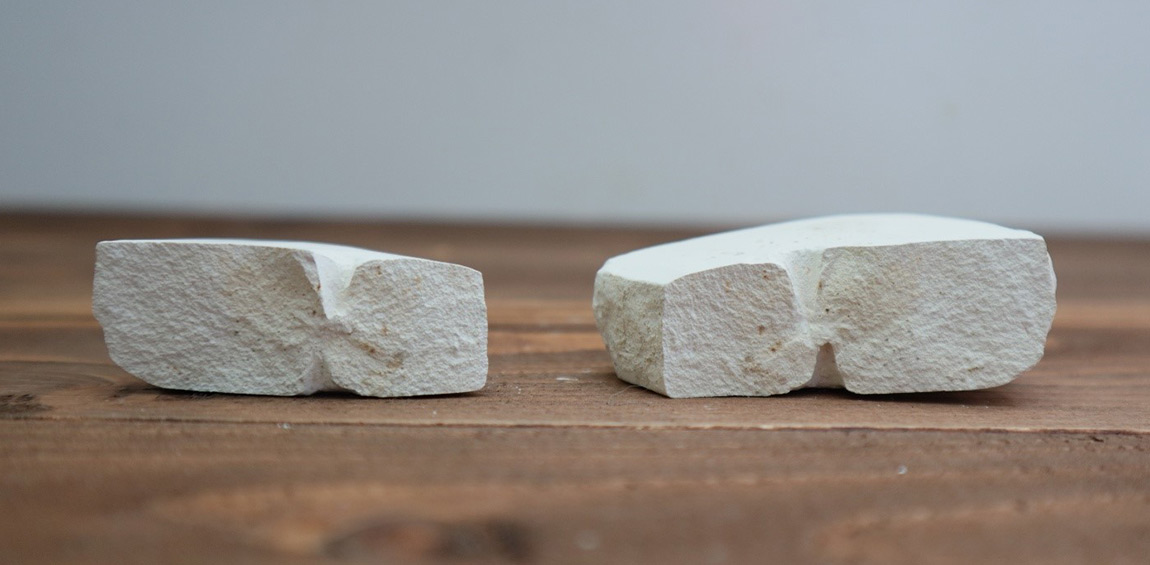
Six whorls were identified for analysis: three each of chalk and clay. The selection criteria for the whorls included choosing the lightest and heaviest complete whorl to represent the extremes in the assemblage, and one whorl that was approximately in the middle of the assemblage in terms of mass. For the clay assemblage, the heaviest whorl was also described as possibly related to sling shot due to its atypical morphology (Cunliffe, 1984). Whorls A, B, and C were constructed from chalk, and Whorls D, E, and F were constructed from air-dry clay (See Figures 1-6). Spindle sticks were carved to accommodate the size of the perforation so the whorls would friction fit. All whorls were placed on the lower third of the spindle stick for comparability with previous experiments, though future experiments may include top whorl placement. Bottom whorl placement also aligns with technological developments following splicing methodology (see Beamer, 2022, Chapter 7; Gleba and Harris, 2018), a logical precursor to draft spinning techniques. Yarns produced via splicing can be managed with a spindle for a boost in production speed, and a perfect, rotationally symmetrical whorl was less important. Furthermore, splicing should not be considered inferior to draft spinning - following the results from Must Farm (Ballantyne, et al., 2024), a site with secure dating and evidence of splicing, it is likely that both bast and wool fibres were used at Danebury and thus both types of fibre spinning practices likely coexisted. The original whorl and replica whorls, along with their metrical data, are listed in Table 1.
| ID | Date | Diameter (mm) | Height/thickness (mm) | Perforation (mm) | Mass (g) | MI (cm²) | Morphology |
| SF 1935 | CP 8 | 35mm | 16mm | 7mm | 20g | 31.85g/cm² | discoid |
| Whorl A | --- | 35mm | 16mm | 5mm | 26.3g | 41.09g/cm² | discoid |
| SF1986 | CP 7 | 59-64mm | 24-27mm | 12-24mm | 82g | 434.60g/cm² | discoid |
| Whorl B | --- | 52.5mm | 24-27mm | 8-12mm | 90.2g | 327.00g/cm² | discoid |
| SF 2410 | CP 7 | 89mm | 35mm | 22mm | 230g | 2416.44g/cm² | discoid |
| Whorl C | --- | 84-87mm | 30.5mm | 8-15mm | 291.5g | 2839.94g/cm² | discoid |
| SF 183 | CP 5 | 25mm | 19mm | 4mm | 12g | 7.79g/cm² | spherical |
| Whorl D | --- | 24mm | 19mm | 4mm | 11.1g | 6.66g/cm² | spherical |
| SF 344 | UNS | 37mm | 22mm | 11mm | 28g | 52.15g/cm² | discoid |
| Whorl E | --- | 38.5mm | 18mm | 7mm | 25.8g | 49.38g/cm² | discoid |
| SF 1284 | CP 7 | 52mm | 32mm | 7mm | 70g | 157.73g/cm² | rod |
| Whorl F | --- | 58mm | 32mm | 6mm | 66.7g | 186.98g/cm² | rod |
Table 1: The whorl selected from the Danebury assemblage is paired with its replica version created for the Spindling for Weaving project. Moment of inertia calculation formulas taken from Verhecken (2010). The dating for Danebury is split into three phases (Cunliffe, 1995, p. 50), Early Iron Age (EIA, CP 1-3, 470-360 BC), Middle Iron Age (MIA, CP 4-5, 360-310 BC), and Late Iron Age (LIA, CP 6-9, 310-50+ BC).
All wool samples were processed in the same way to consolidate the total number of variables investigated to the essentials. These wools included the two breed varieties introduced by Kania (2015, p. 115), merino and bergschaf, and North Ronaldsay, a breed known to exist since the Neolithic in Britain (Balasse, et al. 2019). To be able to make direct comparison to the experiment performed by Kania (2015) and develop a sense of how Iron Age people may have created yarns, all three wools were subjected to the same testing criteria. Though North Ronaldsay may be unfamiliar to modern hand spinners, it was necessary to include a heritage breed for its double coated fleece so that comparison with known extant textiles from similar regions could be assessed, like the assemblage from Hallstatt (Grömer, et al., 2013; Rast-Eicher, 2013; Grömer, 2016). Ryder (1993, p.308), referring directly about the extant sheep breeds likely to be most like those used at Danebury during the British Iron Age, suggested that the heritage breed North Ronaldsay is most similar morphometrically to the faunal evidence at Danebury. Recent isotopic analysis from Skara Brae (Balasse, et al., 2019; see also Greenfield, 2010) lends credence to that notion. Including a modern cognate for a prehistoric original may provide relevant insight regarding whorl morphology, and for this experiment, offer insight into spindling technique.
Every whorl was spun with supported and long-suspension techniques for each of the three wools - bergschaf, merino, and North Ronaldsay - with both a thin and thick sample produced. In this way, every whorl would produce six samples and cover a wide spectrum of yarn products via extrapolation: for example, if a whorl could produce a yarn grist of 0.3 mm to 0.8 mm, it was assumed it would also produce one of 0.5 mm. Identifying these upper and lower boundaries of yarn grist for each whorl, wool, and spindling technique would aid in future analyses where the possibility of full experimentation with the whorl assemblage might not be possible. This design produced one sample for each combination, for a total of 72 samples. In the Appendix, explicit detail about the rationale for these boundary extremes is clearly presented for future replications of this project, which are essential for reinforcing and/or modifying the results within the Spindling for Weaving project.
Each sample was photographed on the spindle (See Figure 7) before being removed to a sample card (See Figure 8) and a sample skein made (See Figure 9), which were also individually photographed. The final two metres of these samples were wrapped on 350 gsm black card, under tension, with sufficient spacing between wraps to visually capture the halo-like effect of fibres sticking out from the surface of a yarn. Though not typically commented upon in textile studies, the distance at which the fibres emerge from the twists of the yarn matter in terms of suitability for warp yarns, sett, and final appearance and function of woven cloth. The fibre preparation and spinning steps are fundamental in determining the trajectory of how a yarn will be used, beyond the importance of its grist.
These cards were then photographed with a Dino-Lite® USB digital microscope and a ruler representing 0.5 mm resolution scale (See Figure 10). Several photographs were taken of the samples wound on the card, carefully selecting sections which visually segregated into thick areas and thin areas, for each respective sample. All measurements, thickness and angle of twist, were taken digitally using the programme Gimp®. For each length of yarn photographed, several thickness measurements were taken, and represented as a range.
The remaining portion of the sample was drawn off the spindle into a hank and measured in terms of total yards and metres, and in terms of yd(m)/g. Due to the nature of this experiment, each sample hank would be of variable mass, so to make each sample comparable across whorl, wool, and spindling technique, defining length per gram was pertinent. Combined with grist diameter and degree of twist, length per gram creates a full picture of the yarn being analysed.
The initial samples were spun with 10 g of wool, but this was determined to be too time consuming for the duration of the experiment given the number of samples that needed to be created. Reducing the prepared wool to 5 g per sample was logical for the timescale, and sufficient in terms of what was necessary for the analysis. In future replications of this experiment, it is advised that 10 g is used as a baseline in case this is determined to be useful (particularly for those unfamiliar with spindle spinning or technique). As well, larger samples may be important for other types of analysis which are destructive, or in circumstances where samples are examined by multiple experts simultaneously.
The turn tests were performed as the final stage of this portion of the experiment since the spinner would be most familiar with the energy activation needs for each whorl. This was the part of the experiment with the least amount of guidance on how to conduct and analyse the results; what has been produced in this report will serve as an expansion of this area of textile studies since it incorporates spindle behaviour as a topic of rich information.
Both the design and implementation of the experiment was relevant to the research questions being asked and any anecdotal/peripheral information or insights acknowledged for future research. The protocols used throughout the experiment were designed with efficiency in mind, to extract as much information as possible without backtracking to earlier points of the experiment.
Results
The results of the spindling experiments are presented here through a series of tables. The results are split into objective, functional terms for analysis and discussion with reference to previous experiments, and to help segregate theoretical outcomes from those motivated by more subjective, practical outcomes (for example, those emanating from spinner intentionality with respect to the operational sequence). Separating the pragmatic concerns allows for a nuanced analysis of what may be possible to produce with the spindles in pure mechanical terms, free of the influence of a spinner, which has, until this experiment, permeated all previous attempts to isolate the relationship between MI and yarn products. Occasionally, unique and unlikely combinations of yarn grist and whorl mass have been produced for the sake of establishing boundary extremes. Their interpretive value may be limited beyond this reference collection; these samples have been produced for a complete record of each variable investigated only. These are particularly noted in Whorls C and D for thin and thick samples, respectively. Commentary about the process of making the yarns for all the samples is provided in the heading Experiential Results, where spinner intentionality is foregrounded specifically. The results are presented according to spinning technique, supported and suspended. All supported samples were spun while the spindle was rotating on a table; all suspended samples were spun via long-suspension, where the spindle rotated at a variable distance from the spinner’s hand. All wools are discussed within each subheading, as well as thin and thick versions for each wool. Where possible, the woven assemblage from Hallstatt (Grömer, et al., 2013) is called upon as a comparative example of what might have been feasible considering the usual caveats of geospatial differences.
Supported
The relationship between grist and whorl mass has captured the debate within textile studies for decades (for example, Tiedemann and Jakes, 2006, p.303; Olofsson, et al. , 2015, pp.86-87; Grabundžija and Russo, 2016), yet there have been too few experiments produced examining it specifically. The general axiom has followed that to produce thin yarns, a lighter whorl is needed, and a heavier whorl is required for thicker yarns when used for suspended spindling. This axiom is usually assisted, however, with the caveat that most yarns could be produced with a 40 g whorl and does not explain the variety of whorls in the archaeological across geographical and temporal periods (Grömer, 2005). This first spindling method, supported, provides a useful point of clarification for this question. The results are presented according to wool selection in reference to yarn grist and by degree of twist for each of the three wools investigated. For the thin samples (See Table 2), those made with North Ronaldsay and merino are most similar, irrespective of whorl used. The variation of grist throughout the sample was generally to within 0.1 mm. This result was assumed to centre around wool selection - the bergschaf wool seemed to produce the thickest yarns for both the thin and thick samples for all whorls used in this experiment. This may be due to the commercial processing and not representative of the breed’s suitability for experiments of this type. Merino produced the thinnest yarns overall, likely due to its finer micron diameter, though North Ronaldsay, with its fine undercoat, produced similar results.
Predominantly, merino produced the thickest yarns. Despite being a fine wool, it was likely due to its ability to clump to neighbouring fibres and its crimp structure, which allowed for such thick yarns to be produced, regardless of whorl used. In either case, thin or thick, Whorl C - the heaviest in the assemblage - created yarns which were subtly different than those made from the other five whorls. The difference was negligible for the thin parameter, especially for merino where there was hardly a discernible difference to the other whorls, but was far more pronounced for the thick parameter. The increased unevenness in the thick yarns for Whorl C may be the result of having more required activation energy and fibres being caught by tension during the spinning process. Although there was an expectation that Whorl C would only excel at producing thick yarns, with the supported technique, all whorls were able to produce similar yarns for each of the two categories.
| Whorl | thin/thick | low boundary | high boundary | Difference | Whorl | thin/thick | low boundary | high boundary | Difference |
| A | thin | 0.50 | 0.58 | 0.08 | A | thick | 0.73 | 0.89 | 0.16 |
| B | thin | 0.50 | 0.59 | 0.09 | B | thick | 0.69 | 0.95 | 0.26 |
| C | thin | 0.38 | 0.68 | 0.30 | C | thick | 1.46 | 1.69 | 0.23 |
| D | thin | 0.41 | 0.51 | 0.10 | D | thick | 0.82 | 0.93 | 0.11 |
| E | thin | 0.36 | 0.54 | 0.18 | E | thick | 0.96 | 1.31 | 0.35 |
| F | thin | 0.43 | 0.63 | 0.20 | F | thick | 1.07 | 1.42 | 0.35 |
| A | thin | 0.29 | 0.41 | 0.12 | A | thick | 0.74 | 0.99 | 0.25 |
| B | thin | 0.35 | 0.49 | 0.14 | B | thick | 0.84 | 1.04 | 0.20 |
| C | thin | 0.40 | 0.63 | 0.23 | C | thick | 0.98 | 2.08 | 1.10 |
| D | thin | 0.31 | 0.40 | 0.09 | D | thick | 0.84 | 1.04 | 0.20 |
| E | thin | 0.26 | 0.34 | 0.08 | E | thick | 0.78 | 1.18 | 0.40 |
| F | thin | 0.27 | 0.48 | 0.21 | F | thick | 0.73 | 1.00 | 0.27 |
| A | thin | 0.35 | 0.40 | 0.05 | A | thick | 0.96 | 1.30 | 0.34 |
| B | thin | 0.22 | 0.45 | 0.23 | B | thick | 0.72 | 1.13 | 0.41 |
| C | thin | 0.28 | 0.43 | 0.15 | C | thick | 1.24 | 1.82 | 0.58 |
| D | thin | 0.27 | 0.34 | 0.07 | D | thick | 1.07 | 1.23 | 0.16 |
| E | thin | 0.28 | 0.36 | 0.08 | E | thick | 1.31 | 1.36 | 0.05 |
| F | thin | 0.25 | 0.35 | 0.10 | F | thick | 1.24 | 1.30 | 0.06 |
Table 2. Individual yarns spun with the supported technique, organised by wool type. All measurements given in millimetres. Bergschaf, green; North Ronaldsay, yellow; Merino, blue.
Standard deviation was a useful statistic to discern the clustering of yarn thicknesses, assuming the premise that all whorls may have been used to create sufficient yarn for a piece of woven fabric (See Table 3). If, for example, a weaver asked for the thinnest, or thickest, yarn from spinners of equal skill while using different whorls, how variable would the final fabric appear? This follows the assumption that multiple spinners were required to adequately supply a weaver with enough yarn to be consistently engaged in the act of weaving (Beamer, 2022, p.163). While there is considerable overlap in yarn grist for both thin and thick yarns, there may be more visible or textural disparity in a cloth made with the thick yarns than those made with the thin yarns. Mainly, this measurement provides a reasonable average that serves as a proxy for the archaeological record where we cannot be sure which whorl produced which yarn, especially with a whorl assemblage that contains a wide spectrum of masses.
Table 3. Overall average and standard deviation for each wool using the supported spindling technique. The thin samples show the smallest deviation while the thick samples show the greatest deviation. All samples shown in ranges, encompassing what may be expected in theoretical terms for each of the ‘thin’ and ‘thick’ categories.
As individual whorls, Whorl D was a preferred choice for creating the most consistent yarns regardless of wool used, or whether a thin or thick yarn was made. A difference of approximately 0.1 mm in hand spun yarn seems rather negligible, though 0.2-0.3 mm difference in gauge could begin to produce significant impact in a woven fabric - additional testing is required to ascertain the degree to which this begins being noticeable. Otherwise, all whorls in this study could effectively be used to create yarns for a consistent, woven fabric. This is also evidenced in the Hallstatt textile assemblage, which typically exhibited a range of diameters in woven fragments (Grömer, et al., 2013).
| Whorl | Spin technique | thin/thick | Low (º) | High (º) | Individual average (º) |
| A | supported | thin | 23.5 | 24.3 | 23.9 |
| B | supported | thin | 24.9 | 30.4 | 27.7 |
| C | supported | thin | 17.1 | 24.5 | 20.8 |
| D | supported | thin | 24.5 | 27.2 | 25.9 |
| E | supported | thin | 19.1 | 22.6 | 20.9 |
| F | supported | thin | 17.1 | 26.2 | 21.7 |
| 21.0 | 25.9 | ||||
| A | supported | thin | 29.6 | 35.0 | 32.3 |
| B | supported | thin | 16.7 | 26.5 | 21.6 |
| C | supported | thin | 18.2 | 25.2 | 21.7 |
| D | supported | thin | 13.9 | 23.7 | 18.8 |
| E | supported | thin | 15.2 | 19.7 | 17.5 |
| F | supported | thin | 11.7 | 18.3 | 15.0 |
| 17.6 | 24.7 | ||||
| A | supported | thin | 16.9 | 20.2 | 18.6 |
| B | supported | thin | 25.4 | 29.4 | 27.4 |
| C | supported | thin | 21.7 | 26.6 | 24.2 |
| D | supported | thin | 18.9 | 22.5 | 20.7 |
| E | supported | thin | 24.3 | 29.9 | 27.1 |
| F | supported | thin | 18.7 | 26.3 | 22.5 |
| 21.0 | 25.8 | ||||
| Whorl | Spin technique | thin/thick | Low (º) | High (º) | Individual average (º) |
| A | supported | thick | 19.3 | 25.0 | 22.2 |
| B | supported | thick | 22.5 | 26.4 | 24.5 |
| C | supported | thick | 25.7 | 29.4 | 27.6 |
| D | supported | thick | 20.5 | 25.7 | 23.1 |
| E | supported | thick | 24.5 | 31.3 | 27.9 |
| F | supported | thick | 24.1 | 32.2 | 28.2 |
| 22.8 | 28.3 | ||||
| A | supported | thick | 24.7 | 34.7 | 29.7 |
| B | supported | thick | 27.4 | 36.8 | 32.1 |
| C | supported | thick | 25.4 | 30.8 | 28.1 |
| D | supported | thick | 17.9 | 31.1 | 24.5 |
| E | supported | thick | 26.8 | 35.8 | 31.3 |
| F | supported | thick | 25.9 | 30.7 | 28.3 |
| 24.7 | 33.3 | ||||
| A | supported | thick | 21.1 | 26.2 | 23.7 |
| B | supported | thick | 22.7 | 25.2 | 24.0 |
| C | supported | thick | 25.6 | 33.4 | 29.5 |
| D | supported | thick | 24.4 | 31.8 | 28.1 |
| E | supported | thick | 22.8 | 30.6 | 26.7 |
| F | supported | thick | 25.1 | 32.5 | 28.8 |
| 23.6 | 30.0 |
Table 4. Degree of twist for supported samples. Bergschaf, green; North Ronaldsay, yellow; Merino, blue.
Degree of twist, another useful parameter for measuring suitability as a yarn, can be informative in terms of how warm a fabric might be, how abrasive resistant it could be, its smoothness or water repellence (Grömer, et al., 2013, p.60), and how it might influence the end-product (for example, whether it could be worn next to skin, how flexible it is, or if further finishing techniques might be needed). Most yarns from the Hallstatt Iron Age period of the woven assemblage have degree of twist in the range of 40º-50º, and are of finer grist (0.4-0.6 mm, Grömer et al. (2013, p.57)) than the Bronze Age yarns, which are often 30º-40º and of a thicker grist (1.2-2.0 mm, Grömer et al. (2013, p.56)). A higher degree of twist may be suitable for some fibres than others, particularly for short-stapled fibres, and, depending on the fibre preparation method and other morphometric features of the individual fibres, may also introduce negative or undesirable characteristics. The variability of individual fibres in terms of crimp structure, overall micron size, and method of preparation could, for instance, produce a fuzzy halo surrounding the core of the yarn and feel coarse and scratchy rather than warm and soft. These are important considerations when examining the testing results since grist is not the only factor being determined by the spinner.
Although not referred to extensively in previous experiments (cf., Kania, 2015), a discussion of where the influence of degree of twist lies could reveal the latent knowledge of a hand spinner embedded in the yarns that survive in the archaeological record. The data recorded in Table 4 demonstrate the type of variability in hand spun yarn: thicker sections are often of a lower twist degree due to a lesser need for twist tension in forming the yarn, and thinner sections are often of a higher twist for the opposite reason. Similarly, minute variations in grist will cause twist to accumulate in thinner sections and could skew the average considerably if a yarn is particularly uneven. This was also a likely occurrence in the past, but with a known length of yarn in an experiment, a range of degree of twist could be measured. All of the yarns produced with the supported spindling technique were within the 20º-30º twist range. The thicker yarns did generally have a higher degree of twist than the thinner yarns, and this is assumed to be the result of the spinner’s cadence with spindling, but the differences are fairly marginal overall. None of the whorls stood out as an outlier in this sample either, each being equivalently capable of producing the yarns as instructed for the experiment. This implies that a lower twist is needed for these yarns and is consistent across each fibre type, resulting in no apparent distinguishing patterns based on wool selection or whorl choice as parameters. Additionally, the twist degree is lower than what is observed in the Hallstatt textile record for both periods. Critically, this suggests that degree of twist was a carefully monitored aspect of yarn construction and was likely influenced by a subsequent step in the operational sequence, such as weaving. Likewise, any whorl could have served the role in a spindle apparatus for this technique.
Long Suspension
Yarns spun via long suspension should be highly distinguishable since it is in this technique that whorl mass would have its greatest impact. Wool fibres must bear the weight of the spindle apparatus and stored yarn, therefore grist and degree of twist may differ significantly compared to the supported technique. Theoretically, then, the lightest whorls ought to produce the thinnest yarns - and resemble those of the supported counterparts - and the heaviest whorls should make distinctly thick yarns. As can be seen in Table 5, Whorl C does resemble an outlier when compared to the remaining five whorls, however, it is only primarily noticeable when considering the variation of grist of thick yarns. While it is true that the lower/upper range of grist is larger for the thin samples than it is for the other five whorls, and is discussed in a later section, it is difficult to conclude how visible this unevenness would be in a finished piece of woven cloth. Otherwise, it is broadly comparable to Whorls B and F. Whorl C adequately extends the upper range of yarn grist possibility, implying that the Danebury whorl assemblage was exceedingly capable of producing all yarns that were likely required for woven fabrics.
| Whorl | thin/thick | low boundary | high boundary | Difference | Whorl | thin/thick | low boundary | high boundary | Difference |
| A | thin | 0.40 | 0.60 | 0.20 | A | thick | 0.82 | 0.92 | 0.10 |
| B | thin | 0.56 | 0.67 | 0.11 | B | thick | 1.11 | 1.23 | 0.12 |
| C | thin | 0.54 | 0.73 | 0.19 | C | thick | 1.24 | 1.63 | 0.39 |
| D | thin | 0.28 | 0.40 | 0.12 | D | thick | 0.87 | 0.91 | 0.04 |
| E | thin | 0.45 | 0.58 | 0.13 | E | thick | 0.88 | 1.25 | 0.37 |
| F | thin | 0.64 | 0.69 | 0.05 | F | thick | 0.94 | 1.01 | 0.07 |
| A | thin | 0.21 | 0.32 | 0.11 | A | thick | 0.96 | 1.24 | 0.28 |
| B | thin | 0.29 | 0.38 | 0.09 | B | thick | 1.03 | 1.28 | 0.25 |
| C | thin | 0.32 | 0.59 | 0.27 | C | thick | 1.43 | 2.19 | 0.76 |
| D | thin | 0.21 | 0.26 | 0.05 | D | thick | 0.61 | 0.80 | 0.19 |
| E | thin | 0.31 | 0.37 | 0.06 | E | thick | 0.98 | 1.07 | 0.09 |
| F | thin | 0.32 | 0.50 | 0.18 | F | thick | 0.97 | 1.08 | 0.11 |
| A | thin | 0.26 | 0.32 | 0.06 | A | thick | 1.22 | 1.71 | 0.49 |
| B | thin | 0.24 | 0.37 | 0.13 | B | thick | 1.29 | 1.65 | 0.36 |
| C | thin | 0.39 | 0.52 | 0.13 | C | thick | 1.37 | 2.24 | 0.87 |
| D | thin | 0.21 | 0.31 | 0.10 | D | thick | 1.02 | 1.17 | 0.15 |
| E | thin | 0.22 | 0.33 | 0.11 | E | thick | 1.22 | 1.42 | 0.20 |
| F | thin | 0.31 | 0.35 | 0.04 | F | thick | 1.27 | 1.78 | 0.51 |
Table 5. Individual yarns spun with the suspended technique, organised by wool type. All measurements given in millimetres. Bergschaf, green; North Ronaldsay, yellow; Merino, blue.
In terms of grist, the yarns produced under the thin parameter with the suspended technique exhibited the same variability as the supported samples, being of a similar grist diameter and evenness. Similarly, the differences between the yarns produced across the spectrum of spindles were comparable, often having primarily overlapping grist ranges. This raises an important question whether there are noticeable visual differences. As with the supported technique, merino wool produced the thickest yarns. Again, this is likely due to the finer micron and grabbing neighbouring fibres as it is drafted into the yarn. The range of grist produced for each whorl predominantly mirrored the supported versions, with Whorl C extending the upper bound of the range significantly, especially when compared to the other five whorls.
The standard deviation calculation resulted in a similar variance across each grist parameter, and for most whorls it would be difficult to attribute the spun samples to the whorl used to create them (See Table 6). Whorl C became a more obvious outlier with the suspended spindling technique as its large mass was testing the tensile strength of the fibre for the thin parameter in a more extreme way. This was particularly obvious with bergschaf, which produced the largest grist for the thin parameter for the entire experiment. Still, considering these yarns as an assemblage, the suspended technique did not produce a significant difference in terms of standard deviation as the supported technique - there was an expectation that this difference should manifest between the two techniques. The suspended method also generated a larger grist for the thick parameter than the supported method produced, suggesting that an independently hanging whorl freeing up two hands for manipulating the grist can more easily make a thick yarn than is possible with a supported technique.
Table 6. Overall average and standard deviation for each wool using the suspended spindling technique. The thin samples show the smallest deviation while the thick samples show the greatest deviation. All samples shown in ranges, encompassing what may be expected in theoretical terms for each of the ‘thin’ and ‘thick’ categories.
No whorl stood out as a clear choice for making a consistent yarn with the suspended spindling technique. Whorl F produced a very consistent yarn in some of the categories, while Whorls A and E produced even yarn in circumstances where Whorl F did not. The increased speed of a freely rotating whorl may reduce the time available for refining the grist diameter, which may suggest that a spinner exchanges control of the grist and fibre supply for an increased production rate. It seems most likely, however, that the sample size is insufficient, and conclusions made relating whorl choice are tenuous.
| Whorl | Spin technique | thin/thick | Low (º) | High (º) | Individual average (º) |
| A | suspended | thin | 18.9 | 23.5 | 21.2 |
| B | suspended | thin | 25.5 | 35.3 | 30.4 |
| C | suspended | thin | 23.4 | 34.4 | 28.9 |
| D | suspended | thin | 34.9 | 42.7 | 38.8 |
| E | suspended | thin | 21.6 | 31.3 | 26.5 |
| F | suspended | thin | 18.5 | 23.6 | 21.1 |
| 23.8 | 31.8 | ||||
| A | suspended | thin | 19.1 | 24.5 | 21.8 |
| B | suspended | thin | 16.8 | 25.1 | 21.0 |
| C | suspended | thin | 21.5 | 28.6 | 25.1 |
| D | suspended | thin | 21.6 | 26.6 | 24.1 |
| E | suspended | thin | 18.1 | 22.4 | 20.3 |
| F | suspended | thin | 16.7 | 27.5 | 22.1 |
| 19.0 | 25.8 | ||||
| A | suspended | thin | 21.7 | 27.6 | 24.7 |
| B | suspended | thin | 19.9 | 21.3 | 20.6 |
| C | suspended | thin | 24.2 | 25.9 | 25.1 |
| D | suspended | thin | 19.2 | 24.9 | 22.1 |
| E | suspended | thin | 21.7 | 24.0 | 22.9 |
| F | suspended | thin | 18.4 | 24.5 | 21.5 |
| 20.9 | 24.7 | ||||
| Whorl | Spin technique | thin/thick | Low (º) | High (º) | Individual average (º) |
| A | suspended | thick | 24.9 | 32.7 | 28.8 |
| B | suspended | thick | 30.4 | 35.7 | 33.1 |
| C | suspended | thick | 26.8 | 34.0 | 30.4 |
| D | suspended | thick | 20.1 | 23.8 | 22.0 |
| E | suspended | thick | 28.6 | 32.9 | 30.8 |
| F | suspended | thick | 28.7 | 35.7 | 32.2 |
| 26.6 | 32.5 | ||||
| A | suspended | thick | 29.1 | 40.1 | 34.6 |
| B | suspended | thick | 30.6 | 35.9 | 33.3 |
| C | suspended | thick | 21.2 | 27.9 | 24.6 |
| D | suspended | thick | 24.2 | 29.9 | 27.1 |
| E | suspended | thick | 27.5 | 30.0 | 28.8 |
| F | suspended | thick | 24.1 | 40.1 | 32.1 |
| 26.1 | 34.0 | ||||
| A | suspended | thick | 29.1 | 33.5 | 31.3 |
| B | suspended | thick | 22.3 | 32.8 | 27.6 |
| C | suspended | thick | 28.3 | 30.6 | 29.5 |
| D | suspended | thick | 26.4 | 29.6 | 28.0 |
| E | suspended | thick | 25.8 | 38.9 | 32.4 |
| F | suspended | thick | 27.3 | 43.7 | 35.5 |
| 26.5 | 34.9 |
Table 7. Degree of twist for suspended samples. Bergschaf, green; North Ronaldsay, yellow; Merino, blue
Degree of twist for the suspended technique is largely the same as it was for the supported technique, with small variation noted (See Table 7). The degree of twist averages in the low to mid 20º range among the thin samples, and in the upper 20º to lower 30º range for the thick samples. The uniformity of this phenomenon can be explained by using a similar flicking technique for both the thin and thick samples for both supported and suspended methods, which causes a similar amount of twist to be inserted into the unspun fibre, regardless of desired grist. This result implies an interesting conclusion: neither technique seems to support the range of degree of twist exhibited in the archaeological reference collection from Hallstatt. If the amount of twist is not implicit in the tool or technique, it resides within the knowledge of the spinner and subsequent steps of the operational sequence.
The thinnest yarns in the suspended samples rarely produced a degree of twist less than 20º which serves as a decent base minimum of twist for yarns spun with this method. If extant and future analyses of yarn twist are compared against the reference collection produced in this experiment, we may state with some inclination that wool yarns made with less than 20º twist were likely produced via a supported spindling method, though, of course, more experimentation is needed. Predictably, the thick yarns were of a higher degree of twist than the thin samples, which mirrors the results from the supported samples as well. Importantly, the difference in twist between the spinning technique and grist was largely insignificant across all the data, suggesting that it would be nearly imperceptible to discern through visual and tactile methods.
Summary of Supported and Long suspension spindling
As individual categories of spinning method, there was little evidence to show statistically significant differences which would allow a researcher to connect a specific whorl to its product, except, perhaps, in extreme cases as for Whorl C. The data also demonstrated that Whorl C could produce similar yarns to the other five whorls by employing different techniques or adhering to a directive (such as spinning a thin yarn) - critically, this information is rarely available in the archaeological record, and especially so for Danebury where there are no surviving textiles. Grabundžija and Russo (2016, p.309) pointed out that a short length wool would have been spun with a whorl 33 g or less, but I was able to spin all the wools in the study to within the same range in mm with Whorls B and F, with both supported and suspended techniques, which brings this assumption into question. It is reasonable, therefore, to posit that equating heavy whorls to thick yarns and vice versa, or suggesting staple length with disregard for spindling technique, is an unhelpful axiom when discussing whorl assemblages disconnected from direct observation. As part of the recording strategy, all samples were made into mini skeins, weighed, and length recorded. Unlike archaeological textile samples, generating this data is both possible and can give us additional metrics to consider within future textile-based experiments. In the Table 8, each sample is listed as a total in grams and yardage/meterage, and again in number of yards/metres per gram. This proportion allows for comparison of the yarns across the assemblage, and helps us understand the fibre consumption requirements to produce the lengths of yarn within the context of spindling method, grist, and degree of twist.
| Whorl | wool | technique | grist | mass (g) | total (y) | total (m) | yd/g | m/g |
| A | bergschaf | supported | thin | 9.4 | 88.60 | 82.80 | 9.43 | 8.81 |
| B | bergschaf | supported | thin | 9.6 | 90.95 | 84.96 | 9.47 | 8.85 |
| C | bergschaf | supported | thin | 11.6 | 158.02 | 147.60 | 13.62 | 12.72 |
| D | bergschaf | supported | thin | 10.5 | 107.15 | 100.08 | 10.20 | 9.50 |
| E | bergschaf | supported | thin | 10.7 | 119.48 | 111.60 | 11.17 | 10.43 |
| F | bergschaf | supported | thin | 9.5 | 114.85 | 107.28 | 12.10 | 11.29 |
| A | bergschaf | suspended | thin | 10.1 | 116.40 | 108.72 | 11.52 | 10.76 |
| B | bergschaf | suspended | thin | 11.2 | 87.10 | 81.36 | 7.78 | 7.26 |
| C | bergschaf | suspended | thin | 10.5 | 70.15 | 65.52 | 6.68 | 6.24 |
| D | bergschaf | suspended | thin | 8.5 | 97.90 | 91.44 | 11.52 | 10.76 |
| E | bergschaf | suspended | thin | 10.1 | 109.50 | 102.20 | 10.80 | 10.10 |
| F | bergschaf | suspended | thin | 9.6 | 90.20 | 84.20 | 9.40 | 8.80 |
| A | bergschaf | supported | thick | 7.0 | 27.00 | 25.20 | 3.86 | 3.60 |
| B | bergschaf | supported | thick | 8.1 | 25.44 | 23.76 | 3.14 | 2.93 |
| C | bergschaf | supported | thick | 7.3 | 12.33 | 11.52 | 1.69 | 1.58 |
| D | bergschaf | supported | thick | 7.2 | 23.90 | 22.32 | 3.32 | 3.10 |
| E | bergschaf | supported | thick | 7.5 | 19.27 | 18.00 | 2.57 | 2.40 |
| F | bergschaf | supported | thick | 7.7 | 16.96 | 15.84 | 2.20 | 2.06 |
| A | bergschaf | suspended | thick | 5.1 | 17.73 | 16.56 | 3.48 | 3.25 |
| B | bergschaf | suspended | thick | 4.3 | 9.25 | 8.64 | 2.15 | 2.01 |
| C | bergschaf | suspended | thick | 8.2 | 11.56 | 10.80 | 1.41 | 1.32 |
| D | bergschaf | suspended | thick | 5.9 | 23.90 | 22.32 | 4.05 | 3.78 |
| E | bergschaf | suspended | thick | 8.0 | 20.81 | 19.44 | 2.60 | 2.43 |
| F | bergschaf | suspended | thick | 8.7 | 22.35 | 20.88 | 2.57 | 2.40 |
| A | north ronaldsay | supported | thin | 4.7 | 74.80 | 69.80 | 15.90 | 14.90 |
| B | north ronaldsay | supported | thin | 5.2 | 74.80 | 69.80 | 14.40 | 13.40 |
| C | north ronaldsay | supported | thin | 5.3 | 137.98 | 128.88 | 26.03 | 24.32 |
| D | north ronaldsay | supported | thin | 5.2 | 84.80 | 79.20 | 16.30 | 15.20 |
| E | north ronaldsay | supported | thin | 5.2 | 87.10 | 81.40 | 16.80 | 15.70 |
| F | north ronaldsay | supported | thin | 5.6 | 94.80 | 88.60 | 16.90 | 15.80 |
| A | north ronaldsay | suspended | thin | 5.6 | 114.10 | 106.60 | 20.40 | 19.00 |
| B | north ronaldsay | suspended | thin | 5.3 | 86.30 | 80.64 | 16.30 | 15.20 |
| C | north ronaldsay | suspended | thin | 5.2 | 49.30 | 46.08 | 9.48 | 8.86 |
| D | north ronaldsay | suspended | thin | 4.8 | 116.40 | 108.70 | 24.30 | 22.60 |
| E | north ronaldsay | suspended | thin | 4.9 | 137.90 | 128.90 | 28.10 | 26.30 |
| F | north ronaldsay | suspended | thin | 4.5 | 94.04 | 87.84 | 20.90 | 19.52 |
| A | north ronaldsay | supported | thick | 5.1 | 16.96 | 15.84 | 3.33 | 3.11 |
| B | north ronaldsay | supported | thick | 5.3 | 18.50 | 17.28 | 3.49 | 3.26 |
| C | north ronaldsay | supported | thick | 4.6 | 14.65 | 13.68 | 3.18 | 2.97 |
| D | north ronaldsay | supported | thick | 4.8 | 20.81 | 19.44 | 4.34 | 4.05 |
| E | north ronaldsay | supported | thick | 4.4 | 14.65 | 13.68 | 3.33 | 3.11 |
| F | north ronaldsay | supported | thick | 4.5 | 17.73 | 16.56 | 3.94 | 3.68 |
| A | north ronaldsay | suspended | thick | 4.7 | 14.65 | 13.68 | 3.12 | 2.91 |
| B | north ronaldsay | suspended | thick | 4.3 | 10.79 | 10.08 | 2.51 | 2.34 |
| C | north ronaldsay | suspended | thick | 5.8 | 11.56 | 10.80 | 1.99 | 1.86 |
| D | north ronaldsay | suspended | thick | 4.3 | 20.81 | 19.44 | 4.84 | 4.52 |
| E | north ronaldsay | suspended | thick | 5.0 | 15.42 | 14.40 | 3.08 | 2.88 |
| F | north ronaldsay | suspended | thick | 5.3 | 13.88 | 12.96 | 2.62 | 2.45 |
| A | merino | supported | thin | 5.8 | 140.29 | 131.04 | 24.19 | 22.59 |
| B | merino | supported | thin | 6.0 | 141.06 | 131.76 | 23.51 | 21.96 |
| C | merino | supported | thin | 4.9 | 139.52 | 130.32 | 28.47 | 26.60 |
| D | merino | supported | thin | 6.5 | 170.35 | 159.12 | 26.21 | 24.48 |
| E | merino | supported | thin | 5.7 | 187.31 | 174.96 | 32.86 | 30.69 |
| F | merino | supported | thin | 4.4 | 158.02 | 147.60 | 35.91 | 33.55 |
| A | merino | suspended | thin | 5.9 | 191.16 | 178.56 | 32.40 | 30.26 |
| B | merino | suspended | thin | 6.3 | 147.23 | 137.52 | 23.37 | 21.83 |
| C | merino | suspended | thin | 4.4 | 37.77 | 35.28 | 8.58 | 8.02 |
| D | merino | suspended | thin | 5.9 | 195.79 | 182.88 | 33.18 | 30.40 |
| E | merino | suspended | thin | 6.1 | 207.35 | 193.68 | 33.99 | 31.75 |
| F | merino | suspended | thin | 6.1 | 183.46 | 171.36 | 30.08 | 28.10 |
| A | merino | supported | thick | 4.9 | 17.73 | 16.56 | 3.62 | 3.38 |
| B | merino | supported | thick | 6.0 | 17.73 | 16.56 | 2.96 | 2.76 |
| C | merino | supported | thick | 7.8 | 16.19 | 15.12 | 2.08 | 1.94 |
| D | merino | supported | thick | 4.6 | 11.56 | 10.80 | 2.51 | 2.35 |
| E | merino | supported | thick | 5.2 | 10.79 | 10.08 | 2.08 | 1.94 |
| F | merino | supported | thick | 6.5 | 13.88 | 12.96 | 2.14 | 1.99 |
| A | merino | suspended | thick | 6.1 | 13.10 | 12.24 | 2.15 | 2.01 |
| B | merino | suspended | thick | 6.7 | 12.33 | 11.52 | 1.84 | 1.72 |
| C | merino | suspended | thick | 9.1 | 14.65 | 13.68 | 1.61 | 1.50 |
| D | merino | suspended | thick | 6.9 | 26.98 | 25.20 | 3.91 | 3.65 |
| E | merino | suspended | thick | 6.3 | 11.56 | 10.80 | 1.83 | 1.71 |
| F | merino | suspended | thick | 8.5 | 14.64 | 13.68 | 1.72 | 1.61 |
Table 8. Sample skeins recorded in terms of yardage/meterage per gram.
Across the data, only two whorls stand out distinctly as special cases: Whorls C and D. For all samples made using Whorl C and the thin parameter, the supported and suspended method produced drastically different results. For Whorl D, this difference was noted under the thick parameter. This means that only under these circumstances does the mass of the whorl seem to impact the resulting yarn to a significant degree. The samples spun via the supported method consistently produce comparable yarns regardless of whorl choice, and even within the suspended method, only Whorls C and D manifest such noticeable results.
The consistency of using carded batts throughout the experiment demonstrates how impactful wool choice and preparation is on an experiment of this sort. Rast-Eicher and Bender Jorgensen (2013) discussed selective breeding and the evolution of fleece types in Europe, and the onset of such tools like long-handled combs, synonymous with the transition into the Iron Age in Britain (Beamer 2022, Chapter 8) and possibly indicative of skilled sorting of wool, therefore experimental design should capture these elements where possible. Bergschaf produced a limited range of grists while working under the thin parameter, regardless of spindling technique employed (see Table 4). This is important since both the North Ronaldsay and Merino produced yarns thinner than 0.3 mm while bergschaf produced yarns greater than 0.4mm while operating within the same conditions. While establishing boundaries of a spinning spectrum it is imperative to push those limits as much as possible. Additionally, the degree of twist shows that although the thin samples spun with the supported method have roughly the same range (low to mid 20º) (see Table 8), the nature of the fibre impacts the grist and in turn, the number of yards(m)/gram. The thicker micron diameter of each individual fibre (for example, coarser) causes an expansion of grist, meaning that there is a natural limit to how thin a yarn can be when made with that wool. In other words, if there are too few individual fibres in a yarn and the lower boundary of grists is tested, the yarn will break under tension far easier - this is an important consideration when understanding yarn construction in terms of those destined for weaving.
It was also noted that merino produced comparatively heavy yarns when operating under the thick parameter when compared to bergschaf which produced similar grist range. The finer micron of merino meant that more fibres were drawn into the yarn during the drafting process than the bergschaf. During the process of spinning, it is difficult to discern how many individual fibres are being spread out in the drafting triangle, yet it must be occurring at this stage to generate the results noted in Table 8. The thick merino yarns were therefore subtly heavier than those made with bergschaf and would likely be noticeable in a finished piece of fabric - it would feel denser, be heavier, and less warm. The longer staple length of the North Ronaldsay made it more challenging to produce a thicker grist yarn (see Appendix). In discussions about modes of production, such as those outlined by DeRoche (1995), there is a desire to equate loci of production and scale of tool assemblage to make conclusions about how a society may have functioned in this regard. With the data generated in this project, there are new metrics that can be added to that analysis, if certain caveats are incorporated. For instance, if the number of yards(m) per gram is known, this can be combined with the grist to provide a sense of fibre consumption needed for a woven garment which can be compared with the yield from flocks. Of course, this requires a nuanced approach to compensate for the variability in the archaeological record, however this may improve existing and future models relating to this point.
The confluence of whorl selection, spindling method, wool choice, grist, and degree of twist can produce a spectrum of yarns that are highly tailored to accommodate an individual weaver/fabric, or be suitable for a host of yarn-based products - for example, those which may reside outside of the remit of woven textile products. Importantly, these results demonstrate that whorl choice alone cannot fully explain why yarns produced during this period appear as they do, especially in terms of degree of twist. As well, the axiom that most textile scholars utilise requires refinement considering the evidence generated regarding spinning techniques. Experiential insights gained through the experiment may be useful in enhancing this axiom.
Turn Tests
The first turn test involved recording the number of twists imparted to a set of dual yarns using the suspended spindling technique with each spindle in six seconds, repeated over three iterations. Those measurements were averaged over the three tests for each of the whorls in the project (See Table 9). This data largely reflects that of Grömer (2005), where the lighter whorls demonstrated a high number of turns and decay rate (acceleration given as a negative number, or deceleration), and the heavier whorls demonstrated the opposite relationship. Whorl E appears to have had issues with getting a decent burst of activation energy, which may be the result of how the top of the spindle stick was carved; given that it is consistent throughout the tests, it is not understood as an outlier. Otherwise, it should have behaved similar to Whorl A, which had nearly the same measurements. Whorl D, however, had too little mass overall to overcome the natural resistance inherent in the linen yarns used for the turn test. This type of test deserves adequate investigation to determine the best yarns/method for implementing these turn tests generally but resides outside the remit of the Spindling for Weaving project. These caveats aside, the remaining whorls behaved as expected.
| Whorl | Mass (g) | Freq1 | Angular velocity (rads/s) | Angular acceleration (-rads/s²) | Seconds |
| A | 26.3 | 166.67 | 17.45 | -2.91 | 6 |
| B | 90.2 | 96.67 | 10.12 | -1.69 | 6 |
| C | 291.5 | 46.67 | 4.89 | -0.81 | 6 |
| D | 11.1 | 60.00 | 6.28 | -1.05 | 5 |
| E | 25.8 | 68.33 | 7.16 | -1.19 | 6 |
| F | 66.7 | 110.00 | 11.52 | -1.92 | 6 |
Table 9. Angular velocity for each whorl in the Spindling for Weaving study and change in angular acceleration after six seconds (except for Whorl D, which only achieved 5 seconds).
| Whorl | Mass | Freq 2 | Angular velocity (rads/s) | Angular acceleration (-rads/s²) | Seconds |
| A | 26.3 | 85.00 | 8.90 | -1.27 | 7 |
| B | 90.2 | 187.50 | 19.63 | -1.40 | 14 |
| C | 291.5 | 105.00 | 11.00 | -0.34 | 32 |
| D | 11.1 | 50.00 | 5.24 | -1.31 | 4 |
| E | 25.8 | 90.00 | 9.42 | -1.35 | 7 |
| F | 66.7 | 155.00 | 16.23 | -1.16 | 14 |
Table 10. Angular velocity for each whorl as carried out to a full stop.
The second turn test used the same approach, except it allowed the spindle to continue rotating until it began to back spin (See Table 10). The whorls behaved predictably, where the lighter whorls spun quickly and the speed decayed quickly, while the heavier whorls demonstrated the opposite effect. Notably, Whorls B and F perform very well with linen yarns, and Whorl C to a lesser extent, with a high rate of velocity and total spin time (14 seconds). This result also confirms an inclination raised previously in Beamer (2022, p. 192) that heavier whorls may have been suitable for longer staple fibres or plant fibres. Conservatively, whorls weighing more than 50 g may be ideal for this purpose. Critically, this conclusion only holds for suspended spindling since no turn tests currently exist for evaluating activation energy for supported spindling.
Experiential Results
As previous textile scholars have shown (for example, Harris, 2008), personal reflections and emotional relationships can produce fruitful results that deepen our understanding of the archaeological record and the people we study (Hansen, 2014), though is not a substitute for ethnographic informants/knowledge transmission (Jolie, 2014, p.312) or proof of technique. Shrum et al. (2005, p.4), in discussing videography as an ethnographic tool, indicated that unconscious experiences may be recorded through a process and overlooked if not recognised. Still, experimental archaeology which captures the experiential elements can lead us to a cognitive understanding technology, material affordances, and hidden interrelationships (see for example, Renfrew, 2012) and to consider the affordances and constraints of the physical properties of materials (Schlanger, 1996). Throughout the experiment, I observed my reactions to the whorls and wools and recorded them in a log that was updated throughout the process. Highly subjective though they may be, they reveal information not otherwise recorded in the detailed metrics above: my opinion. Weighting such observations carefully and without overstating their impact, we may generate a greater understanding of the ontological frameworks crafters might have operated within.
First, constructing the whorls and spindle sticks was a novel experience for me, having never created my own spindles before now. Using the archaeological example as a guide for the overall metrics, it was fairly easy to produce decent whorls - Whorl C was an exception as it was the only one which had a noticeable amount of wobble. In fact, all the whorls in this project had some amount of wobble, thought it never bothered me or impeded my ability to spin the yarn I wanted. Partially drilled disc-shaped objects were reported in the whorl assemblage at Danebury, but discarded - I experienced a whorl breaking due to impurities in the chalk causing it to split in half where I was countersinking the perforation. A craftsperson familiar with the properties of chalk may have observed such subtle changes in the composition and abandoned the whorl before it broke. Viewing the cross-section, it would appear to be impregnated with small pockets of limestone (See Figure 11). Carving the dowels was straightforward as well. Had I needed to make my own spindles, I felt my basic skills with a knife were sufficient (See Figure 12). Since this was the first known account of an experiment involving chalk whorls, new knowledge was generated about material selection, construction, and delicacy.
Second, I felt that working with commercially prepared wools restricted the scope of the project and may have negatively impacted the results. Wools prepared as combed top have been scoured to thoroughly remove lanolin since it can interfere with the machinery used for spinning the combed top into yarn, and are thoroughly disconnected from the preparation processes in prehistory. As well, short fibres have been removed so the fibres are of uniform length. The carding process can separate the individual fibres and incorporate air pockets between them, there is a limit because they are still generally the same length. The North Ronaldsay wool used in this experiment was hand processed from the raw fleece, largely due to it not usually being available as commercial top. The samples produced from this wool may more closely reflect an Iron Age fleece and how it was processed, though that specific question was not addressed in this experiment. Although I am well versed in using a variety of wool breeds, I felt that the bergshaf was both dry and brittle yet grabby, since I experienced difficulty making the thin yarns which my experience level suggested I should have been able to produce. Sourcing the wool and processing it in a manner sympathetic to the archaeological assemblage would produce more ideal results.
Third, and most importantly, simply because the spinner can achieve the given directive, does not imply reality (Beamer, 2021, p.19; Hudson, 2014) - experimental archaeology does not necessarily prove technique or outcomes in the past, it provides us with the range of possibility (on craft skills transmission, see Bender Jørgensen, 2012). This point can be clearly described through my experience with Whorls C and D. Whorl C produced excellent results with the supported technique for both the thin and thick parameters, and while making thick yarns via the suspension technique. I preferred using the heavier whorls for making fine yarns, as noted in Table 8 where I consistently made fine yarns with the supported technique and Whorl C. To make thin yarns, although I was able to produce samples for this experiment, it felt awkward to do so. I was regularly conscious of accidentally making the yarn too thin and causing the yarn to snap under tension and worrying about breaking the whorl when it fell. There was an uncomfortable strain on the wrist that was directing the twist into the fibre supply - long periods of spinning this way may produce a repetitive strain injury (see also Becker, 2025). It also encourages us to think more deeply about who did the spinning and whether this would have manifested for another spinner, such as a male, which may reveal interesting insights about gendered activities in the Iron Age, or simply that Whorl C was not used in this way. Whorl D proved ineffective at making thick yarns regardless of spindling technique used. The supported method was made difficult because friction from the table required two bursts of activation energy to get enough tension for drafting against the twist - all other spindles needed just one moment of activation. There was a far greater tendency for the spindle to back turn while suspended spinning than any other whorl, making me stop drafting to flick it into rotation again. This interrupted flow felt very tedious and I would have preferred to switch to a spindle with a heavier whorl. There was insufficient mass in Whorl D to overcome the resistance introduced by the fibre and grist which meant that I needed to exert substantial influence over the process to make the yarn I required; rather than the spindle providing assistance, it acted more as a hindrance. In conjunction with another whorl for added weight, it might be more useful for its flexibility in the assemblage (see Barber, 1991, p.62)
Lastly, whorl morphology mattered considerably though only in its relation to MI, with MI not being as significant a factor in influencing yarn products as might be expected. Across each technique and parameter, subjectively, the disc-shaped whorls (Whorls A, B, C, and E) were the easiest to activate and quickly evened out wobble in the suspended technique. Any persistent wobble was unnoticed during the process of spinning and there was no observable impact to the yarn quality. Whorl D was most useful for making thin yarns with the supported technique, but I found its spherical shape more likely to back turn when making the equivalent thin yarn with the suspended technique. There was no clear advantage of using Whorl D instead of Whorls A or E, and it did not have the same amount of versatility as Whorls A or E either. Overall, Whorls A, B, E, and F were the easiest to use, though those which were heavier tended to be the most versatile and produced the most dynamic range of yarns (see also Bergerbrant, 2018, for Bronze Age Hungary). If I were to make a generalised claim from my experience, it would be to suggest that heavier whorls afford the most flexibility to a spinner, and those extremely light/heavy whorls may indicate niche (or ‘specialist’) uses. Surprisingly, Whorl F provided a pleasant spindling experience. Rod-shaped whorls tend to be quite rare in the archaeological record and even among the Danebury assemblage, it is a singular case. It is rotationally symmetrical and is a generally recognised requirement for being a useful spindle whorl, and was reminiscent of a Turkish style spindle, which has two arms that criss-cross at the base of a spindle stick. It produced very thin, very even yarns across the wool selection and spindling technique, and was capable of making very thick yarns with 2-3 moments of activation. In the replica assemblage, it was the most versatile whorl. Based on DAN-L432-1284, and illustrated as 7.23 in Vol 2 of Danebury report (Cunliffe, 1984, p.398), Whorl F was included in this experiment due to my intuition as a craftsperson and to attempt to resolve what it may have been used for. Given how well it performed as a whorl, I am inclined to consider it as such.
Discussion
Approaching an experiment of this type, it is crucial to include ways to distinguish between what is possible with the spindle apparatus and what the spinner did to overcome mechanical changes to achieve the directives of the experiment. While I would concur that lighter whorls produced thinner yarns and vice versa, I can also employ my skills as a spinner to produce the yarn I desired by selecting the spindling technique and degree of twist to make the target grist with a spindle I have available or prefer. In this way, Whorl C with the supported technique and Whorl E with the suspended technique can produce nearly identical yarns. If a weaver required a specific yarn for the next woven project, a group of spinners can select whichever whorl they may have in their collection and achieve the same outcome. Critically, practitioner and technique cannot be disaggregated; Cicarelli and Perelli (2017) implied that it was the spinner who carried the most impact on the yarn, followed by technique, however this experiment has demonstrated how intertwined these two variables are. A spinner must select a technique to use; the technique is the mediator of skill possessed by the spinner; therefore, if specific instructions are given for a particular gauge of yarn, a proficient spinner could essentially choose whichever spindle was available and produce the desired yarn with a suitable spindling technique. Ultimately, whorl choice may have been governed by characteristics such as availability, versatility, comfort, or even aesthetics. The one obvious drawback of supported spindling is the need for a surface for supporting the weight of the spindle while it is in motion. For suspended spindling, speed may be preferred over versatility or softness. Without concrete evidence from Danebury regarding specified locations for textile production, it is reasonable to presume that yarns could have been produced while seated at any time due to the portability of spindles.
The turn tests provide important contextual information about the relationship between spindle, spindling technique, and spinner. Although not comprehensive as it did not include supported spindling or wool yarns, it did begin to reveal an important relationship. Though activation energy imparted by the spinner may be variable, there are highly predictable outcomes given this combination of parameters. Factors such as hand strength and dexterity, flicking versus thigh-rolling, can introduce variability to the revolutions per minute (RPM) and total spin time, so the selection of whorl does matter. There are practical concerns that can be examined further, as well as those which are situational and based on the suitability of the whorl itself. For instance, I may find thigh-rolling for suspended spindling a great method of twist insertion for Whorls E or F, but not for Whorl C. As a point of expansion, turn tests would be an appropriate direction for further experimentation. The observation that Grömer (2005) noted that a 40g whorl could make most yarns is bolstered by this data as well. This experiment prompted a number of interesting observations and questions worth exploring, especially if the metrical data is merged with the experiential insights. For instance, the combination of high activation energy requirements of Whorl C and its slight wobble may have been instrumental in producing a more uneven yarn that desired within the supported technique category. Whorl F, with its rod-like shape, also produced slightly inconsistent grist yarns but due to its lower activation energy needs, it was easier to adjust during the spinning process. As mentioned above, activation energy is most significant with the supported spindling technique than in long suspension spindling because of the start/stop process inherent with that style of spinning. This effect is most obvious in the thin samples for the supported technique where it is less possible to produce a significantly thinner yarn than it is for a thicker one.
Discussed previously, the thin samples produced with both the supported and suspended techniques were extremely similar, prompting the question of whether there were any distinguishing visual features not otherwise captured through the established metrics for the experiment. Capturing vital information of a subjective nature is tricky, but would be perceptible to an experienced craftsperson, and possibly the wearer of a garment. Though there was significant overlap, the method of twist insertion can alter the surface features of a yarn. In the supported spindling technique, detailed in the Appendix, drafting against the twist means that the tension created at the point where twist enters the fibre supply is used as a pinching point against which the unspun fibres are drafted away. The excess twist travels along the new section of unspun wool and becomes twisted to form a continuing section of yarn. One hand manipulates the twist of the spindle while the other drafts the fibres away from the twist. At no point is this fresh yarn smoothed or compressed during the yarn-making process. In contrast, long suspension spindling frees up both hands for working with the fibres since the spindle is freely rotating. One hand holds and manages the fibre supply, while the other hand adjusts the grist of the yarn if needed, and smooths down fibres as the twist enters the yarn. This action combines both haptic and visual information allowing the spinner to make minute modifications, which may be especially important in terms of overall evenness of the yarn given that a higher twist yarn compresses fibres, revealing clumping of fibres more distinctly. Not only are the surfaces of these yarns visibly smoother, with fewer fibres sticking out from the main core of the yarn, they will be less likely to catch on neighbouring threads during the process of weaving and abrading. This factor is important since abrasion weakens the fibres and the yarn and can result in the degradation of a finished woven fabric faster than expected.
A lower twist yarn means there is less compression exerted on the individual fibres, and, depending on factors such as the micron of each fibre and its crimp structure, the resistance pushing against the twist opens air pockets between fibres. The result is a softer, squishier yarn with high compressibility that can appear very even. This is demonstrated in two examples using bergschaf wool perfectly: Whorls A and D produced the same number of yards per gram (11.52 yd/g) for the long suspension technique while making the thin samples. Whorl A, however, produced a grist range of 0.40-0.60 mm while Whorl D produced a range of 0.28-0.40 mm. The difference in degree of twist, 21.8º and 24.1º respectively, is noteworthy. Whorl A should have produced a similar yardage per gram like Whorl E (10.80 yd/g, 20.3º) because those samples were similar in grist (0.45-0.58 mm). The reason that Whorl A produced a sample closer to Whorl D, despite the complete difference in grist range, however, comes down to the degree of twist and how this compresses the fibres. In effect, a higher twist yarn will produce a thinner grist yarn but the compaction of those fibres will impact the mass by increasing it slightly. Whorls A and D have very different degrees of twist - the sample from Whorl A will feel slightly bouncier than the sample from Whorl D, due in large part to the amount of twist. Otherwise, they will appear exactly the same metrically and visually. Haptically, though, a person may be able to feel the difference. Hyper-specific details like these may seem incongruent with our need to understand textile production at a site where all that remain are the tools, which themselves may not fall into the category of production waste but may have been part of socially proscribed acts of deposition (see Beamer, 2022, on Deposition, Chapter 10). Marchant (1989) raised a valid criticism regarding how textile specialisation was attributed to Danebury which the material evidence, spindle whorls and loom weights, did not comport, drawing on the evidence and archaeological interpretation of other contemporary Iron Age sites. Experiments like the Spindling for Weaving project provide a reference collection and practitioner experience with which to evaluate the artefactual record, giving credence to discussions of specialisation in a nuanced manner (Costin 1991, p.3). Textile studies needs ways of discussing the relationships between whorl mass, how they may have functioned as active objects, and the role of practitioner, that gives us the scope to evaluate production economies with more precision. This experiment has broadened that horizon and delivered a comprehensive, evidenced-based approach on which to build theories and meaningful narratives.
Conclusion
The primary goal of this experiment was to determine the nature of spinner intentionality and how it can be documented by examining the range of yarn products that could be made from six whorls based on the Danebury textile tool assemblage. By implementing a SMART methodology to the design and implementation of the experiment, a substantial reference collection of yarns could be created. The range that was produced was comprehensive, covering yarns as thin as 0.2 mm to as thick as 2.2 mm (question 1). The combination of spindling methods available to the spinner meant that any yarn could be made, with significant overlap between spindles, implying that the assemblage was quite versatile (question 2). The degree of twist was likely influenced by decisions made by the spinner and knowledge of the next stage of the chaîne opératoire. The samples produced had a low degree of twist compared to the data generated from the Hallstatt mines of a contemporary period, implying that the whorl does not dictate this parameter as much as realised. A spinner’s intentions can, therefore, override many negative aspects of spindle choice, as demonstrated sufficiently with Whorls C and D, the two extreme examples in the project. The data also indicated that wool selection and preparation do bear significantly on the results of the experiment, so future iterations must evaluate these choices carefully. Critically, my ability to produce yarns does not serve as a sufficient proxy for prehistoric spinners who were guided by living textile traditions - replications are essential for bolstering or modifying any claims contained within this reference collection and any interpretations made about prehistoric textile production must carry the full weight of the caveats listed here as well.
As a secondary goal, the turn tests created by Grömer (2005) were both replicated and indicated to be a highly useful direction for future experimentation. Though similar relationships were observed in the Spindling for Weaving project, it also illustrated the importance of yarn choice for this test to discern whether we can more accurately attribute whorl with grist of yarn (question 3). As a contribution to the main study of this project, the turn tests help contextualise MI within a body of subjective data which supports an important goal of textile studies, which is meant to clarify how spindles assisted the spinner. The analysis presented in Beamer (2022, pp.164-175) discussed ways to view moment of inertia without spinner influence; this project has demonstrated how spinner influence can be restricted by specified goals. By incorporating MI as part of this study and comparing each combination of parameters as a set of relationships, the Spindling for Weaving project has been able to remove the influence of the spinner to reveal what can be made from the whorls as a base. As a reference collection, the samples provided in this project demonstrate what we might regard as basic yarns that could be made if the lower/upper spectrum boundaries are pushed, in an actualistic manner.
This project has shown (and confirmed the insights from previous experiments, Grömer, 2005; Kania, 2015; Ibarra, et al., 2018), comprehensively, that spinner intentionality was an important element in textile production and visible in the archaeological record, as noted by cross referencing the Hallstatt textiles. Simple characterisations of whorls are not useful, possibly detrimental to the study and narratives created, and diminishes the extent of knowledge embodied by crafters during this period (question 4). Preferences of the spinner and social perceptions of materials may have also influenced whorl morphology, and changing connections with tool morphology elsewhere in the operational sequence (see Beamer, 2022, Chapter 6, Loom weights), could have created uneven knock-on effects elsewhere in those linkages. Although no textiles survive from Danebury, the samples created herein show how versatile the assemblage was and how extensive the knowledge of its craftspeople must have been. Whorls like Whorl D, with its small mass, may indicate a shift towards specialisation in terms of very fine wool yarns by the end of the Iron Age period, where experimentation demonstrated how difficult it was to produce anything other than a fine yarn. Further experimentation is necessary to test the yarns in a woven sample, to see if further disambiguation is possible with yarn products not destined for the loom and other purposes the spindle whorls may have been used for, such as net making, rope, straps, et cetera. or heavier cloths. As well, further comparative analysis with the textile tool assemblage and depositional context is imperative for developing the narrative of textile production at Danebury. The axiom that seems most constructive by the conclusion of this project is that: tool and technique combinations and spinner expertise can work together to override the negative aspects of some methods of spinning, and that extremes (such as that noted in Whorls C and D) may more strongly indicate one technique of spindling over the other. To be useful as an axiom, however, more evidence and experimentation is needed. Other textile tool scholars draw upon experimental archaeology for advancing the discipline (for example, Grabundžija and Russo, 2016), therefore, it is critical that results derived from experiments are correctly interpreted, which is done via explicit detail made on the part of the experimenter, and conservatively applied to datasets. Equally, these insights may contribute to persistent questions relating to production time and how this valuable resource was allocated (Damm, 2000) The naturally flowing next step in the discussion of textile production of Danebury is to create a practical woven sample since it is unclear at this point whether the yarns created in this project can bear the extreme mass of the loom weights in the assemblage. For now, it is sufficient to state that the whorl assemblage at Danebury produced a wide range of yarns that could have been important for many different purposes, which has been a crucial step in developing a comprehensive landscape narrative.