

The content is published under Creative Commons Attribution 4.0 International license (CC BY 4.0).
Reviewed Article:
Breaking the Mould: Production of Early Ceramic and Aceramic Forms at the Coves de Santa Maira
Ceramics are a keystone of early technological development for many ancient cultures, but their development is far from linear or simple. Ceramic artefacts, through examination of their production and use, give insights into many aspects of life by those who made and used them including cooking, food storage, mobility, pyrotechnology, art, and performance. Ceramic fragments uncovered at Coves de Santa Maira in eastern Spain may shed light on the early development and use of ceramic vessels in Western Europe during the Final Magdalenian, Epipaleolithic and Mesolithic (Aura Tortosa et al., 2019). Using experimental techniques, this article explores the production and use of various clay and ceramic forms of which the fragments were once a part.
Introduction
The limestone cave site of Coves de Santa Maira is located near Alicante in the Valencia region of Spain, only about 30 km from the Mediterranean coast (See Figure 1A) (Aura Tortosa, et al., 2019, p.582). Measuring about 10 x 30 m, the sub-triangular cave is divided into the Corral Del Gordo and the West Sector Hall (see Figure 1B). The West Sector has five sedimentary units (SM-5 to SM-1) and was occupied throughout the transition of the Pleistocene into the Holocene, beginning in the Final Magdalenian around 16 – 13 ka cal BP (See Table 1B, Aura Tortosa et al. 2019, pp.583-584; Real et al. 2025, p.4). In addition to the ceramic fragments, lithics, red deer bone needles and awls, and evidence of ochre working are present in the West Hall Sector (Aura Tortosa, et al., 2020, p.73; Real, et al., 2025, pp.5-7). Further analysis has been done on the plant remains from the cave, which indicates the Epipaleolithic inhabitants exploited a wide variety of plants for food – acorns, fruits, seeds and legumes – as a fuel source, as well as in the production of textiles and other technologies (Aura, et al., 2005).
Aura Tortosa et al. (2019) focus largely on the preserved plant fibres and textile imprints and less on the clay fragments themselves, though the remains are suggested to be indicative of various ceramic and aceramic forms. Part of the evidence of human activity at Coves de Santa Maira includes 60 clay fragments, some with smoothed surfaces and/or impressions of organic fibres (See Figure 2 and Figure 3) discovered in the West Sector Hall. These clay fragments, along with fragments of worked plant fibres, are presented in “Cordage, basketry and containers at the Pleistocene–Holocene boundary in southwest Europe. Evidence from Coves de Santa Maira (Valencian region, Spain)” by Aura Tortosa et al. (2019). The fired clay remains date from SM-5 to SM-3, but the majority date to SM-4, the Epipaleolithic period (See Table 1B). The Epipaleolithic coincides with the Younger Dryas period, a dramatic climatic shift in Europe beginning around 13,000 BP. Aura Tortosa et al. (2019) suggest that this could have been a catalyst for a number of socio-cultural changes, such as the adoption of new technologies (Aura, et al., 2011, p.358).
Aura Tortosa et al. (2019) categorise the fragments into five types within two broad categories (See Tables 1A, 1B): hearth plates (Types 1-2; see Figure 2) and baskets/containers (Types 3-5) (See Figure 3), while the organic remains and impressions were identified to be of Stipa tenacissima (esparto grass) (Aura Tortosa, et al., 2019, p.586). Here, hearth plates are defined as “fragments of hearths of which the smoothed surface was preserved” (Type 1), or any other clay surface that came in contact with fire (Type 2) (Aura Tortosa, et al., 2019, p.589). Types 3-5 are interpreted as evidence of woven fibres, possibly representing “mats, flexible containers, or rudimentary textiles” used as bases or moulds onto which ceramic vessels were formed (Aura Tortosa, et al., 2019, p.589). Types 3-5 are of particular archaeological interest as the introduction of pottery into Eastern Spain was believed to have been during the Neolithic, in the 6th Millennium BC (McClure, et al., 2006, p.671).
| Type 1 | Type 2 | Type 3 | Type 4 | Type 5 | |
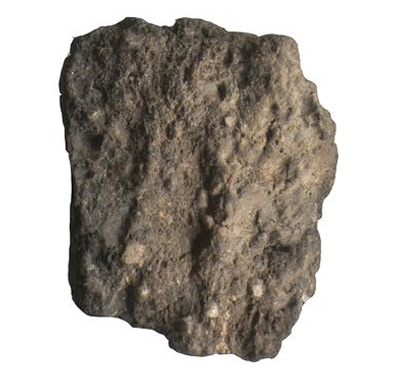 | 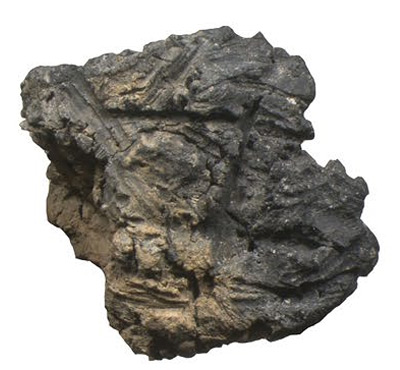 | 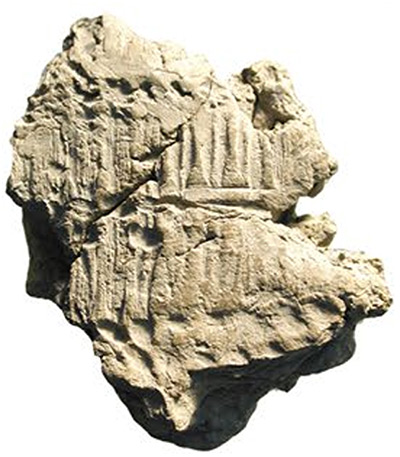 | 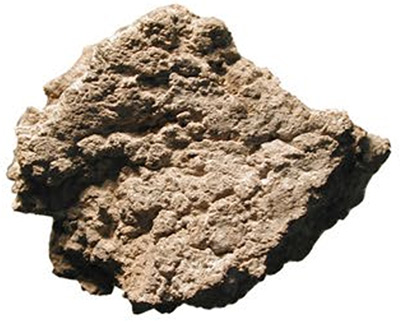 | 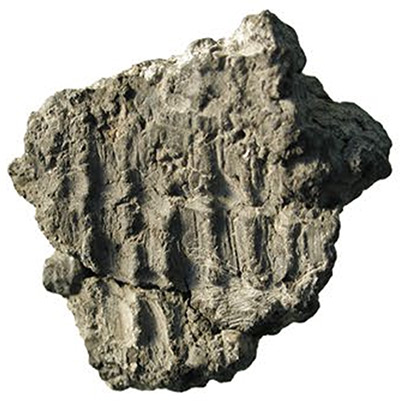 | |
| Features | 1 smooth surface; untreated | None | Smooth outer surface; | Smooth convex surface | Plant impressions on convex surface; basketry impressions on concave surface |
| Composition | Clay and plant material | Clay and plant material | Clay | Clay | Clay and plant material |
| Impressions? | No | No | Yes (concave surface) | No | Yes (concave surface) |
| Lamination? | Yes | Yes | No | No | No |
| Interpretation by Aura et al. (2019) | Hearth plate | Hearth plate | Basket/ container | Basket/ container | Basket/ container |
Table 1A: Explaining the different types of fragments, their features, composition and interpretation in Aura et al. (2019). Source: Hassan, O’Connell and Torti 2025, with information from Aura et al. (2019)
| Sedimentary Unit | Archaeological Phase | 14 C dates (ka cal bp) | Type 1 | Type 2 | Type 3 | Type 4 | Type 5 |
| SM-5 | Final Magdalenian | 14.7–13 | 6 | 1 | |||
| SM-4 | Epipaleolithic | 12.9–10.2. | 16 | 19 | 2 | 1 | 2 |
| SM-3 | Mesolithic | 10.4–8.8 | 5 | 8 | |||
| Total | 27 | 28 | 2 | 1 | 2 |
Table 1B: Explanation of the various fragment types and their sedimentary units, relative date and absolute date.
The earliest fired clay objects were ceramic figurines created 30,000 years ago, during the Upper Palaeolithic period in Europe (Kuzmin, 2006, p.369; Breuer, 2012). It was around 17,000 years ago that the earliest ceramic vessels were known to have been made (Kuzmin, 2005, p.369; Boaretto, et al., 2009, p.1; Breuer, 2012). The invention of pottery is generally hypothesised to have evolved through the transition of clay linings of basketry to stand-alone vessels and/or the replication of existing container forms (Brown, 1989, p.203). The development of ceramic technologies was not a singular event – it emerged independently across the world in many different types of cultures and ways of life (Zhushchikhovskaya, 1997; Kuzmin, 2006; Sato and Morisaki, 2017). The adoption of ceramic technology is often a crucial part of the “Neolithic package,” and defines the transition from the Mesolithic/Epipaleolithic to the Neolithic across Europe (Gibbs and Jordan, 2016). Ancient communities may be wholly founded upon - and even named for - their ceramic fashions, such as the Bell Beaker cultures and Corded Ware cultures across Late Neolithic Europe (Grömer and Kern, 2010, p.3136). There is a history of studying ceramic material culture as reflections of past communities, cultures and transitions, a concept often referred to as “pots equal people” (Harush, 2025, p.2). For example, archaeologists hypothesise that the diffusion of the Bell-Beaker ceramic form across Europe - marking transitions to the Neolithic - was the result of a rapid population replacement, however Vander Linden (2024) questions equating migration of human population with the emergence of the Bell-Beaker style. It is important to rethink these dynamics through different theoretical frameworks, particularly those that recognise people and pots as separate entities with their own agencies and affordances.
Still, ceramic artefacts maintain importance and provide insight into examinations of technological innovation, subsistence strategies and cultural practices. The study of ceramic technologies opens a window into the past, and when studied in conjunction with experimental archaeology, the lived experiences of ancient people can be uncovered. The fired clay remains uncovered at Coves de Santa Maira, while highly fragmented, are suggested to be representative of various clay forms, including clay lined baskets, free-standing vessels, hearth plates and clay lined hearths (Aura Tortosa, et al., 2019). Hence, questions are raised regarding the formation of these fragments at the very advent of ceramic technology in the Iberian Peninsula – opening a discussion on ceramic and aceramic technologies for both functional and non-functional purposes. This article explores the plausibility of the form and use based upon the clay fragments from Santa Maira through the means of experimental archaeology.
This report presents two main hypotheses:
- The fragments of types 3-5 found at the Coves de Santa Maira are evidence of ceramic technologies that constituted forms other than containers, as laid out by Aura Tortosa et al. (2019).
- The fragments of types 3-5 found at the Coves de Santa Maira are evidence of aceramic technology that was supported by woven forms.
Three objectives were formulated to assess the plausibility of the theories presented in Aura Tortosa et al. (2019), as well as our hypotheses, regarding the types 3-5 sherds at the Coves de Santa Maira and are as follows:
- To measure the water retention of ceramic and aceramic free-standing clay vessels
- To measure the water retention of clay-lined basketry
- To test the plausibility of a non-vessel form, a hearthplate, used for cooking.
Materials and Methods
To test the possible functions and forms derived from the types 3-5 fragments discovered at Coves de Santa Maira, we created various ceramic and aceramic forms, totalling four hearth plates and thirteen basket-based clay vessels (See Figure 4). The clay-based vessels varied in degrees of dryness: fired, bone dry and leather hard. The experiment was conducted at the YEAR Centre at the University of York, as part of the postgraduate Experimental Archaeology module alongside three other groups. Clay was acquired from Littlethorpe Pottery, which is sourced from a local clay deposit consisting of layers of brown and gray clay with inter-laminated layers of silt, which was then homogenized using a pug mill. The recommended firing temperature was between 800 and 1000 ℃ in an electric kiln. No temper was added to the clay either by the manufacturer or for experimental purposes as Aura Tortosa et al. (2019) did not include information on the clay composition or origins. It is plausible that the clay used to form the fragments was local, as the archaeological ochre from the site was found to have likely come from the surrounding geological area (Aura Tortosa, et al., 2020, p.84). Although it was observed that plant fibres were likely included into the clay mixtures of fragment types 1, 2 and 5, we only tested the possibility of form and thus minimally processed the clay and did not add any inclusions (Aura Tortosa, et al., 2019, p.587). The woven mats and coiled seagrass baskets were purchased from Amazon.co.uk.
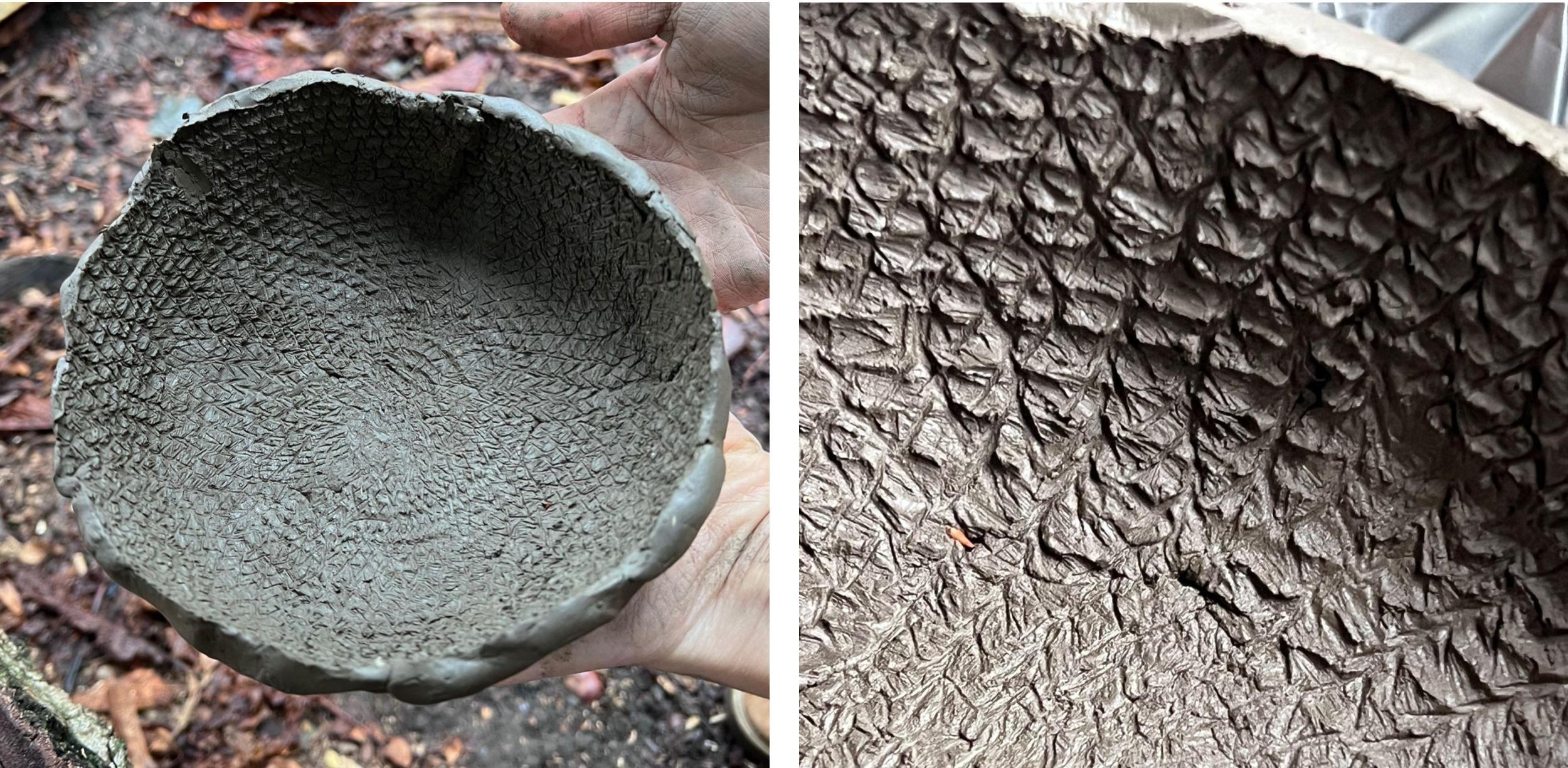
To form the vessels, clay was smeared onto the outside of a basket, matching the estimated 0.75-2 cm thickness as stated by Aura Tortosa et al. (2019, p.589). The baskets were then carefully removed from the completed vessel, leaving impressions along the inside as seen in Figure 5F, bearing similarity to the fragments from Santa Maira and other Mesolithic fragments of pottery (Zhushchikhovskaya, 1997, p.60; Nieuwenhuyse, 2012, p.74). The clay lined baskets were formed in a similar way to the free-standing vessels; however, the clay was applied to the basket and was not removed. To make the hearth plates, clay was spread over and then peeled off a woven mat (See Figure 6). The vessels, once removed from the baskets, ranged in size from 13.75 to 16.5 centimetres in diameter and 5.5 to 6.5 centimetres in height before drying. The hearth plates ranged from 16 to 17 centimetres in length and 12 to 13.4 centimetres in width. The vessels and hearth plates were dried indoors for two weeks.
The firing process, seen in Figure 7, was conducted over two days. The authors’ experience in firing clay and ceramics is minimal; however we were supervised by Gareth Perry, Technical Specialist in artefact studies at the University who specialises in reconstructing ceramic reproduction practice. The first day consisted of the firing of four ceramic vessels and two hearth plates, and the second day involved a single hearth plate. Two fires were made – one in a pit roughly 60 cm wide and 10 cm deep, next to which the second, smaller fire was built to provide charcoal and firewood. The pit fire was allowed to burn down to coals, on top of which large stones were placed as platforms to support the vessels and hearth plates; immediately placing unfired vessels on the coals would cause them to spall violently. The vessels were instead slowly heated to 100°C, ensuring that remaining moisture in the clay was released slowly (Colbeck, 1988, p.44). If the increase in temperature is too fast or uneven, the rapidly escaping steam can cause spalling and cracking (Rhodes and Brownstein, 1969, p.14); this was an issue we encountered during the initial heating phase. When the ceramics reached c. 300°C, charcoal and burning oak logs were stacked around and then atop them. Throughout the process, the vessels and hearth plates were routinely rotated and flipped to allow all sections to be heated as evenly as possible. The drying process is complete at around 500℃. Subsequently, and sometimes simultaneously, oxidation, quartz inversions, and vitrification occur, turning the clay into ceramic at around 800 - 1000℃ (Rhodes and Brownstein, 1969 pp.14-16). This transformation from raw clay into ceramic requires experience and technical mastery (Brown, 1989, p.204).
To better understand if a clay vessel could become ‘accidentally fired,’ as suggested by Aura Tortosa et al. (2019), one of the hearth plates (HP3) was placed between the pit fire and supporting fire during both firing sessions. Here, the effect of exposure to indirect heat was tested. The temperature of the coals, ceramics and the ‘accidentally fired’ hearth plate were monitored with a temperature gun. The firing pit was left to burn down and was watched by Dr. Aimee Little and Dr. Gareth Perry, who were supervising during the firing process. After a few hours, they removed the fired ceramics from the pit fire. During the second firing day, we focused on firing the remaining hearth plate (HP1), and the previous day’s process was repeated. Taking our learned experiences from the prior attempt, and only focusing on one hearth plate, we encountered fewer challenges.
Despite being supported with modern technology, including tongs, fireproof gloves, and temperature guns, we had difficulty preventing vessels’ spalling or exploding, maintaining the appropriate temperature of the ceramics, as well as managing both fires. During our firing, hearth plates HP2 and HP4 and vessel V6 spalled and broke.
One test was conducted to ascertain the functionality of the ceramic vessels as storage and/or cooking vessels, while the hearth plates were tested as fire-resistant cooking surfaces. In addition to the fired and bone-dry vessels, five new vessels were created: two leather hard clay vessels, two baskets interiorly lined with clay and one basket exteriorly lined with clay. Half of the vessels were lined with pork lard purchased from Amazon due to the suggestion, according to Moroccan ethnographic sources, that clay and animal fat were used to waterproof baskets (Aura, et al., 2019, p.591; Desmond, 2022, p.167). The fat was applied to the inside of the vessels with gloved hands and then heated over fire to distribute over the vessel walls. Once the fat was re-solidified, 150 ml of water was poured into each vessel. The vessels were then left outdoors under a covered structure at the YEAR Centre for a week (See Figure 9). This yielded partially unusable results due to factors such as cold temperatures and animal disturbance. Over the week-long test, the water filled vessels were exposed to freezing temperatures, which may have interfered with the water retention abilities.
Additionally, there was evidence of animal activity. We assume they were attracted to the vessels due to the animal fat and tipped over some of the vessels. Therefore, the water retention test was repeated with two fired vessels and two interiorly clay-lined baskets. All four vessels were kept inside for a week.
In terms of the hearth plates, as stated previously, only one was successfully fired; the rest likely failed due to uneven heating. The one remaining hearthplate (HP1) was placed on a bed of coals and used to cook a flatbread of hand-ground wheat. While there is little evidence of grains at Santa Maira – two samples of Avena sp. and one of Triticum aestivum – large quantities of legumes, Rosaceae fruits, and acorns (Quercus sp.) were recovered (Aura, et al., 2005, p.546). People at the Coves de Santa Maira may not have been cooking flatbreads made from wheat, however this cooking technique could have been applied to other foods. Thus, we tested the plausibility of HP1 as a plate for cooking on. We ground down Trend Organic wheat grain using a grinding stone into a coarse flour, and mixed it with water to form a dough, which was then successfully cooked on HP1 in a fire (See Figure 8).
Results
The experiment revealed both expected and unexpected results. The unfired bone-dry vessel with fat applied – V1 – retained the highest percentage of water, with a 14.8% water loss, followed by V5, the fired vessel with fat applied, with 35.4% water loss. V13, the clay and fat lined basket had 50% water loss, and the clay lined basket had (V12) 83.21% water loss (See Table 2 and Figure 9). The other vessels did not retain water for the entire week, though it must be noted that some held water for a range of 1-3 minutes and others were able to retain water for over 24 hours. We are unable to verify which vessels retained water for longer periods than this, as they were inaccessible until the end of the week. Additionally, consider that the clay lined baskets in the second test grew mould, which would have affected the taste and consumability of the vessel’s contents. However, the experiment shows a relative success, particularly where a layer of fat has been applied, increasing the probability that clay technologies may have played a role in the upkeep or repair of woven containers.
| Vessel number | Clay property | Lined with fat? | % water lost in 1 week | Time noted on water loss start | Notes |
| V4 | Fired | No | 100% | Immediate | Cracked bottom |
| V5 | Fired | Yes | 35,40% | N/A | cracked bottom |
| V2 | Dry | No | 100% | 240 seconds | |
| V1 | Dry | Yes | 14,80% | N/A | Disintegrated during second test |
| V7 | Leather hard | No | 100% | Immediate | |
| V8 | Leather hard | Yes | 100% | Immediate | Cracked bottom |
| V9 | Internally lined basket | No | N/A | N/A | Rodent knocked over pot |
| V10 | Externally lined basket | No | 100% | 72 seconds | |
| V11 | Internally lined basket | Yes | 100% | N/A | |
| Rerun of test | |||||
| V3 | Fired | No | 100% | 98 seconds | Slow leak crack at bottom |
| V4 | Fired | Yes | 80,40% | N/A | Water retained to fat line |
| V12 | Internally lined basket | No | 83,20% | N/A | Mould |
| V13 | Internally lined basket | Yes | 50% | N/A | Mould |
Table 2: The results of the water retention test. Each vessel was given 150ml of water and left for a week to determine the best variables for waterproof sealing vessels. Source: Hassan, 2026
As for the fired hearth plate, HP1 was the only one to survive firing without major spalling or exploding. During the first firing, space constraints meant that only two hearth plates along with our vessels were able to be fired, both of which exploded (See Figure 10). However, the second firing only consisted of our third hearth plate (HP1), which remained mostly intact with some cracks. The difficulty in firing these hearth plates may have been due to their rectangular shape, resulting in uneven heating. Persistent hot and cold spots were observed on all the hearth plates while firing; this too was an issue for the pots however, to a lesser degree. Due to these hot and cold spots, the hearth plate needed constant manipulation and movement during the initial stages of firing when the form was heating up to mitigate the variation in temperature. This process required a high degree of attentiveness and the constant use of a digital laser thermometer to know where the cold spots and warm spots were and to adjust the hearth plate or the fire, accordingly, aided by heatproof gloves and coal tongs. A future experiment concerning a circular form can be suggested to aid in better temperature distribution and possibly a higher degree of success.
Discussion
The experimental results suggest that the ceramic fragments found at the Coves de Santa Maira may be indicative of ceramic hearth plates, aceramic/ceramic vessels and/or clay lined baskets. Not only does this diversify our understanding of aceramic clay technology at Coves de Santa Maira, but it can also challenge widely held beliefs about the limitations of unfired forms and provide further insights into prehistoric developments of ceramic technology (McClure, 2011).
The impressions found on the surface of the fragments require the consideration that woven baskets were not used merely as a mould for the creation of a ceramic vessel, but that clay may have been the assistant of woven technology. As argued by Brown (1989), the presence of ceramic vessels does not mean that all other forms of containers were suddenly abandoned and replaced (Brown, 1989, pp.206-207). The use of clay to seal or waterproof basketry is documented throughout prehistory and is hypothesised to be one of the forebearers of stand-alone ceramic vessels (Desmond, 2022, p.167). Additionally, there are many ethnographic examples of the use of clay lined baskets as well as the use of baskets as a mould by many indigenous American groups (Mason 1902). For example, Otis T. Mason recorded that the Havasupai people of northern Arizona lined “the inside of a basket with clay in order to render it fireproof” used to cook seed and grains (Mason, 1902, p.197). Later, Mason describes the use of clay lined basket by the White Mountain Apache, saying “The interstices [of a willow basket] were filled with puddled clay, to make them useful for receptacles of water, which had to be transported from the canyon 300 feet below.” (Mason, 1902, p. 360). While these sources give insights into the use of these vessel, and archaeological evidence make it unclear the precise methodology of creating such vessels, including whether clay lined the interior or exterior of basketry (Barton and Collcutt, 2019, p.429; Barton, et al., 2019, p.547). Therefore, we created and tested both interiorly- and exteriorly-lined basket vessels.
However, despite this evidence, the experimental baskets lined with clay internally and externally had very low water retention rates. The internally lined V13 had the highest retention with only 50% water loss over the course of a week. This suggests that the technology of using clay to reinforce or seal basketry may be more effective in short-term use rather than long-term storage. Thus, the use of clay as a sealant may have been a technically difficult process requiring special knowledge of basketry types and clay used. The variable water retention results of the experimentally tested clay-lined baskets could have been due to the type and material of the basket used, the minimally processed clay, or the technique used. Further study may benefit from testing baskets made of esparto grass as was seen in the archaeology of the Coves de Santa Maira (Aura, et al., 2019, p.586). Aceramic clay forms or clay-lined baskets may have been used for short term water storage, transportation, or food storage at the Coves de Santa Maira (Aura, et al., 2019, p.591). According to W. Holmes, the specific use of baskets in modelling ceramic vessels was “the rare exception” (Holmes, 1901, pp.397-399). A basket reaching the end of its functional life may have been reinforced with clay – and possibly fat – to extend its life or to give it a new use (Haas-Lebgyev, 2014, p.160). This has been indicated in prehistoric contexts, such as the Early Bronze Age site of Dhaskalio Kavos in Greece, where researchers, concerning the cross-use of pottery and woven basketry, noted that baskets were typically at the end of their functional life (Renfrew, 2013). Thus, imprints of the fragments from the Coves de Santa Maira may possibly represent a method wherein clay was used as a support for aceramic containers.
The durability and versatility of basketry is testified to by ethnographic data recorded in the Beni Snassen in Morocco, which shows the ability of esparto baskets to store unprocessed acorns – a prevalent bioarchaeological remain at Santa Maira – for six months (Barton, et al., 2019, p.535; Aura, et al., 2005, p.546). This data also indicates that esparto grass baskets could be made waterproof through techniques of flattening the leaves, which was a possible technique Aura Tortosa et al. (2019) identified in the Type 5 impressions (See Figure 3, Table 1) (Aura Tortosa, et al., 2019, p.589; Barton, et al., 2019, p.516). Regionally, basketry and other woven structures have been made out of Stipa tenacissima for millennia in the Mediterranean (Fajardo, et al., 2015, p.372), suggesting they were a prevalent practice necessary for daily life. Furthermore, aceramic technology has been used in cooking processes since the Pleistocene: hot rock cooking utilised heated stones in watertight basket vessels (Nelson, 2010, p.243; Desmond, 2022, p.167), while containers made of animal stomachs were used to boil water (Langley, et al., 2023). Thus, it can be understood that aceramic techniques are of vital importance and remained so even after the adoption of ceramic vessels into daily life (Nelson, 2010, pp.243-244).
It must also be considered that, despite the archaeological and ethnographical establishment of these academic techniques, there are limitations regarding longevity and reusability (Nelson, 2010. p.243). Researchers have noted disadvantages of hot rock cooking, such as the possibility of rock fragmentation, large fuel requirements, ineffective heat transfer and lack of control and maintenance of high temperatures (Hanson, et al., 2019, p.180). As such, consideration must be made for the complexity regarding the transition to ceramic vessel technology as a solution to problems concerning storage or cooking (Brown, 1989, pp. 204-206). While basketry is an important and valuable technology, ceramic vessels offer certain affordances that aceramic vessels do not. Ceramics are reusable, sturdy and are often more hygienic and portable than unfired vessels. Specifically, ceramic vessels have even been demonstrated as more effective than hot rock technology in the processing of acorns (Hanson, et al., 2019, p.180) and, regardless of temper, offer greater versatility in cooking food with fire (Skibo, Schiffer and Reid, 1989, p.131; Harry, 2010, p.21). Hence, one can infer that though clay may have been used as a support for woven vessels at the advent of ceramic technology, ceramic technology was overall more efficient. It is thus possible that the fragments from the Coves de Santa Maira may represent ceramic technology wherein woven vessels were used as a support.
While we did find success in creating ceramic and aceramic forms, results also showed a high possibility of ‘failure’ during the firing process, where ceramics developed cracks or spalled and exploded. This was likely due to the lack of temper in the clay, however due to limited supply and time constraints we were unable to add a temper. Petrographic analyses can be utilised to assess in greater detail the type of plant temper that was originally used in the fragments from the Coves de Santa Maira. Further experimentation would benefit from adding “some kind of plant temper” to more accurately replicate the clay used at the Coves de Santa Maira (Aura, et al., 2005, p.587). The process of firing clay requires a high degree of skill, which in prehistory would have been passed down through tradition and embedded knowledge; in our experience, we were able to apply the knowledge we acquired from the first firing to the second firing. In Spain, stylistic designs and technical methods of production of ceramics, such as tempering, are chronologically distinct from the Mesolithic to the Neolithic (McClure, et al., 2006, p.671). Such changes suggest a degree of learned experience, with technical understandings inherited and developed across generations. During our firing process, we heavily relied on modern technologies; heat guns to assess temperature; fireproof gloves and tongs for safety; pre-cut firewood and processed clay for convenience and to ensure firing success. Despite this, we struggled to avoid cracking, spalling and explosive accidents. Preventing such accidents would have been a much more intimate process in the ancient world. Ancient peoples would have had to completely rely on sensory elements: visually monitoring the colour of clay as it dries, listening to a tap against the clay transform into the clink against ceramic and possibly even smelling or tasting raw clay to know its chemical makeup (Kuijpers, 2012). This highly complex process involves necessary intuition and experience, informed through inherited understandings of pyrotechnical processes.
Yet, even where practitioners are highly knowledgeable, ceramics are unpredictable, suggesting that the fired clay fragments from the Coves de Santa Maira could be indicative of failed firing attempts or early experimentation. Considering the possibility that ceramic technology may have been an accidental discovery, as suggested by Aura Tortosa et al. (2019, p.591), we placed one more hearth plate (HP3) between the main fire pit and the secondary fire during both firing days for repeated exposure. For most of human history, fire and hearths were part of daily life, providing light, heat and protection (Leesch, et al., 2010, p.53). As centres of social activity, it is entirely possible that a clay-lined basket or dried clay vessel could accidentally be knocked into a hearth, or that a fallen-apart clay vessel was accidentally fired (Shahack-Gross, et al., 2008, p.58). We noted that when the re-hydrated unfired vessel (V7) broke onto a flat surface during the water retention test, the fragment lost a significant degree of curvature (See Figure 12). The experiment proved that clay-lined baskets storing water are liable to become mouldy and unsafe for food storage: this may have led to the unsafe vessel being discarded into a fire. After being placed into the fire, sections of the vessel would have spalled as steam quickly escaped, leaving these fragments to fire into ceramics, preserving the imprints of the since-burned basket. This was observed in our experiment, where spalled fragments of various sizes continued to fire and could be recovered later. If the Santa Maira fired clay remains include clay or vessel refuse, it may explain some of the irregularities in curvature. Alternatively, the forms could have been manufactured on uneven surfaces. Aura Tortosa et al. (2019) suggest that the curvature noted in types 3-5 fragments indicates that they are indicative of vessels (See Figure 11) (Aura, et al., 2019, p.589). Yet their curvature suggests a vessel of a very large size, which would have been difficult to create and probably functionally impractical.
Ceramics remain invaluable to the study of early technological development in archaeological thought and analysis, as well as providing insights into not only ancient technologies, but also potentially culture, art, and spirituality (Vandiver, et al., 1989). The transformation from malleable to fixed, and the stages in between, may have been of more importance than the functionality of the final product. This is made evident at the Upper Palaeolithic site of Dolni Vestonice in Czechoslovakia, where fragments of clay figurines show rough branching fractures due to thermal shock, suggesting a purposeful deposition of wet clay into a kiln to make it explode, spall and sizzle (Vandiver, et al,, 1989, p.1007). The “special and unique fire-related properties” of clay may have been of spiritual or ritual performance, and we must consider the possibility that the fragments from the Coves de Santa Maira may not have been created with a solely practical function in mind. While the scale, time period and archaeological context are different between the Coves de Santa Maira and Dolni Vestonice, we must consider the alternate possibility of deposition into the fire, for the sake of the firing process.
Conclusion
Ultimately, this experiment has shown that the fired clay remains recovered at the Coves de Santa Maira could have originated from a variety of ceramic or aceramic forms. The creation of both vessel and non-vessel forms useful in cooking and storage functions shows that ceramics could have played a highly important role in the Coves de Santa Maira. While this experiment suggests that the successful firing of hearth plates is difficult, it is possible to create a surface upon which food items can be cooked, as shown by the rough bread made and cooked during the experiment, suggesting plausibility for their presence at Santa Maira, particularly due to the fact that the original fragments of types 3-5 show very little curvature, these may be hearth plates created on an uneven surface. At the advent of ceramic technology, the plausibility of its use in supporting woven vessels was shown to be a successful method. Particularly when sealed with fat, it enhances the storage capabilities of woven vessels. Further investigation into alternative sealants, such as pine resin, would benefit this field of study, as this method would likely allow for more cracks to be efficiently sealed and thus yield higher retention. This experiment has also demonstrated the possibility of accidental firing through HP3, as well as fragments of spalled vessels, however, further study into the repeated exposure of indirect heat would yield necessary results to make a holistic assessment of plausibility. Further research could also assess possibilities of a clay-lined hearth as described by Aura Tortosa et al. (2019) that could have been preserved (Aura Tortosa, et al., 2019 p.589).
This experiment, based upon the fired clay fragments from the Coves de Santa Maira, has diversified understandings concerning the development of ceramic technology in Western Europe, as well as the ways in which prehistoric peoples at Santa Maira utilised basketry and clay to create a variety of vessels and structures. Conclusively, this experiment has tested the plausibility of the types 3-5 fragments at the Coves de Santa Maira, as well as the role of aceramic technologies in Epipalaeolithic Spain, providing an insight into the form and function of clay technologies on the advent of ceramic development.
Ethics Statement
The animal products (fat) and grain used for this experiment were purchased from Amazon. During the production and testing of the ceramic vessels, all activities were in compliance with the 2025 Year Center Risk Assessment form, with proper fire safety precautions taken.
Keywords
Country
- Spain
Bibliography
Aura, J.E., Carrion, Y., Estrelles, E., Jordà, G.P., 2005. Plant economy of hunter-gatherer groups at the end of the last Ice Age: plant macroremains from the cave of Santa Maira (Alacant, Spain) ca. 12000–9000 b.p., Vegetation History and Archaeobotany, 14(4), pp. 542–550. Available at: https://doi.org/10.1007/s00334-005-0002-1
Aura, J.E., Jordá, J.F., Montes, L., Utrilla, P., 2011. Human responses to Younger Dryas in the Ebro valley and Mediterranean watershed (Eastern Spain), Quaternary International, 242(2), pp. 348–359. Available at: https://doi.org/10.1016/j.quaint.2011.01.023
Aura Tortosa, J.E., Pérez-Jordà, G., Marco, Y.C., Seguí Seguí, J.R., Jordá Pardo, J.F., Miret i Estruch, C., Cebrián, C.V., 2019. Cordage, basketry and containers at the Pleistocene–Holocene boundary in southwest Europe. Evidence from Coves de Santa Maira (Valencian region, Spain), Vegetation History and Archaeobotany, 29(5), pp. 581–594. Available at: https://doi.org/10.1007/s00334-019-00758- x
Aura Tortosa, J.E., Gallello, G., Roldán, C., Cavallo, G., Pastor, A., Murcia-Mascarós, S., 2020. Characterization and sources of Paleolithic–Mesolithic ochre from Coves de Santa Maira (Valencian Region, Spain), Geoarchaeology, 36(1), pp. 72–91. Available at: https://doi.org/10.1002/gea.21821
Barton, R. N. E. and Collcutt, S. N., 2019. Inorganic Material. In: R. N. E Barton, A. Bouzouggar, S. N. Collcutt, L. T. Humphries, eds. Cemeteries and Sedentism in the Later Stone Age of NW Africa: Excavations at Grotte des Pigeons, Taforalt, Morocco. Regensburg: Schnell & Steiner. pp. 428–441.
Barton, R. N. E., Bouzouggar, A., Collcutt, S. N., Humphries, L. T., 2019. Synthesis and Interpretation, in R. N. E Barton, A. Bouzouggar, S. N. Collcutt, L. T. Humphries, eds. Cemeteries and Sedentism in the Later Stone Age of NW Africa: Excavations at Grotte des Pigeons, Taforalt, Morocco . Regensburg: Schnell & Steiner, pp. 497–548.
Breuer, S., 2012. The chemistry of pottery . [Online] Available at: < https://edu.rsc.org/feature/the-chemistry-of-pottery/2020245.article > [Accessed: 10 December 2025].
Brown, J.A., 1989. The Beginnings of Pottery as an Economic Process, in S.E. van der Leeuw and R. Torrence, eds. What’s New? A Closer Look at the Process of Innovation . London: Unwin Hyman, pp. 203–224.
Colbeck, J., 1988. Pottery materials: their composition, preparation and use . London: Batsford.
Desmond, A., 2022. Bone Tool Proxy Evidence for Coiled Basketry Production in the North African Palaeolithic, Journal of African Archaeology, 20(1), pp. 156–175. Available at: https://doi.org/10.1163/21915784-bja10018
Fajardo, J., Verde A., Rivera D., Obón C., Leopold S., 2015. Traditional Craft Techniques of Esparto Grass (Stipa tenacissima L.) in Spain, Economic Botany, 69(4), pp. 370–376. Available at: https://doi.org/10.1007/s12231-015-9323- x
Gibbs, K. and Jordan, P., 2016. A comparative perspective on the ‘western’ and ‘eastern’ Neolithics of Eurasia: Ceramics; agriculture and sedentism, Quaternary International, 419, pp. 27–35. Available at: https://doi.org/10.1016/j.quaint.2016.01.069
Grömer, K. and Kern, D., 2010. Technical Data and Experiments on Corded Ware, Journal of Archaeological Science, 37(12), pp. 3136–3145. Available at: https://doi.org/10.1016/j.jas.2010.07.015
Haas-Lebegyev, J., 2014. Interactions between basketry and pottery in Early Iron Age Attica, Greece, in W. Gauss, G. Klebinder-Gauss and C. von Rüden, eds. Knowledge Networks and Craft Traditions in the Ancient World . 1st ed. London: Routledge, pp. 104–126. Available at: https://www.academia.edu/37352996/...
Hanson, K.E., Bryant, P.L., Painter, A.M., Skibo J.M., 2019. Acorn processing and pottery use in the upper great lakes: An experimental comparison of stone boiling and ceramic technology, Journal of Archaeological, Ethnographic and Experimental Studies , 11(2), pp. 170–185. Available at: https://doi.org/10.1080/19442890.2019.1642574
Harry, K.G., 2010. Understanding Ceramic Manufacturing Technology: The Role of Experimental Archaeology, in J.R. Ferguson, ed. Designing Experimental Research in Archaeology: Examining Technology through Production and Use . Denver: University Press of Colorado, pp. 13–45.
Harush, O., 2025. Pots equal people: tracing communities of practice via minute variation approach, Humanities & Social Sciences Communications , 12(1). Available at: https://doi.org/10.1057/s41599-025-05645-7
Holmes, W.H., 1901. Use of Textiles in Pottery Making and Embellishment, American Anthropologist , 3(3), pp. 397–403. Available at: https://doi.org/10.1525/aa.1901.3.3.02a00010
Kuijpers, M.H.G., 2012. The sound of fire, taste of copper, feel of bronze, and colours of the cast: sensory aspects of metalworking technology, in K. Rebay-Salisbury and M.L.S. Sørensen, eds. Embodied Knowledge . United States: Oxbow Books, p. 137.
Kuzmin, Y.V., 2006. Chronology of the earliest pottery in East Asia: progress and pitfalls, Antiquity , 80(308), pp. 362–371. Available at: https://doi.org/10.1017/s0003598x00093686
Langley, A. Needham, A., Kröger, R. Cifuentes-Alcobendas, G., Adgeest, M., Cousen, J., Lance, C., Benton, H., Mansbridge, A., Stachell, A., Tomlinson, L., Rockall-Birtles, F., Lucquin, A., Little A., 2023. An experimental study of wet-cooking in organic vessels: implications for understanding the evolution of cooking technologies’ Archaeological and Anthropological Sciences , 15(9). Available at: https://doi.org/10.1007/s12520-023-01843-z
Leesch, D., Bullinger, J., Cattin, M., Müller, W., 2010. Hearths and hearth-related activities in magdalenian open-air sites: the case studies of Champréveyres and Monruz (Switzerland) and their relevance to an understanding of upper Paleolithic site structure, in P. Bobak and D. Bobak, eds. The Magdalenian of Central Europe: New Finds and Concepts . Rzeszów: Fundacja Rzeszowskiego Ośrodka Archeologicznego, pp. 53–69.
Mason, O. T., 1902. Aboriginal American Basketry: Studies in a Textile Art without Machinery . Washington, D.C.: Smithsonian Institution.
McClure, S.B., 2011. Learning technology: cultural inheritance and Neolithic pottery production in the Alcoi Basin, Alicante, Spain . Oxford: British Archaeological Reports. Available at: https://doi.org/10.30861/9781407308777
McClure, S.B., Bernabeu, J., García, O., Aura, E., Molina, L., Descantes, C., Speakman, R.J., Glascock, M.D., 2006. Testing technological practices: Neutron activation analysis of Neolithic ceramics from Valencia, Spain, Journal of Archaeological Science , 33(5), pp. 671–680 Available at: doi:10.1016/j.jas.2005.10.001.
Nelson, K., 2010. Environment, cooking strategies and containers, Journal of Anthropological Archaeology , 29(2), pp. 238–247. Available at: https://doi.org/10.1016/j.jaa.2010.02.004
Nieuwenhuyse, O.P. et al., 2012. The cord-impressed pottery from the Late Neolithic Northern Levant: Case-study Shir (Syria), Paléorient , 38(1/2), pp. 65–77 Available at: < https://www.academia.edu/2557253/... >
Real, C., Conesa, M.V., Aura Tortosa, J. E., Morales Perez, J.V., Roman, Didac., Villaverde, V., 2025. Review of the techno-economic trends from Cova de les Cendres and Coves de Santa Maira, Spain. The central Iberian Mediterranean area during the Tardiglacial and Early Postglacial, Journal of Archaeological Science: Reports , 67 [no pagination]. Available at: < https://doi.org/10.1016/j.jasrep.2025.105376
Renfrew, C. The Role of the Settlement at Dhaskalio: an Overview, In: C. Renfrew, O. Philaniotou, N. Brodie, G. Gavalas, M. J. Boyd eds. The Settlement at Dhaskalio . McDonald Institute for Archaeological Research. pp.705-721.
Rhodes, D. and Brownstein, H., 1969. Clay and glazes for the potter . London: Pitman. Sato, H. and Morisaki, K., 2017. Emergence of the world’s oldest pottery, Quaternary International , 441, pp. 1–2. Available at: https://doi.org/10.1016/j.quaint.2017.05.050
Shahack-Gross, R., Ayalon, A., Goldberg, P., Goren, Y., Ofek, B., Rabinovich, R., 2008. Formation processes of cemented features in karstic cave sites revealed using stable oxygen and carbon isotopic analyses: A case study at middle paleolithic Amud Cave, Israel, Geoarchaeology , 23, pp. 43–62 Available at: doi:10.1002/gea.20203.
Skibo, J.M., Schiffer, M.B. and Reid, K.C., 1989. Organic-Tempered Pottery: An Experimental Study, American Antiquity , 54(1), pp. 122–146.
Vander Linden, M., 2024. The Bell Beaker phenomenon in Europe : a harmony of difference. In: M. Fernández-Götz, B. Arnold, eds. The Archaeology of Europe. Cambridge University Press, pp. 59-60. Available at: https://doi.org/10.1017/9781009496872
Vandiver, P.B., Soffer, O., Klima, B., Svoboda, J., 1989. The Origins of Ceramic Technology at Dolni Věstonice, Czechoslovakia, Science , 246(4933), pp. 1002–1008. Available at: https://doi.org/10.1126/science.246.4933.1002
Zhushchikhovskaya, I., 1997. On Early Pottery-Making in the Russian Far East, Asian Perspectives , 36(2), pp. 159–174 Available at: https://www.jstor.org/stable/pdf/42928406