

The content is published under Creative Commons Attribution 4.0 International license (CC BY 4.0).
Reviewed Article:
Thoughts on the Concepts and Methods of Experimental Archaeology
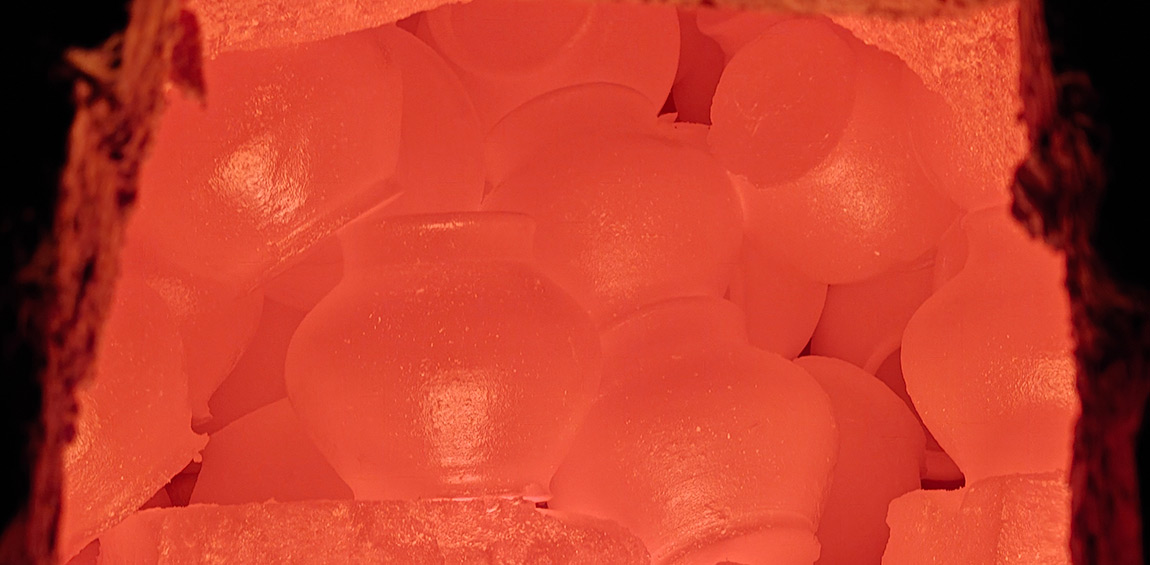
Based on the theory of experimental archaeology, this paper clarifies the definitions of academic terms including simulation experiment, restoration research, restoration experiment, simulation research, experimental reconstruction and experimental reconfiguration, so as to standardise the development of experimental archaeology research. It should be noted that experimental archaeology follows distinct development trajectories across nations and regions, a pattern closely intertwined with their respective cultural backgrounds and established archaeological research practices. In focusing on the Chinese context this paper traces the developmental history of its experimental archaeology, draws on contemporary domestic case studies, seeks to elucidate the role and distinctive characteristics of experimental archaeology against the backdrop of China’s archaeological development, and puts forward reflections on the theoretical underpinnings of experimental archaeology. On this basis, the paper expounds on the definitions and inherent differences between experimental reconstruction and experimental reconfiguration, clarifies the key points of contention in current experimental archaeology research, and identifies the adverse implications arising from the application of modern equipment in this field. Two key measures are proposed: first, treating the avoidance of modern equipment in experimental design and implementation as a core experimental consideration; second, conducting selective interpretation of experimental findings. These measures are intended to augment the archaeological merit of experimental archaeology. Additionally, the paper emphasises that the practice of experimental archaeology should be guided by academic rigour and a strong sense of historical responsibility, with hasty conclusions avoided wherever feasible.
Introduction
Since the 1980s, with the widespread adoption of experimental archaeology methodologies across nations and regions worldwide, archaeologists across the globe have advanced diverse interpretations of the discipline’s core concept, grounded in their respective local archaeological contexts and research attributes. China is no exception.
As early as the 1930s, the Chinese archaeologist Pei Wenzhong had already begun to use experimental archaeological methods to conduct research on Neolithic stone tools unearthed from the Zhoukoudian Site and discuss the production methods of stone tools using the percussion technique (1932). In 1938, the Chinese archaeologist Wu Jinding explicitly emphasised the significance of applying experimental archaeological methods to the study of Chinese pottery in his book Prehistoric Pottery in China published in London United Kingdom (1938, p.8).
In the 1960s, another scholar Zhou Ren adopted experimental archaeological approaches to investigate the manufacturing techniques of lustrous surfaces on prehistoric black pottery in China, putting forward the viewpoint that such distinctive surfaces were realized through polishing the pottery body before firing and implementing carburization during the kiln firing process (Zhou, Zhang and Zheng, 1964). Despite these sporadic and valuable research attempts the development and dissemination of experimental archaeology in China was still interrupted by factors such as wars. This situation continued until around the 1980s when it finally improved.
With the implementation of China’s reform and opening-up policy in the 1980s, Chinese archaeologists engaged in increasingly frequent academic exchanges with their international counterparts. Numerous works introducing Western archaeological theories and their practical applications were translated into Chinese, thus prompting Chinese archaeologists to redirect their scholarly focus to experimental archaeology. As experimental archaeology has been intrinsically linked to stone tool research since its very origin, it followed that the application of experimental archaeology in China during the 1980s remained largely concentrated on stone tool related research.
From the 1980s onward, Chinese archaeologists embarked on efforts to apply experimental archaeological methodologies to research domains including pottery firing techniques, bronze casting craftsmanship, and jade carving processes. It was not until around 2020 that experimental archaeology garnered widespread attention within China’s archaeological fraternity. Since then, Chinese archaeologists have carried out an extensive array of experimental archaeological investigations, covering topics such as the functional attributes of ancient musical instruments, pottery manufacturing techniques, the construction methodologies and functional characteristics of pottery kilns, bronze casting technologies, as well as the construction techniques and operational functions of iron smelting furnaces.
With respect to the conceptual definition of experimental archaeology, the following presents some of the latest perspectives emerging from China:
As a vital methodological foundation and empirical approach to bolster the scientific underpinnings of archaeology, experimental archaeology has garnered widespread recognition and endorsement among archaeologists both domestically and internationally. This discipline entails conducting systematic and in-depth analysis of ancient relics, on the basis of which targeted experiments are designed and executed. It converts static archaeological relics into dynamic experimental procedures, thereby facilitating the discovery, identification, and interpretation of such relics. Furthermore, it seeks to probe into ancient craftsmanship, technological systems, and human behavioral patterns through empirical experimentation. The entire research practice centers on addressing core archaeological questions, encompassing the design, implementation, observation, documentation, and analytical interpretation of relevant experiments…
Experimental archaeology can broadly be categorized into five tiers of research.
The first tier focuses on the reconstruction of ancient artifacts. Drawing on preliminary insights derived from scientific archaeological methodologies including microfracture observation and compositional analysis of excavated artifacts, targeted experiments are designed and implemented. The outcomes of these experiments are subsequently compared against the excavated artifacts to validate hypotheses pertaining to the artifacts’ functional applications, manufacturing technologies, and other associated dimensions…
The second tier focuses on the reconstruction of ancient technologies. Building upon the replicative experiments of the first tier, researchers conduct extensive experimental reconstruction efforts on analogous artifact types spanning distinct chronological and geographical contexts. This iterative process establishes a comparatively holistic framework for technological evolution across different historical periods and geographical regions…
The third tier focuses on the reconfiguration of archaeological features. Guided by the theoretical underpinnings of experimental archaeology, researchers rigorously design and execute targeted experiments. They then compare the resultant experimental phenomena against the observed archaeological features, so as to derive evidence-based interpretations of such features within archaeological contexts…
The fourth tier focuses on the reconfiguration of ancient human behaviors. Building on the cumulative findings from extensive experimental investigations across the first three tiers, researchers seek to distill the behavioral modal patterns that underpin ancient human activities via the lens of experimental reconfiguration…
The fifth tier focuses on the reconfiguration of social systems, representing the highest and most challenging tier of inquiry in experimental archaeological research. Building upon the experimental endeavors spanning the preceding four tiers artifact reconstruction, technological reconstruction, archaeological feature reconfiguration and ancient human behavior reconfiguration researchers undertake comprehensive experimental investigations to explore and achieve a degree of reconstruction regarding ancient social systems. (Tang, 2023, pp.40-43 and p.58, English by the author)
Recent years have witnessed the widespread application of experimental archaeology across diverse subfields of archaeological research in China. In ceramic archaeology, for instance, researchers have carried out targeted experiments on pottery manufacturing and firing processes, the construction and operational modalities of pottery kilns, and the coloring mechanisms of porcelain glazes. Within the realm of bronze artifact research, experimental endeavors include the casting and finishing of bronze objects, the fabrication of ceramic moulds for bronze casting, and systematic investigations into the operational performance of blast pipes. Experiments in iron metallurgical archaeology cover the construction and functional validation of iron smelting furnaces, as well as the reconstruction of chaogang, an ancient Chinese processing technique that entails stirring molten iron to eliminate impurities. Scholars have conducted experiments in salt production on the technological processes underlying sea salt manufacturing. Jade artefact archaeology has an experimental focus on jade cutting, drilling, and the intricate crafting of movable ring structures (Tang, Wang and Li, 2023; Tang and Xue, 2024).
A systematic review of published experimental archaeological research highlights a notable degree of terminological ambiguity within the Chinese archaeological community when referring to experimental archaeology. Key terms in common usage include restoration experiment, simulation experiment, restoration, restoration research, simulation, simulation research, experimental reconstruction, and experimental reconfiguration.
Precise clarification of these academic terms will facilitate the standardized advancement of experimental archaeology research within China. Rooted in the research paradigm of experimental archaeology and aligned with its five-tiered research framework (Tang, 2023), terms such as restoration and restoration experiment, whose literal meaning connotes holistic reproduction, should theoretically encompass the experimental reconstruction of ancient artifacts and technologies as well as the experimental reconfiguration of archaeological features, human behaviors, and social systems.
Yet, a systematic review of extant scholarship indicates that most studies framed as restoration or restoration experiment within the Chinese archaeological community remain merely confined to the reconstruction of ancient artifacts and technologies alone. By contrast, terms such as simulation, simulation experiment and simulation research, as their literal meanings imply, are primarily oriented towards the reconstruction of ancient artifacts and technologies.
Experimental Reconstruction and Experimental Reconfiguration
Although the terms reconstruction and reconfiguration differ by merely a single character in their Chinese equivalents, they exhibit substantial conceptual disparities when situated within the theoretical and methodological paradigm of experimental archaeology.
Experimental reconstruction is primarily oriented toward research corresponding to the first and second tiers of experimental archaeology (Tang, 2023). It typically takes place when a relatively thorough understanding of archaeological feature and related information has been attained and such experiments are conducted with the aim of verifying attributes such as functionality, entailing little to no deductive inquiry.
Take the casting experiment of Wuzhu coins (a type of currency from China’s Han Dynasty) as an example. Regarded as one of the longest circulating currencies in Chinese history, Wuzhu coins were in circulation for an extended period, approximately from 118 BCE to 621 CE. Consequently, they are extensively unearthed as archaeological specimens across various regions of China. Following the excavation of complete sets of Wuzhu coin moulds, researchers employed experimental archaeological methodologies to replicate these moulds and conduct coin-casting experiments, with the primary objective of verifying the casting techniques.
Given that a comprehensive understanding of Wuzhu coins and their moulds had already been established prior to the experiment, the experiment’s objective focused on replicating, observing, and validating hypotheses and did not involve additional deductive inquiries, such as exploring alternative potential casting techniques Thus, in accordance with the experimental archaeology paradigm, the casting experiment of Han Dynasty Wuzhu coins is most appropriately characterized as an experimental reconstruction.
It is worth noting that to date, no experimental archaeological research focusing on the production technology of Wuzhu coins has been carried out by scholars in China. Nevertheless, it is reasonable to anticipate that archaeologists in China will soon turn their attention to this long-circulating currency and employ experimental archaeological methodologies for comprehensive investigation. Hence, this case study of Wuzhu coins is presented herein to clarify the terminological norms applicable to such experiments, thereby facilitating the adoption of widely recognized terminology by archaeologists in China when translating relevant research content in the future.
Experimental reconfiguration is primarily focused on research corresponding to the third, fourth, and fifth tiers of experimental archaeology (Tang, 2023). When a baseline level of understanding of archaeological feature-related information has been attained, this approach involves formulating testable hypotheses and designing and executing targeted experiments based on archaeological materials, while integrating insights drawn from ethnology, anthropology, and allied disciplines. The overarching objective of such experiments is to assess the validity of the formulated hypotheses, and such efforts typically contribute substantially to the interpretation of archaeological features.
As an illustration, consider prehistoric pottery kilns or dwellings, of which typically only the kiln pits or building foundations endure; their superstructures, including kiln roofs and kiln walls as well as house walls and roofs for dwellings, have long since vanished. By conducting meticulous analysis of archaeological feature-related information, drawing comparisons with analogous archaeological features, and synthesizing ethnological and anthropological data, researchers employ scientifically rigorous methodologies to reconstruct these pottery kilns or dwellings. This reconstructive process serves to validate hypotheses pertaining to specific functions or formation mechanisms of the archaeological features in question, such as whether flues existed inside the pottery kilns and what operational roles these flues fulfilled, or the correlation between the fire induced abandonment of dwellings and the accumulation of hongshaotu, a type of burnt red earth (Tang, Wang and Li, 2023).
The most notable distinction between experimental reconfiguration and experimental reconstruction resides in the divergence of their respective archaeological reference subjects. The reference subjects for experimental reconstruction are more frequently complete archaeological features with well-defined functional attributes, whereas those for experimental reconfiguration are predominantly damaged archaeological features or feature remains whose functional attributes remain unidentifiable.
Take experimental archaeological research on pottery as an example. If the archaeological reference subject for an experiment is a specific pottery artifact or a distinct type of pottery, researchers first investigate its potential manufacturing techniques through direct observation and scientific analysis. This would include but is not limited to production methods, wheel throwing, coil and slab building, temper selection such as sand tempered pottery and clay only pottery, and surface decoration techniques such as polishing, impressing, stamping, and incising after which the experiment is designed and implemented.
The pottery produced then undergoes systematic observation and scientific analysis, with the resultant data cross-referenced against the original archaeological reference subject to validate the experimental hypothesis. For instance, clay mixed with substantial quantities of coarse sand can be fashioned into pottery via the coil building method. Subsequent analyses such as ceramic petrography and X ray fluorescence spectroscopy are then performed on this experimentally produced pottery revealing striking similarities to archaeologically excavated specimens in terms of material composition and manufacturing technique. This congruence confirms that the excavated pottery was crafted from clay mixed with large amounts of coarse sand using the coil building method.
As another illustrative case, experiments that take well-preserved and functionally distinct archaeological features as their reference subjects involve hypotheses that can be validated through a relatively controlled and unambiguous experimental framework, and such experiments are typically categorized as experimental reconstruction.
For experimental reconfiguration, the archaeological reference subjects are often archaeological features or their remains that are either functionally indeterminate or partially preserved. In contrast to the reference subjects employed in experimental reconstruction, these materials carry a higher degree of inherent uncertainty. When designing experiments for experimental reconfiguration, researchers may incorporate a reasonable degree of deductive reasoning while upholding rigorous scientific observation and analysis.
Consider a pottery kiln site where only the kiln chamber is preserved. While the original structure of the kiln roof remains undetermined, researchers can infer, through systematic observation and measurement of the curvature of the surviving kiln walls and integration of this data with ethnological evidence, that the roof structure of such ancient pottery kilns may have been spherical. By analysing the inclination of the kiln bed and the extent of fire induced damage across distinct sections of the kiln walls and bed, researchers can further deduce the potential existence of flues in these ancient kilns as well as their approximate positions.
The pottery kiln reconfigured in the experiment only replicates specific structural elements such as the kiln bed from the original site. In contrast, features including the kiln roof and flues, are inferred from plausible scenarios derived through rigorous scientific analysis. Nonetheless, this experimentally reconfigured kiln retains substantial research significance. Deploying this reconfigured kiln facilitates the interpretation of pottery firing efficiency at the original kiln site which serves as the archaeological reference subject. By applying experimental archaeological methodologies, the static kiln site is converted into a dynamic operational process. Following the completion of firing experiments, systematic observation of structural changes both inside and outside the kiln deepens scholarly understanding of pottery kiln remains.
Subsequently, procedures including deliberate dismantling and intentional burial can be carried out. After a designated period of time, an excavation can be conducted to validate the inferences drawn regarding the various structural attributes of the old remains, namely the original kiln site by examining the physical traces left by the new remains.
There also exists a relatively distinctive type of experiment within experimental reconfiguration, referred to as a pilot experiment. By conducting systematic observations of archaeological features and synthesizing ethnological evidence, researchers propose and test a potential hypothesis. Such hypotheses can be boldly formulated on the premise of adhering to sound scientific research principles, with the experimental outcomes remaining non closed loop. In fact, the outcomes of unsuccessful pilot experiments often yield greater value for elucidating the functional attributes of those archaeological features whose functions remain undetermined.
For instance, archaeologists have uncovered a square-shaped pottery implement with approximate dimensions of 15 centimeters in length and 15 centimeters in width, corresponding roughly to the size of a human palm. This artefact bears several distinctive perforations two horizontal fully penetrating circular holes on its upper surface, each approximately the diameter of a human finger, and one vertical non-penetrating circular hole at its base with distinct rotational friction marks visible within the vertical cavity. By synthesizing contextual information from its excavation, researchers can formulate a hypothesis that this artefact may have functioned as a pottery manufacturing implement serving specifically as a support spindle for a potters wheel.
Several potential outcomes may result from this experiment. If the experiment is unsuccessful, it indicates that the square-shaped pottery implement cannot function as a support spindle, enabling researchers to rule out this functional possibility for the artefact in subsequent empirical research. If the experiment succeeds, it only demonstrates that such a function is theoretically feasible and does not definitively confirm that this was the artefact’s actual function in historical contexts. Nevertheless, it can still offer directional guidance for subsequent research and excavation observations.
As a representative research methodology within the field of experimental archaeology, experimental reconfiguration represents a modest yet meaningful stride toward unraveling the truths of the past, in contrast to the direct formulation of subjective inferences and hypotheses solely through the observation of archaeological features.
In recent years, experimental archaeology has progressively emerged as a prominent research focus within Chinese archaeology, with published research outputs in the field, developing distinct research orientations. A defining characteristic of experimental archaeology lies in its reproducibility allowing for repeated verification. Re-examining the published findings of experimental archaeology will also therefore contribute to the establishment of academic norms within this field.
Divisions in Experimental Archaeology Research in China
An analysis of currently published experimental archaeological research findings in China (Tang, Wang and Li, 2023)reveals that such research can be broadly categorized into two distinct types.
Type 1
The first type aligns with the paradigm of scientific archaeology, with experiments primarily conducted in laboratory settings and findings presented predominantly in a data centric format. For instance, Chen, et al. (2024) conducted experimental reconfiguration research on the phase separation coloring mechanism of sky-blue Jun glaze from the Song and Yuan dynasties (960–1368 CE). Within laboratory settings, they employed a planetary ball mill to grind materials for glaze preparation and analyzed the experimental outcomes using scientific instruments such as ultra-depth-of-field microscopes and transmission electron microscopes. Their research revealed that the addition of bone ash during the glaze making process served a pivotal role in the development of the sky-blue hue of Jun glaze.
Shan, et al. (2023) conducted an experimental reconstruction study on the sagger packing (the process of placing porcelain pieces into heat resistant protective saggers prior to kiln firing) and firing technology for Yue Kiln mise ci (secret colour porcelain). They employed a planetary ball mill to grind the body clay, selected modern lightweight refractory saggers as well as saggers crafted from porcelain clay, and carried out sagger packing and firing experiments for mise ci in a shuttle type gas fired kiln. Their research demonstrated that porcelain saggers with glazed edge sealing treatment constituted the key technical element underpinning the production of mise ci in Yue Kiln.
From a spectroscopic perspective, Xiong, et al. (2024) conducted an experimental archaeological study into the glaze colour of leaf-patterned, black-glazed porcelain and the mechanism behind the clarity of its leaf patterns. They employed modern wet ball milling technology to prepare the glaze and carried out firing experiments in a high-temperature muffle furnace. Their study proposed that the composition of the glaze material and the thickness of the glaze application exerted a significant influence on the black glaze colour of leaf-patterned, black-glazed porcelain and the clarity of its leaf patterns.
A notable feature of this type of experimental archaeology research is that the majority of studies are spearheaded by scholars with a background in scientific archaeology (Tang, Wang and Li, 2023). The experimental procedures are subject to strict control, and the experimental findings are highly quantitative and scientifically rigorous.
Type 2
The second type comprises experimental archaeological research conducted in the field or outdoor settings, and is grounded in archaeological materials and documentary records. For example, Lei, et al. (2024) conducted an experimental archaeological study on prehistoric brine production techniques at the Daxie Site in Ningbo, Zhejiang Province. Through on-site observations, scientific analysis, a systematic review of documents relating to brine production techniques, and the collation of ethnological data and oral history accounts, they carried out an experimental reconfiguration of the prehistoric brine production process. This experiment does not impose strict requirements on data recording but focuses primarily on the comparison between experimental results and archaeological relic phenomena. This work enhanced the understanding of the archaeological relic phenomena associated with prehistoric brine sites.
Tian, et al. (2021) conducted experimental research on charcoal kilns at the Xiwubi Site in Jiangxian County, Shanxi Province. This research can be categorised as a pilot experiment under the framework of experimental reconfiguration. Through detailed observations of archaeological relics with unknown functions, they proposed that these relics might have been used for charcoal production. Subsequently, they conducted reconfiguration experiments grounded in relic data and compared the experimental results with excavation traces. Ultimately, they demonstrated that such relics were indeed charcoal kilns.
Tang and Li (2023) conducted experimental reconfiguration on the flute-holding base of the Han Dynasty (202 BCE – 220 CE) chui xiao yong (flute-playing figurine) and the reconfiguration of its usage practices. Adopting a combination of live human subject observation and acoustic measurement equipment for data recording, they pointed out that if the chui xiao yong was a lifelike representation of an ancient musical instrument player, then the object held at the bottom of the flute by the figurine, an item resembling an er bei (ear cup) or an oval bowl, may have actually existed in ancient times. It could have been crafted from pottery, wood, or other materials, and its functions included not only optimizing acoustic effects but also providing the player with an "in-ear monitor", like those that function during feast music performances.
Furthermore, for the flute player in a jizuo (kneeling-sitting) posture, the ear cup or oval bowl-shaped object at the bottom of the flute could serve as support, effectively reducing arm fatigue for the player during prolonged performances. The concave structure of the object could also collect condensed water produced while playing, preventing it from dampening the player’s garments, thus fulfilling a certain ritual purpose (Tang and Li, 2023).
Li and Dou (2023) conducted experimental reconfiguration of different types of gu zu (bone arrowheads), with reference to the bone arrowheads unearthed from the Xitou Site in Xunyi County, Shaanxi Province. Subsequently, they conducted shooting experiments and carried out experimental reconfiguration to test the lethality of double-winged arrowheads, triangular prism arrowheads, round-headed arrowheads, and flat-headed arrowheads. Based on this research, they proposed that the gu zu from the Xitou Site might have been used in warfare, hunting, or yishe (shooting at flying game birds) (Li and Dou, 2023).
This type of experimental archaeology research is characterised by the fact that the majority of experiments are spearheaded by scholars with a background in field archaeology. With respect to the experimental process and results, while a certain quantity of quantitative data is generated, the emphasis lies more on archaeological observational analysis and the interpretation of archaeological issues.
It is evident that current Chinese archaeologists, whose backgrounds lie primarily in either scientific archaeology or field archaeology, can find their respective niches within the field of experimental archaeology research in China. The first type of experimental archaeology research, however, is somewhat deficient in accounting for archaeological contexts and engaging with archaeological questions, while the second type requires enhancement in terms of scientific rigor—specifically in areas such as technological testing and quantitative data analysis.
Striking the balance between scientific rigour and archaeological interpretive research stands as the future developmental direction for experimental archaeology in China. Furthermore, experimental archaeology may also serve as an effective approach for scientific archaeology to address the issue of "kaogu yu keji tuojie" (a Chinese academic term describing the disconnect between archaeological research and technological applications, where the two operate in isolation without effective integration).
In both types of experimental archaeology research, scholars have utilized modern equipment to varying degrees throughout the experimental process. Examples of such utilization include firing ceramics in modern electric kilns or gas-fired kilns, employing modern blowers for auxiliary air supply during bronze casting and iron smelting experiments, and attaching plastic arrow shafts to experimentally reconfigured arrowheads to conduct penetration tests using modern bows.
Given that it is impossible to return to the past and ensure that experimental materials are entirely consistent with those used in ancient times, the employment of modern equipment can be regarded as an inevitable choice for experimental archaeology research.
The introduction of modern equipment is permissible within the research paradigm of experimental archaeology in China, but certain considerations need to be taken into account. Yet, most of these key considerations have been overlooked by Chinese archaeologists in previous experimental archaeology research.
The Impact of Modern Equipment Application on Experimental Archaeology Research
Against the backdrop of accelerated urban modernisation and social transformation, it is rather challenging to source environments and materials entirely consistent with those used in ancient times. This renders the adoption of modern equipment as auxiliary tools in experimental archaeological research as a seemingly inevitable and intuitive choice.
For experimental archaeology, the use of modern equipment functions as a double-edged sword: when deployed judiciously, it accelerates the experimental process, optimises experimental findings, provides a basis for comparison, and illustrates how modern technologies induce material alterations, such as by comparing the analytical results of bronze smelted in a charcoal furnace with those of bronze melted in an electric or gas furnace; when employed indiscriminately, it undermines the credibility of experimental outcomes and diminishes their academic merit.
Drawing on practical experience in experimental archaeology, a heightened degree of caution is warranted when modern equipment is incorporated into research projects. During both the experimental design and implementation phases, careful consideration should be given to whether modern equipment serves as a core component of the experiment. When interpreting experimental results, a comprehensive analysis should be undertaken and only those results unaffected by the use of modern equipment should be selected for further examination, thereby safeguarding the validity of the experimental results.
The Impact of Modern Equipment as a Key Experimental Element
A "key experimental element" refers to a critical factor that bears a direct and significant correlation with the artefacts or phenomena undergoing experimental reconstruction or reconfiguration.
During the experimental design and implementation phases, where modern equipment acts as a key experimental element, it may yield experimental results that diverge drastically from prior understandings or established conclusions. In the absence of a sound theoretical framework for experimental archaeology, and if the impact of modern equipment application on experimental results is overlooked, there is an increased risk of forming inaccurate or biased interpretations of archaeological remains based on such results, or even erroneously claiming breakthrough discoveries with misplaced confidence. Two illustrative examples, namely ceramic experiments and iron smelting experiments, are provided below to elucidate this point clearly.
In ceramic reconstruction experiments, the focus of investigation often centres on the production methods and decoration techniques associated with a specific ceramic artefact or a particular category of ceramics. When reconstructing and fabricating a ceramic piece, the key experimental elements are the selection of ceramic body clay and the choice of ceramic firing sites namely pottery kilns or porcelain kilns, these also constitute the most core variables governing ceramic production.
In experiments investigating the polished decorations of pottery, researchers typically control variables pertaining to the application of polishing techniques. For example, they may employ tools such as ox horns or leather strips to polish the pottery surface either before firing or after firing. By comparing the resulting data, researchers can then explore and interpret the polishing techniques utilised for ancient pottery vessels.
From the perspective of current operational practices among experimental archaeologists in academia, meticulous and rigorous researchers tend to control the source of pottery clay: they first employ scientific and technological approaches to analyse the composition of ancient pottery, then select clay from the same origin as the raw materials used in ancient pottery production with comparable properties, thereby bolstering the persuasiveness of the experimental findings. However, most researchers neglect the fact that pottery-firing sites namely pottery kilns also constitute a key experimental element. Instead, they employ modern equipment such as electric kilns, gas-fired kilns, or muffle furnaces for pottery firing, regarding the employment of modern equipment as an extraneous variable.
The primary distinction between ancient pottery kilns and modern counterparts such as electric kilns, gas-fired kilns and muffle furnaces lies in their fuel sources: ancient pottery kilns relied on firewood which, when combusted, releases intense heat and generates substantial volumes of smoke that impacts the surface of pottery vessels. In contrast, modern equipment delivers only a narrow range of conditions such as a uniform temperature profile or a smokeless redox atmosphere.
If tools such as ox horns or leather strips are employed to polish the pottery surface either before or after firing, firing in an ancient style pottery kiln will yield the conclusion that the polishing process for ancient pottery vessels was conducted after firing. In contrast, if modern equipment such as electric kilns, gas-fired kilns or muffle furnaces are used for firing, one may observe that polishing the pottery surface prior to firing produces better results and thus easily arrive at the erroneous conclusion that the polishing process for ancient pottery vessels was completed before firing (See Figures 1 and 2).
In accordance with the methodological workflow of experimental archaeology, such a conclusion may appear seemingly scientifically rigorous. Furthermore, it diverges from prior mainstream understandings and corresponding ethnographic records pertaining to pottery production, lending the conclusion an air of novelty. In practice though, its validity is highly questionable; it constitutes a skewed experimental outcome induced by the confounding effects of modern equipment. By the same token, in ceramic experiments, practices such as employing modern ball mills for the preparation of body clay may likewise compromise the reliability of experimental results.
It should be noted that the surface glossiness of pottery is influenced by a multitude of factors by no means limited to the structure of the pottery kiln itself. The type of fuel utilised, the presence or absence of smoke within the kiln chamber, and variations in the materials employed for polishing the pottery surface all exert a tangible impact on the outcomes of such experiments. Therefore, the example of ancient pottery kilns versus modern kilns cited here serves merely to facilitate a clearer understanding of the key experimental elements involved in experimental archaeology research.
Therefore, if a conclusion derived from experimental archaeology appears relatively novel, greater emphasis should be placed on ethnographic materials to verify its consistency with existing evidence. In the event of a discrepancy, the experiment should be replicated multiple times, and the experimental procedure should be meticulously scrutinised to determine whether modern equipment that functions as a key experimental element has exerted any confounding influence.
In iron smelting experiments, most researchers opt to employ modern blowers for air supply to reconstructed smelting furnaces. They then calculate metrics such as charcoal consumption and iron smelting duration, directing their experimental focus to iron ore smelting while dismissing air-blowing equipment as a peripheral extraneous variable. However, air supply constitutes a core key experimental element for both the operation of smelting furnaces and the smelting process itself. By neglecting this critical factor, the experimental data collected including charcoal consumption and smelting duration loses considerable reference value.
Ancient air blowing devices were mostly leather bellows or wooden box design, with intermittent blasts of air produced by manually squeezing the bellows or pulling the boxes. In contrast, modern blowers are predominantly motorized devices that deliver continuous uninterrupted airflow. Under ancient smelting conditions, the charcoal inside an iron smelting furnace would have been shaped by this intermittent air supply: the charcoal would alternate between glowing brightly and fading in intensity in tandem with the air blasts, releasing heat in a rhythmic breathing pattern (See Figure 3).
When modern blowers are adopted in iron smelting experiments however, the charcoal inside the furnace generates heat continuously, remaining uniformly bright red and intensely hot at all times and generating excessive heat within a short timeframe. Consequently, reconstructed furnaces often encounter operational problems in iron smelting experiments that utilise modern blowers such as cracking of the furnace walls before the iron ore has fully melted.
Since modern blowers function as a key experimental element in these iron smelting experiments, they induce a notable discrepancy between the air supply conditions employed in the experiment and those prevailing in ancient times. Therefore, the data recorded in such experiments such as charcoal consumption and smelting duration ceases to possess genuine archaeological significance. This data merely reflects the iron smelting efficiency attainable under the conditions of modern air blowing equipment.
Throughout the experimental design and implementation phases, it is imperative to uphold a rigorous mindset and meticulous observation at all times to ascertain whether any modern equipment deployed as auxiliary tools have evolved into a key experimental element influencing the results. Conversely, when deriving relatively novel experimental outcomes, the experiment should be replicated multiple times, and critical reflection should be undertaken to verify whether any modern equipment is functioning as a key experimental element.
In addition, great care must be exercised during the experimental design and implementation process to prevent modern equipment from being deployed as a key experimental element. Similarly, due consideration should also be given to selective interpretation when analysing and interpreting experimental results.
Selective Interpretation of Experimental Results
In the practice of experimental archaeology, it is not always feasible to refrain from using modern equipment as auxiliary experimental tools or supplies. Under these circumstances, it is essential to conduct a selective interpretation of the experimental results during the analysis phase, so as to circumvent the adverse impact that arises when modern equipment functions as a key experimental element.
In an arrowhead reconstruction experiment designed to investigate its lethality selective interpretation of the experimental outcomes is imperative if fiberglass arrow shafts fitted with rubber fletchings are deployed with hot melt adhesive applied to the interface between the arrowhead and shaft and a laminated recurve bow is used for shooting trials. The wound patterns such as V shaped or cylindrical marks left by different types of reconstructed arrowheads on the target medium such as skin covered pork constitute valid experimental archaeological findings. However, metrics including wound depth namely penetration depth, the shooting range of different arrowhead types, and their shooting precision are influenced by the modern equipment. Variations in factors such as the archery proficiency of the experimenter, or the specifications of the modern equipment and materials employed will yield disparate experimental data and outcomes.
Therefore, when modern equipment functions as a key experimental element in arrowhead reconstruction experiments, research into the lethality of ancient arrowheads based on the wound patterns left by the arrowheads on the target holds genuine archaeological value. In contrast, research predicated on experimental data and outcomes such as penetration depth shooting range and precision to investigate the lethality of ancient arrowheads is prone to bias and its archaeological reference value is consequently constrained.
During the analysis of experimental outcomes, selective interpretation of the findings is imperative. Every effort should be made to bolster the credibility and reference value of the research findings, thus maximizing the distinctive attributes of experimental archaeology and striving to address key archaeological questions.
Conclusion
Drawing on the theoretical framework of experimental archaeology, this study clarifies academic terminology pertaining to the field namely simulation experiments reconstruction research reconstruction experiments and simulation research. It further categorises these terms into two core expressions namely experimental reconstruction and experimental reconfiguration. This categorisation facilitates the standardised advancement of experimental archaeology research and its integration with international academic practices.
This study elucidates the definitions and distinctions between experimental reconstruction and experimental reconfiguration, namely experimental reconstruction centres primarily on research pertaining to the first and second levels of experimental archaeology. The archaeological references underpinning such experiments are predominantly intact relics with definitive functions. In contrast experimental reconfiguration focuses mainly on research concerning the third, fourth, and fifth levels of experimental archaeology whose archaeological references are mostly damaged relics, or relics and remains with unidentifiable functions.
Meanwhile through reviewing and synthesizing published research findings this study categorises current experimental archaeology research in China into two core types namely research oriented toward scientific archaeology with experiments conducted in laboratory settings and results conveyed through a data driven approach (Type 1) and research carried out in field or outdoor settings grounded in archaeological materials and documentary records (Type 2). Synthesizing the attributes of these two research models the study proposes that finding a balance between scientific rigor and archaeological research ought to be recognised as an emerging trend for the future development of experimental archaeology.
In the context of experimental archaeology encompassing experimental design implementation procedures and result analysis this study identifies the adverse impacts of modern equipment deployment on experimental outcomes by drawing on prior experimental experience and integrating experimental archaeology theory and puts forward two methodological approaches to mitigate such adverse impacts.
With regard to experimental design and implementation procedures every effort should be made to avoid modern equipment being deployed as a key experimental element. In relation to the analysis of experimental outcomes due emphasis should be placed on the selective interpretation of experimental outcomes.
As one of the relatively prominent archaeological research methodologies in contemporary academia experimental archaeology should adhere to the principle of theory prior to application. Guided by a spirit of academic rigor and historical accountability, researchers ought to conduct iterative experimental investigations and thereby formulate theoretically sound and archaeologically valuable conclusions under the guidance of experimental archaeology theory striving to avoid premature conclusion drawing. This is because the majority of published experimental findings are not subject to subsequent verification and the conclusions they propose risk being perpetuated as emerging archaeological and historical perspectives.
Keywords
Country
- China
Bibliography
Chen, M.X., Zhang, M.L., Liu, Y.T. and Wu, L., 2024. Experimental archaeological study on phase separation and coloring mechanism of sky blue Jun porcelain glaze during the Song and Yuan dynasties. Journal of Ceramics , 45(1), pp.173-179. https://doi.org/10.13957/j.cnki.tcxb.2024.01.018.
Lei, S., Mao, X.L., Cui, J.F. and Wang, Z.H., 2024. Experimental archaeology research on the production process of prehistoric brine at the Daxie site in Ningbo, Zhejiang Province. Cultural Relics in Southern China , 2024(1), pp.235-253. Available at: < https://oversea.cnki.net/kcms2/article/abstract?v=dKcr_PZ1zct1y5WOhU32H…;.
Li, X.Y. and Dou, H.F., 2023. Experimental archaeological study on the lethality of bone arrowheads: A case study of the Xitou site in Xunyi, Shaanxi. Western Archaeology , 2023(2), pp.313-324. Available at <https://oversea.cnki.net/kcms2/article/abstract?v=dKcr_PZ1zctop9g57G6Tx…;.
Pei, W.C., 1932. Notice of the discovery of quartz and other stone artifacts in the lower Pleistocene hominid bearing sediments of Choukoutien cave deposit. Bulletin of the Geological Society of China, 11(2), pp.109-146.
Shan, R.Q., Yuan, Q., Wu, J.M. and Sang Y.X., 2023. Experimental archaeological study on the firing technology for Yue kiln Mi’se porcelain with saggers. Sciences of Conservation and Archaeology , 35(6), pp.78-86. https://doi.org/10.16334/j.cnki.cn31-1652/k.20230102796.
Tang, B.C., 2023. Discrimination and analysis of the difference between experimental archaeology and laboratory archaeology. Journal of Baoding University , 36(1), pp.40-43, 58. https://doi.org/10.13747/j.cnki.bdxyxb.2023.01.005.
Tang, B.C. and Li, H.C., 2023. Experimental archaeology research on the vertical flute base support of pottery figurines playing vertical flute. Cultural Relics in the Spring and Autumn Period , 2023(2), pp.80-85. https://doi.org/10.13635/j.cnki.wwcq.2023.02.007.
Tang, B.C., Wang, X.K. and Li, H.C., 2023. The rise, development and prospect of experimental archaeology. Southern Ethnological Archaeology , Vol.26, pp.321-335.
Tang, B.C. and Xue, Y., 2024. Making the past serve the present: the practical value of experimental archaeology. China Cultural Relics News , 7 June.
Tian, W., Cui, C.P., Tang, Y.Y. and Dai, X.M., 2021. On the charcoal kilns at the Xiwubi site and their experimental archaeology. Cultural Relics of Central China , 2021(2), pp.67-73. Available at: <https://oversea.cnki.net/kcms2/article/abstract?v=dKcr_PZ1zcu69i1LF0O2b…;.
Wu., J.D., 1983. Prehistoric Pottery in China . London: Kegan Paul.
Xiong, L., Yuan, Y.J., Li, D., Yang, X., Ji, R., Li, Q.J. and Wu, J.M., 2024. Experimental Simulation of Leaf Pattern Decoration on Black Glaze Porcelain at High Temperature Based on Spectroscopic Analysis. Spectroscopy and Spectral Analysis , 44(8), pp.2381-2387.
Zhou, R., Zhang, F.K. and Zheng, Y.P., 1964. Studies on the technology of Neolithic and Yin and Chou pottery unearthed in the Yellow River valley. Acta Archaeologica Sinica , 1964(1), pp.1-27, 132-139. Available at < https://oversea.cnki.net/kcms2/article/abstract?v=dKcr_PZ1zctdhodKmLP0w…;.