

The content is published under Creative Commons Attribution 4.0 International license (CC BY 4.0).
Reviewed Article:
Study on the Globular-Bellied Vessels of the Zhongshan State in the Late Bronze Age of China
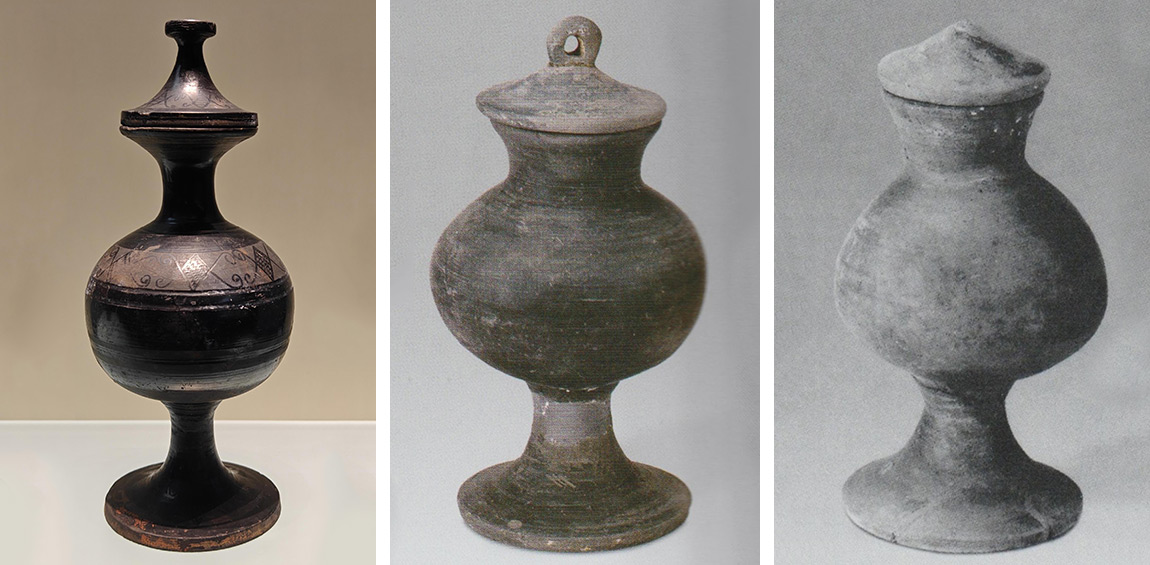
To interpret the manufacturing techniques of globular-bellied vessels from the Zhongshan State of China’s Late Bronze Age (770 BCE–221 BCE), experimental reconstruction was carried out. Based on the experimental results, it can be concluded that these vessels were composed of three separate components: the lid, the spherical body, and the flared base, which were integrated into a single unit through a specialized assembly technique. Specifically, the three components were first individually fabricated, the spherical body and flared base were then polished and incised with decorative patterns before being bonded into an integrated unit. Finally, this unit was combined with the lid to form a complete vessel. It should be emphasized that both the glossy surface achieved through polishing and the incised decorative patterns were fully completed on unfired clay blanks prior to firing. Integrating archaeological and ethnological survey data, the vessels are inferred to be special funeral artifacts for the Zhongshan nobility, embodying the cultural traits of northern nomadic ethnic minorities residing in traditional Chinese agricultural regions.
Introduction
During China’s Late Bronze Age (770–221 BCE), the Zhongshan State (414–295 BCE) emerged as a major regional power in the North China Plain, a key hub of northern China’s agricultural civilization. Historical and archaeological evidence indicates that the state was established by ethnic groups with nomadic cultural traditions (Tang and Li, 2022, p.86). The globular-bellied vessel, a distinct ceramic form characterized by a spherical body and a stable base, has been exclusively unearthed from royal and noble burials of the Zhongshan State and is therefore recognized as a diagnostic artifact of this polity (Wang and Chen, 2021, p.128). Existing scholarship on these globular-bellied vessels has been confined to basic observation and documentation based on excavation, and has lacked in-depth investigation into their technological and functional attributes. Adopting an experimental archaeological approach to study the Zhongshan State’s globular-bellied vessels will enable systematic analysis of their manufacturing techniques and functional uses, thereby providing critical insights into the cultural adaptability of groups with nomadic origins within agricultural settings during China’s Late Bronze Age.
Background
The Zhongshan State (414–295 BCE), a polity established by groups with nomadic heritage, existed in the North China Plain during China’s Late Bronze Age (770–221 BCE) and was governed by five successive rulers. Geographically, its territory roughly aligns with present-day Baoding and Shijiazhuang in Hebei Province, China (Wang and Liu, 2020, p.5). Across the Zhongshan State’s historical territory, Chinese archaeologists have uncovered numerous city sites and tombs which have yielded a wealth of exquisite artifacts including bronzes, jades, glass beads, and pottery (Zhang, Zheng and Liu, 1979, p.3; Liu, Wang, Zhang and Qiu, 2019, p.52) (See Figure 1).
The globular-bellied vessel stands as a diagnostic artifact of the Zhongshan State. To date, it has only been recovered from Zhongshan State tombs and is rarely documented in urban settlements or handicraft workshop sites. Globular-bellied vessels are more frequently encountered in royal and noble tombs than in auxiliary noble burials or commoner graves. Additionally, specimens recovered from individuals of higher social status tend to exhibit more elaborate craftsmanship. These patterns collectively indicate that globular-bellied vessels likely carried symbolic meaning related to social status in Zhongshan State society (See Figures 2 and 3).
Globular-bellied vessels exhibit two fabric types: sand-tempered pottery and untempered clay. These vessels typically range from 20 to 40 cm in height, and their surfaces are often treated with decorative techniques such as polishing to a glossy finish, incising with patterned motifs, and applying coloured pigments. Pottery colours vary from grey and brown to black. Archaeological observations indicate that each vessel comprises two components: a cone-shaped lid and a spherical body with an integral base. The spherical body has a wall thickness typically ranging between 0.5 and 1 centimetre. While hollow, the spherical body is not contiguous with the base.
In the ethnic minority settlements of contemporary China’s southwestern region, a wooden vessel analogous to the globular-bellied pottery has been documented. This wooden implement serves as a wine container, with its use typically confined to major commemorative occasions as illustrated in Figure 4.
Existing archaeological discoveries of the Zhongshan State indicate that globular-bellied vessels are significantly less numerous than other ceramic types. Employing experimental archaeological methods to investigate the production techniques of these vessels could illuminate the factors contributing to their scarcity while enabling a more nuanced understanding of Zhongshan State material culture.
Methodology: Reconstruction Experiment of the Globular-Bellied Vessels of the Zhongshan State
Given the paucity of publicly available data on the globular-bellied vessels of the Zhongshan State, understanding of their manufacturing techniques remains limited. This study aims to explore the production technology of these vessels. It also seeks to verify the rationality of the hypothesis that the hollow spherical body and flared base were manufactured separately before assembly, using experimental methods. Furthermore, by examining the manufacturing difficulty of globular-bellied vessels together with the cultural background of the Zhongshan State, this research intends to address why these vessels appear mainly in the tombs of kings and nobles instead of commoner burials or the ruins of living scenarios such as houses.
Observations of unearthed Zhongshan State globular-bellied vessels indicate that these artifacts were assembled from three components: lid, spherical body, and base. Traces of fast wheel throwing are evident on both their exterior surfaces and bases, suggesting that fast wheel throwing was integral to their manufacturing process. Consequently, an experienced potter was engaged in this experiment to produce the globular-bellied vessel replicas utilizing a fast wheel.
Suitable loess was collected from the vicinity of Zhongshan State pottery kiln sites and processed into workable clay. Using the fast wheel, the prepared clay was shaped into the lid, spherical body, and base as separate components. These components were subsequently left to rest for a period, during which surface hardness was assessed manually until they reached a state of moderate hardness with residual moisture. Clay slurry was then applied to the joining surfaces of the three components, which were assembled to form a complete globular-bellied greenware vessel.
The assembled greenware was first air-dried indoors. Consultations with archaeologists specializing in Zhongshan State studies indicated a probable firing temperature of around 900℃ for these vessels, this temperature will be confirmed in follow-up studies via a thermal dilatometer. Accordingly, the air-dried greenware was placed in an electric kiln, heated to 900℃ over a period of nine hours, held at this temperature for three hours, and then allowed to cool naturally (See Figure 5).
To reconstruct the glossy surfaces and incised decorative patterns commonly found on globular-bellied vessels, this experiment utilized smoothed ox horns and bone knives as implements. First, a semi-dried bowl-shaped pottery blank was polished with a smoothed ox horn to achieve a glossy finish, followed by incising decorative patterns with a bone knife. Once the pottery blank was air-dried, it was placed in a kiln and fired at 900°C (See Figure 6).
Results
During the fabrication of the globular-bellied vessel’s various components, the lid and base proved relatively straightforward to produce, while the spherical body exhibited greater manufacturing difficulty and a higher failure rate. Precise control of the clay blank’s moisture content is critical when shaping the spherical body, as the structure requires a hollow interior. If the moisture content is excessively high, the blank becomes overly malleable and structurally unstable, causing the formed spherical body to collapse due to insufficient support.
Conversely, if the moisture content is too low, the blank grows excessively dry and brittle, making it challenging to mold into a spherical form with a smooth, refined curvature. Only when the clay blank’s moisture content is moderate can the spherical body’s hollow structure be successfully achieved.
During the air-drying phase, the globular-bellied vessel blank maintained structural integrity. Following kiln firing, a complete finished vessel was obtained. Post-firing inspection identified a crack at the base, a phenomenon likely attributable to the combined effect of two factors: first, localized temperature variations between the spherical body and the base during firing; second, the inherent weight of the spherical body itself. These two factors exerted cumulative stress on the base, resulting in the development of the crack.
This experiment successfully replicated the globular-bellied vessel’s glossy surface and incised decorative patterns. The surface glossiness and incised pattern clarity of the fired specimen closely resemble those observed on archaeologically excavated globular-bellied vessel specimens.
Based on the experimental results, it can be concluded that the globular-bellied vessels of the Zhongshan State were manufactured using an assembly technique. Specifically, the lid, spherical body and flared base were first produced as separate components. After the separate production, the spherical body and flared base were polished, and decorative patterns were carved on the relevant components. Then, once the polishing process was completed, the polished spherical body and flared base were bonded together to form an integrated unit. Finally, this integrated unit was combined with the lid to constitute the complete globular-bellied vessel. It should be emphasized that the creation of the glossy surface achieved through polishing and incised decorative patterns on the globular-bellied vessel was completed before the clay blanks were fired.
Discussion
During the reconstruction of the globular-bellied vessel, we observed that both the lid and the vessel body feature horizontal rims, with no interlocking mechanisms to secure them in place. Thus, when the lid is placed on the vessel’s rim, it can be easily displaced or dislodged with minimal disturbance. Based on the lid’s design characteristics, the globular-bellied vessel lacks practical utility and was more likely intended as an ornamental piece.
From an experimental archaeological perspective, this study found that globular-bellied vessels are relatively difficult to manufacture and may not be suitable for large-scale production. Their rarity could also partly explain why relatively few of these vessels have been unearthed. Integrating archaeological data and ethnological survey results, most globular-bellied vessels have been excavated from tombs of higher social status. Additionally, some ethnic minorities in contemporary southwestern China still use wine vessels similar in shape to globular-bellied vessels during major festivals. On this basis, it is inferred that globular-bellied vessels may have served as special utensils for elite funeral rituals and represent a cultural manifestation of how northern nomadic peoples preserved their ethnic characteristics in traditional Chinese agricultural areas during China’s Late Bronze Age.
Conclusion
This study adopted the method of experimental archaeology to explore the manufacturing methods of globular-bellied vessels from the Zhongshan State during China’s Late Bronze Age. Based on the experimental results, it can be concluded that the globular-bellied vessels of the Zhongshan State were manufactured using an assembly technique. Specifically, the lid, spherical body and flared base were first produced as separate components. Subsequent to the separate production, the spherical body and flared base were polished, and decorative patterns were carved on the relevant components. After the polishing process was completed, the polished spherical body and flared base were bonded together to form an integrated unit. Finally, this integrated unit was combined with the lid to constitute the complete globular-bellied vessel. It should be emphasized that the creation of the glossy surface achieved through polishing and incised decorative patterns on the globular-bellied vessel was completed before the clay blanks were fired.
In addition, the experiment found that since there was no obvious structure to fasten the lid to the vessel body, it is inferred that the globular-bellied vessels served as special ritual utensils for nobles of the Zhongshan State in funeral ceremonies. Meanwhile, the experiment revealed that these vessels were relatively difficult to manufacture and not suitable for large-scale production, which corresponds to the small number of such vessels discovered in archaeological excavations.
The experimental archaeological research on the globular-bellied vessels of the Zhongshan State is of great significance for clarifying the manufacturing techniques of these vessels and exploring the material cultural connotations they embody. As the first systematic reconstruction study on the manufacturing techniques of globular-bellied vessels in China, this experiment provides important reference value for subsequent experimental archaeological research on other types of ancient pottery in China.
Acknowledgments
Funded by Science Research Project of Hebei Education Department (SQ2023172)
Keywords
Country
- China
Bibliography
Liu, L.Q., Wang, X.K., Zhang, W.Z., Qiu, G.B., 2019. Excavation report on Tomb M8 at the Fangjiazhuang Cemetery in Pingshan, Hebei. Cultural Relics in the Spring and Autumn Period , 2019(5), pp. 52-56. https://doi.org/10.13635/j.cnki.wwcq.2019.05.008.
Tang, B.C. and Li, J.M., 2022. A preliminary study on the dragonfly-eye glass beads of the Zhongshan State during the Warring States Period. Identification and Appreciation to Cultural Relics , 2022(4), pp. 86-89. https://doi.org/10.20005/j.cnki.issn.1674-8697.2022.04.027.
Wang, X.K. and Chen, D.C., 2021. "Ritual Artifacts": Analysis of Social Stratification Based on Funerary Pottery from State of Zhongshan during the Warring States Period.
Cultural Relics in Southern China , 2021(6), pp. 126-143. Available at: < https://oversea.cnki.net/kcms2/article/abstract?v=hmNf6PfbaBudceOY... > [Accessed January 2026]
Wang, X.K. and Liu, L.Q., 2020. The Excavation of the Tombs M11 and M37 of the Warring States Period at Zhongqiji in Pingshan, Hebei. Cultural Relics , 2020(9), pp. 4-19, 1. https://doi.org/10.13619/j.cnki.cn11-1532/k.2020.09.001.
Zhang, S.Z., Zheng, M.Z. and Liu, L.C., 1979. Excavation report on the tombs of the Zhongshan State during the Warring States Period in Pingshan County, Hebei Province. Cultural Relics , 1979(1), pp. 1-31, 97-105. https://doi.org/10.13619/j.cnki.cn11-1532/k.1979.01.001.