
The content is published under Creative Commons Attribution 4.0 International license (CC BY 4.0).
Reviewed Article:
How Culinary Arts May Have Contributed to Ceramic Arts in Blacktop Redware from Kerma
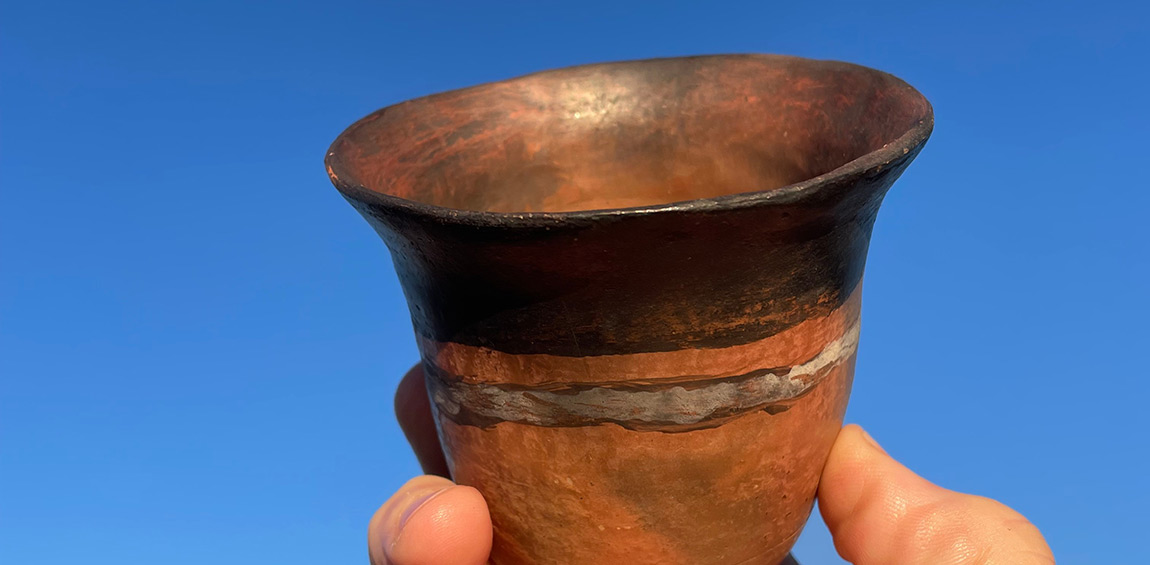
The process of how seemingly deliberate black colour on ancient decorated pottery was achieved in various cultures throughout history has been of great interest to me as a potter for several years. Many modern potters with the same interest have replicated black, or combinations of black and other colours on the surface of vessels with various minerals, clay, and firing techniques (Ward, 2026). In my studies of ancient pottery from my home region of the Southwest United States, I noticed some similarities in ancient vessels with other, much older cultures from around the world: combinations of black, red, and white achieved at low-temperature firings. This can be quite complex and often almost impossible for modern potters to control and replicate the way many ancient cultures had achieved, seemingly with little effort, as evident by the large, consistent production of certain vessel types. I hope to share with you another theory of how black colour on the top of Kerma Culture pottery (Hayes, 1959) (See Figure 1) in particular may have become a norm, not from an aesthetic decision by the potter, but as the result of an effort to make a well-sealed vessel for making bread, or toasting grains such as emmer, wheat, barley, and sorghum, which werean important part of their diet (Nasreldein, et al., 2025).
Background
My current test firings, as the subject of this article, are on seemingly deliberate black colour on fired pottery of the Kerma in ancient Nubia (modern-day Sudan) as an example (circa 2500-1500 BC) but reflects a wide range of similar pottery colour design throughout the region, including Egypt. The beaker types (See Figure 1) seemed to be made from clay gathered near the Nile River. This clay type is often referred to as Nile silt and contains various non-plastic tempers such as mica (Kilroe and Spataro, 2023, p.304). The outer and inner surfaces appear to have been burnished with a smooth stone and slipped with an iron-rich terracotta clay or iron oxide. It has been suggested that a finer clay had also been slipped before firing, on the inside of the beakers (Hayes, 1959), possibly for sealing the ware better and helping it to hold liquids.
Pottery Construction and Materials
My Kerma-style beaker vessels for testing my theory were thrown on an electric pottery wheel for rapid construction of test pieces. Some were hand built as well, including forming slabs of clay over a hump mould. My goal was to recreate fired results with similar shapes, clay slips, and clay bodies, but not necessarily be too concerned with how the shape of the clay body was created, as long as the thickness of the walls and profile resemble images of actual Kerma beakers. The wall thickness at the top flared rim was approximately 4mm thick, with a height of 7.65 cm-8.90 cm and a flared rim diameter of 11.43 cm-12.7 cm. My test pieces may have been slightly smaller than original excavated samples. The body clay used to make these test pieces was from a mica-rich terracotta clay gathered in New Mexico and sold by a local retailer, being the closest I could get to Nile silt composition. Nile silt clay, much like my source of Mica rich clay, can sinter or become a solid at firing temperatures ranging from 600 °C to 850 °C.
In this particular study, I felt the clay body mineral composition had more to do with thermal shock resistance and sintering in an ancient pottery firing than achieving the black colour since many of my tests on several other personally gathered and purchased clays yielded the same black effect when bentonite clay is added as a sealer or decorative design, and gases from burning starchy carbohydrate grains, oils, or stover are present during cooking or initial firing to sinter the vessel.
Haematite, a powdery form of red iron oxide, gathered near my home in the form of soft stone ground on a basalt stone to create fine particles was mixed with a small amount of mica clay into a watery consistency and applied with a soft brush to the surface of the vessels inside and out, when the clay body was almost dry. A polished smooth stone was used to burnish this iron-rich surface into a smooth, glossy finish at a time when the slip was almost dry.
The next step involves what I consider one of the key ingredients for achieving the black colour: bentonite clay. This clay type, found in ancient volcanic ash deposits, may have been appealing to ancient peoples living near such sites, due to its unique features. Bentonite clay is a very fine particle clay and can swell when water is added to it in a raw state, especially if it is of a form known as sodium bentonite. This feature is well known, and there are many sources discussing this clay type and expressing not only its ability to soak up water like a sponge or retain water in a pond, but also how it attracts and traps gases (Amri, 2024) such as CO2, CO, and Hydrogen, among others. Altogether these gases are known as Synthetic Gas, or Syngas for short, and are responsible for helping red iron oxide turn into black forms of iron, such as magnetite, under controlled iron steel processing conditions.
In my experiments with trying to replicate the black colour of Kerma beakers, I applied a very wet, thin solution of bentonite clay from four different sources, all of which gave me the same positive results of black colour after firing. One source I gathered myself near a region known for its ancient volcanic activity, in an area called the Four Corners, in New Mexico, USA. Another was purchased in Gallup, New Mexico, from a young Native American couple at a swap meet. This couple identified the clay to me as sacred clay known as “Gleesh”, and used for stomach issues, skin care, and ceremonial rituals. The third bentonite source was given to me by Andy Ward, a dedicated ancient pottery replicator, who gathers and uses it for a white colour on pottery fired in an oxygen-rich environment, much like a campfire, with various wood fuel types. The final source was a purchased bentonite sold in stores for skin care. Having all of these sources behave in the same manner, under the right conditions, gave me confidence that the reaction of bentonite clay with starchy grains or oils in a fire could have been a trait well known for thousands of years, across several continents where ancient volcanic ash had decomposed enough to become a form of bentonite, in a white, grey-green, or iron-rich form. Many forms of smectite clays are often credited for such fine thin-walled vessels created by cultures along the Nile including pottery such as the type in my studies, Kerma beakers. Nile silt is credited for having extremely plastic characteristics due to its often-natural inclusion of smectite clays such as montmorillonite, and bentonite. Creating clay bodies with other temper added to prevent dry cracking was likely since bentonite has a very high shrink rate when dried. Levigating with water of Nile silt clays could have produced very fine particle bentonite clay rising to the surface of the levigated solution, and then possibly applied inside and on the rim initially to help seal the vessel yet also created the black colour.
The lower band of white and black colour on my Kerma pottery replicas was first slipped with bentonite in a thin line just below the bentonite slipped rim of the vessels (See Figure 2), and then an even thinner line was established on top of the bentonite using a local white clay type material that I gather for replicating ancient southwest pottery. This local white clay may be a mix of Dolomite, Hentite, Kaolin, or some form of calcium carbonate rich clay. This clay type will not turn black in a fire rich in smoke and gases like the bentonite but can become a little grey. My attempts to recreate the slightly purple and opal colour on this band, as observed on some actual Kerma beaker images available online, have been limited, but the white colour overlaying on a black colour has been very consistent in results.
Firing Process and Results
Initially, 6 to 8 test firings were conducted in various environments casually while trying to understand what was causing the effect. All test firings with charcoal as fuel consistently reached a maximum firing range of 648 °C to 815 °C. My initial discoveries came from firing test pieces slipped with bentonite in a well-contained, limited oxygen environment known as a charcoal chimney, which is a metal cylinder with holes on the sides, used for igniting charcoal on a grill, and using manufactured charcoal, known as briquettes, for fuel. (See Figure 3) In this firing, a black, glossy colour was achieved quite easily on the bentonite surfaces with little to no fugitive clay, meaning that the clay surface became hard enough that it could not be easily scratched off. Using a laser thermometer (See Figure 9) during early test-firing was random and mostly used to see if temperatures rose over carbon burn off. Temperatures of approximately 400 °C to 700 °C were reached while still witnessing visible black colour where bentonite slip was applied. Once I realized the composition of this fuel source played a major role, a greater understanding of what may have been happening in ancient times came to light. Manufactured charcoal briquettes contain starch to hold the charcoal dust into a shape and form. My attempts to fire the same test pottery compositions with bentonite using natural charcoal not containing starches led to a white-gray colour on the bentonite-treated surfaces rather than black. My hypothesis became compelling that starchy carbohydrates may have been directly involved in creatingblack-coloured surfaces, perhaps intentionally, possibly through religious offerings during firings, or simply from a food preparation process during and after initial firing of the ceramic vessel or from certain oils like flax or olive oil being used to burnish the vessel before smectite clays were applied like bentonite.
Timing of how smoke and gases interact with bentonite during the firing seems to play a role in achieving the black colour. Carbon and soot from smoke must come in contact with the bentonite surface before the sintering or shrinking occurs in most cases and with most fuel sources if certain biomass is present such as grains, grain stover, or certain oils. Currently, my best results in replicating the look of Kerma beakers using experimental archaeology come from initially building a fire in a slightly wind-protected area using stacked rocks in a U-shape having a 25-30 cm interior diameter, with rocks stacked at the same height of approximately 30 cm (See Figure 4), in a way to allow some oxygen in during firing. The pre-fire consists of gathered twigs, leftover natural charcoal, and sometimes cow manure. The beaker to be fired is placed nearby to warm and preheat the vessel (See Figure 5). Once the fire burns down to hot coal, a pottery sherd from a broken pot is placed on the ground in the centre (See Figure 6). My Kerma beaker is filled before, or after warming, with a variety of starchy material such as wheat or barley flour, sorghum grains, or leftover dried flakes of wheat dough from making bread. Stover from these grains is not available to me but would be worth experimenting with as a fuel source due to also containing starchy carbohydrates. The filled beaker is placed right side up, on top of the pottery sherd in the centre (See Figure 7). Natural, untreated biochar, or charcoal is then placed all around the vessel. Some tests were also done covering the top of the vessel with a bowl or disk-shaped object and more coal added on top, yielding less attractive results from the first firing but better sintering of the clay due to higher temperatures achieved (See Figure 8). The coal slowly becomes hotter from the bottom up, creating biochar in the lower portion of the inside of the vessel filled with grains, which results in gases escaping through the walls of the vessel. This aids in the appearance of black on the outside of the vessel coated with bentonite and seems to help prevent fire clouds from the hot coals from contacting the exterior red or white surface of the fired vessel. The best results are achieved when the grains, flour, and leftover dried bread fragments inside the vessel are compact enough to form gases that will escape through the walls of the vessel before ignition at the surface occurs. Ignition at the surface or top of the vessel when the temperature is at its maximum (See Figures 9,10) also produces gases that contribute to the blackening of the rim and interior. This seems to also help sinter the clay, making it ceramic with little to no fugitive colour even under low-temperature firing conditions (See Figure11).
Flames generated from the gases exiting the side walls of the vessel during firing seemed to have some negative impact on the initial blackening of the outer rim and band, if coals do become ignited when no oil is used within the bread mix or used to burnish the pot before firing. This creates flame on the black colour band or rim, turning slightly grey in places, however, after repeated use of the vessel while making bread, most, if not all, of the bentonite slipped surface became increasingly more burnished black, resembling a well-seasoned iron skillet (See Figures 12,13).
The application of various oils has also been tested, being applied to vessels before firing and in between bread-making events. The oil, such as castor, flax, and animal fat, was applied to the raw clay before firing, for burnishing. Even though black was easily produced inside and out where bentonite was applied, adding oil before firing seemed to inhibit the sintering of clay, leaving more fugitive colour after firing unless the temperature reached at least 700 degrees Celsius. Small amounts of oil coatings inside the sintered, previously fired, vessel before baking bread did seem to enhance black colour inside and outside of the vessel, but also created more soot, in some cases, and less lustre when castor oil was utilized, with flax seed oil providing the most shine. Possibly due to the lower smoke point temperature.
| Oil type | Smoke point | Added before firing | Added for cooking |
| Ghee, smen | 230-250 °C | Black top inconsistent | Blacktop increase |
| castor | 200-230 °C | Consistent dull black | Consistent dull black |
| Tallow | 205-250 °C | Dull blacks and grey | Increase in black |
| flax | 107 °C | Consistent blacktop | Increase black shine |
A slight purple hue did occur on the light-coloured outside band of one test piece, having been fired with a thin castor oil coating on the inside, then the beaker of bread dough was nestled inside another beaker for firing, creating a protective layer from the heat to prevent burning the bread while baking. This could be from trapped gases exiting the vessel side walls while cooking bread. Further explorations of this effect are pending and could be the result of Manganese dioxide presence in bentonite material used for the banding colour.
The use of so called ‘fire dogs’ was also explored in the bread making process of beakers filled with dough (Mosiniak, 2013). These odd-looking ceramic objects measuring on average 16cm in diameter and as tall as 25-35cm have been unearthed in large quantities on Sai Island. They are known as animal-shaped clay tools, used for cooking in the Nubian culture, including in the city of Kerma. I shaped a fire dog (See Figure 16) as well as I could from images available to me online (Mosiniak, 2013), my shaped fire dogs are roughly 6cm smaller in diameter and height than noted artifacts to match my beakers, that are also approximately 6cm shorter than average Kerma beakers, my attempt at replicating fire dogs were sculpted from the same clay I used to make beakers –this being a very durable, mica-rich clay which is highly resistant to thermal shock from a fire. This proved to be a good choice (See Figure14). Having the beaker sit on the fire dog was effective in preventing too much burning of the bread, and the loop-shaped handle opposite of the ‘dog ears’ made a perfect way to pull the beaker out of the coals by sliding it towards myself, while the ears kept the beaker from falling backwards (See Figure15). The bread recipe was created from only wheat flour, a little yeast, and water. Maximum temperature at the surface of the bread did not produce any visible gases discernible from the smoke. However, the outer portion of the bentonite slipped vessel did become darker black after just two bread baking events, taking approximately thirty minutes for each loaf, with a very light coat of castor oil or flax oil on the inside of the beaker and rim. (See Figures 12,13).
Conclusions
The exact science of why this visual colour change occurs is somewhat of a mystery to me, as I am a hobby experimental potter, and not a chemist. However given the evidence and results using experimental archaeology, I am compelled to considerthere could be some connection of bentonite/montmorillonite clay, certain oils, and starchy grains being used for decorating, or sealing pottery that could have also been used for cooking grains. In a way, that would produce a certain chemistry of smoke. This could lead to other ways for archaeologists to identify cultural trade, food preparation. along with the availability of starchy grain foods and oils at specific periods of time.
This also leads to further questions. Did the results of food preparation originate the expansion of the use of bentonite and oils for creating art? Could it have derived from ritualistic practices? For me, as a potter, and not necessarily a baker, this discovery will indeed encourage more artistic expression.
Acknowledgement
Thank you, Deborah Wilkinson, for your helpful support and knowledge of writing an archaeological article and sharing your studies of ancient places as a student of archaeology. Many thanks to my patient family and loving wife for putting up with my obsession with firing pottery near daily in the front yard with test pieces, clay, and organic materials laying everywhere. Thank you, Andy Ward, for getting me hooked on ancient pottery. Many thanks and appreciation to ancient potters for inspiring those of us who admire and are often puzzled by your skills in the art of ceramics.
Bibliography
Amri, C., 2024. Natural bentonite filter as an absorber of acid gas contaminant in the use of portable fumehoods. AIP Conference Proceedings, Volume 2952, Issue 1. Available at: < https://doi.org/10.1063/5.0212287 >
Hayes, W., 1959. Scepter of Egypt II: A Background for the Study of the Egyptian Antiquities in the Metropolitan Museum of Art: The Hyksos Period and the New Kingdom (1675-1080 B.C.). Available at: < https://www.metmuseum.org/met-publications/the-scepter-of-egypt-vol-2-the-hyksos-period-and-the-new-kingdom-1675-1080-bc > [Accessed 5 January 2026].
Kilroe, L and Spataro, M., 2023. Preliminary Investigation of the chaîne opératoire of Meroitic Potsherds from the Cemetery of Faras, Northern Nubia (Sudan), Bulletin de liaison de la céramique égyptienne, 32 | 2023. Available at: < https://doi.org/10.4000/14tvp >
Mosiniak, N., 2013. The “fire dogs” of Sai-a work in progress . Available at: < https://acrossborders.oeaw.ac.at > [Accessed 4 February 2026].
Nasreldein, M., Riehl, S., Deptuła, A., de Lellis, L. and Obłuski, A., 2025. A Window into the Nubian Diet: A Case Study of Food Crop Storage in the Kingdom of Dongola (Fourteenth to Eighteenth Centuries CE), Northern Sudan. African Archaeological Review , Volume 42, pp. 259-290. Available at: < https://doi.org/10.1007/s10437-025-09622-y >
Ward, A., 2026. Ancient Pottery . Available at: < https://ancientpottery.how > [Accessed 20 March 2020]